Active is Attractive
The PreSonus Eris 3.5 Studio Monitors, Pair are powered, active studio speakers for home studio music production, podcasting, video editing and desktop audio setups, delivering accurate sound and strong low-end performance.
Ian Gardner is a British-American broadcaster, voice artist and audio enthusiast, sharing years of experience building creative workflows from a modern home studio. He helps readers make smarter buying decisions across studio gear, production tools and home comforts for both inside and outside the workspace. Broadcasters, podcasters, voice artists, producers and digital creators will find guidance that supports high production values and efficient workflows for building a successful home studio business. Similar articles can be found in the studio-essentials blog.
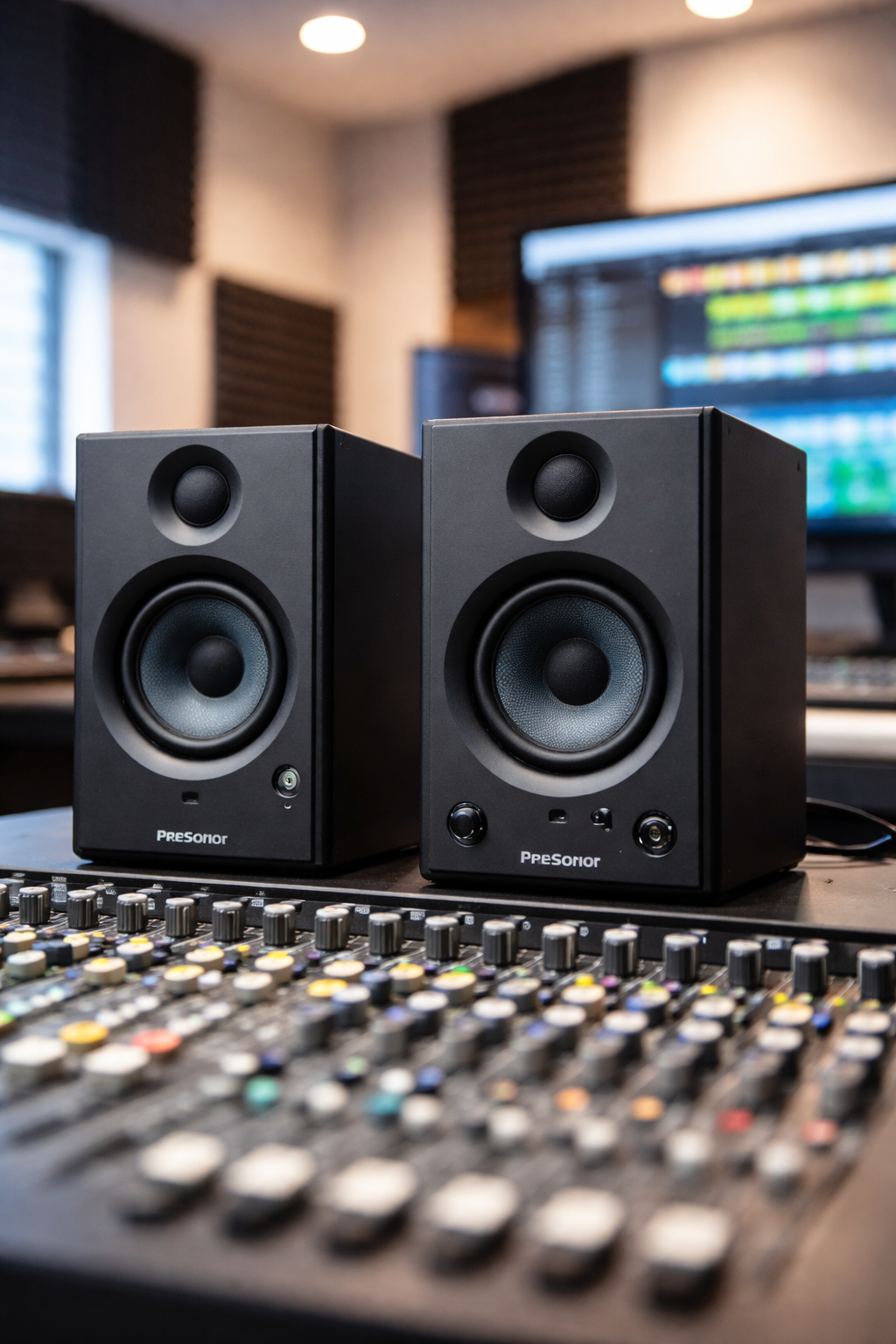
The PreSonus Eris 3.5 Studio Monitors are a compact yet surprisingly capable solution for anyone building a home studio setup, whether you are producing music, editing audio, or simply enjoying high-quality playback at your desk. Designed as powered, active monitor speakers, they remove the need for an external amplifier and deliver a clean, controlled listening experience straight out of the box. For creators working in near-field environments, these monitors strike an excellent balance between affordability, performance, and practical usability.
At the core of the Eris 3.5's appeal is their studio-quality, accurate sound. In a home studio context, accuracy is everything. You need to hear your mix as it truly is, not colored or exaggerated in ways that might sound flattering but translate poorly on other systems. If you are still dialing in your setup, proper placement is just as important as the speakers themselves, and this guide on positioning studio monitors breaks down exactly how to get the most accurate listening environment. These monitors are engineered to provide a neutral response that allows you to make informed decisions about EQ, compression and spatial placement. Whether you are working on vocal production, podcast editing, or instrumental layering, the clarity offered here gives you confidence in what you are hearing. That becomes even more important when your monitoring chain is matched with the right recording tools, and choosing the right microphone can have just as much impact on your results as the monitors themselves.
One of the standout features is the woven-composite woofer design. The material and structure of the woofer contribute to a tight and controlled low end that feels present without becoming muddy or overwhelming. For a speaker of this size, the bass response is notably full, making it suitable not only for production work but also for hi-fi listening. You can feel the low frequencies without sacrificing definition, which is particularly useful when working with kick drums, basslines or cinematic audio elements. The result is a cleaner overall sound that maintains separation across the frequency spectrum.
Powering the system is a 50 Watt Class AB dual amplification setup, delivering 25 watts per side. This configuration ensures consistent performance with low distortion, even when you push the volume a bit higher. In a typical desktop or small room studio, this level of power is more than sufficient to fill the space without introducing unwanted noise or harshness. The Class AB design also contributes to a warmer, more musical character compared to some entry-level digital amplification systems, which can sometimes sound sterile.
Another critical advantage is the ultra-wide listening sweet spot. Thanks to the 1-inch low-mass, silk-dome tweeters, the high-frequency response remains smooth and natural across a wide listening area. This means you are not locked into a single rigid position to hear an accurate stereo image. In practical terms, you can move slightly around your desk or adjust your posture without losing clarity or balance. For long sessions, this flexibility reduces listening fatigue and makes the overall experience more comfortable.
Connectivity is another area where these monitors excel. On the rear panel, you will find 1/4-inch TRS balanced inputs, which are ideal for connecting professional audio interfaces or mixers. There are also unbalanced RCA inputs for consumer devices such as media players or turntables. On the front panel, a convenient 1/8-inch TRS stereo aux input allows you to quickly plug in a phone or portable device. This range of input options makes the Eris 3.5 highly adaptable, whether you are integrating them into a full production setup or using them as versatile desktop speakers.
The ability to precision-tune the monitors to your room is another valuable feature. Home studios rarely exist in perfectly treated acoustic environments, so having control over high- and low-frequency adjustments is essential. The onboard tuning controls allow you to tailor the sound based on your room size, speaker placement and personal preference. Whether the monitors are sitting on a desk, placed on a bookshelf or positioned alongside a turntable, you can fine-tune the output to achieve a balanced and accurate response.
A particularly practical inclusion is the front-panel headphone output with a built-in headphone amplifier. This makes it easy to switch between speaker monitoring and headphone reference without needing to reconfigure your setup. For late-night sessions or detailed editing work, this quick-switch capability is invaluable. You can maintain workflow continuity without reaching behind your desk or adjusting external equipment.
The Eris 3.5 also includes a power saver mode, which automatically reduces energy consumption when the monitors are not actively in use. This is a small but meaningful feature for anyone who spends long hours in the studio. It not only helps lower power usage but also extends the lifespan of the components by reducing unnecessary wear.
In a home studio environment, space is often limited, and the Eris 3.5's compact footprint makes them easy to position without cluttering your workspace. Despite their size, they deliver room-filling sound that feels much larger than expected. This makes them equally suitable for music production, multimedia editing, gaming and casual listening.
Overall, the PreSonus Eris 3.5 Studio Monitors offer a compelling combination of accuracy, flexibility and user-friendly design. They are particularly well-suited for beginners building their first studio, as well as experienced users looking for a reliable secondary monitoring solution. With their balanced sound, thoughtful features and adaptable connectivity, they provide a solid foundation for any desktop audio setup where clarity and precision matter.
At the core of the Eris 3.5's appeal is their studio-quality, accurate sound. In a home studio context, accuracy is everything. You need to hear your mix as it truly is, not colored or exaggerated in ways that might sound flattering but translate poorly on other systems. If you are still dialing in your setup, proper placement is just as important as the speakers themselves, and this guide on positioning studio monitors breaks down exactly how to get the most accurate listening environment. These monitors are engineered to provide a neutral response that allows you to make informed decisions about EQ, compression and spatial placement. Whether you are working on vocal production, podcast editing, or instrumental layering, the clarity offered here gives you confidence in what you are hearing. That becomes even more important when your monitoring chain is matched with the right recording tools, and choosing the right microphone can have just as much impact on your results as the monitors themselves.
One of the standout features is the woven-composite woofer design. The material and structure of the woofer contribute to a tight and controlled low end that feels present without becoming muddy or overwhelming. For a speaker of this size, the bass response is notably full, making it suitable not only for production work but also for hi-fi listening. You can feel the low frequencies without sacrificing definition, which is particularly useful when working with kick drums, basslines or cinematic audio elements. The result is a cleaner overall sound that maintains separation across the frequency spectrum.
Powering the system is a 50 Watt Class AB dual amplification setup, delivering 25 watts per side. This configuration ensures consistent performance with low distortion, even when you push the volume a bit higher. In a typical desktop or small room studio, this level of power is more than sufficient to fill the space without introducing unwanted noise or harshness. The Class AB design also contributes to a warmer, more musical character compared to some entry-level digital amplification systems, which can sometimes sound sterile.
Another critical advantage is the ultra-wide listening sweet spot. Thanks to the 1-inch low-mass, silk-dome tweeters, the high-frequency response remains smooth and natural across a wide listening area. This means you are not locked into a single rigid position to hear an accurate stereo image. In practical terms, you can move slightly around your desk or adjust your posture without losing clarity or balance. For long sessions, this flexibility reduces listening fatigue and makes the overall experience more comfortable.
Connectivity is another area where these monitors excel. On the rear panel, you will find 1/4-inch TRS balanced inputs, which are ideal for connecting professional audio interfaces or mixers. There are also unbalanced RCA inputs for consumer devices such as media players or turntables. On the front panel, a convenient 1/8-inch TRS stereo aux input allows you to quickly plug in a phone or portable device. This range of input options makes the Eris 3.5 highly adaptable, whether you are integrating them into a full production setup or using them as versatile desktop speakers.
The ability to precision-tune the monitors to your room is another valuable feature. Home studios rarely exist in perfectly treated acoustic environments, so having control over high- and low-frequency adjustments is essential. The onboard tuning controls allow you to tailor the sound based on your room size, speaker placement and personal preference. Whether the monitors are sitting on a desk, placed on a bookshelf or positioned alongside a turntable, you can fine-tune the output to achieve a balanced and accurate response.
A particularly practical inclusion is the front-panel headphone output with a built-in headphone amplifier. This makes it easy to switch between speaker monitoring and headphone reference without needing to reconfigure your setup. For late-night sessions or detailed editing work, this quick-switch capability is invaluable. You can maintain workflow continuity without reaching behind your desk or adjusting external equipment.
The Eris 3.5 also includes a power saver mode, which automatically reduces energy consumption when the monitors are not actively in use. This is a small but meaningful feature for anyone who spends long hours in the studio. It not only helps lower power usage but also extends the lifespan of the components by reducing unnecessary wear.
In a home studio environment, space is often limited, and the Eris 3.5's compact footprint makes them easy to position without cluttering your workspace. Despite their size, they deliver room-filling sound that feels much larger than expected. This makes them equally suitable for music production, multimedia editing, gaming and casual listening.
Overall, the PreSonus Eris 3.5 Studio Monitors offer a compelling combination of accuracy, flexibility and user-friendly design. They are particularly well-suited for beginners building their first studio, as well as experienced users looking for a reliable secondary monitoring solution. With their balanced sound, thoughtful features and adaptable connectivity, they provide a solid foundation for any desktop audio setup where clarity and precision matter.
You may purchase items mentioned in this article here. Affiliate links earn me a commission at no extra cost to you. Thanks for supporting IanGardner.com