Audio Interface Overview
Learn why a quality audio interface is key for your home studio.
Ian Gardner is a British-American broadcaster, voice artist and audio enthusiast, sharing years of experience building creative workflows from a modern home studio. He helps readers make smarter buying decisions across studio gear, production tools and home comforts for both inside and outside the workspace. Broadcasters, podcasters, voice artists, producers and digital creators will find guidance that supports high production values and efficient workflows for building a successful home studio business. Similar articles can be found in the studio-essentials blog.
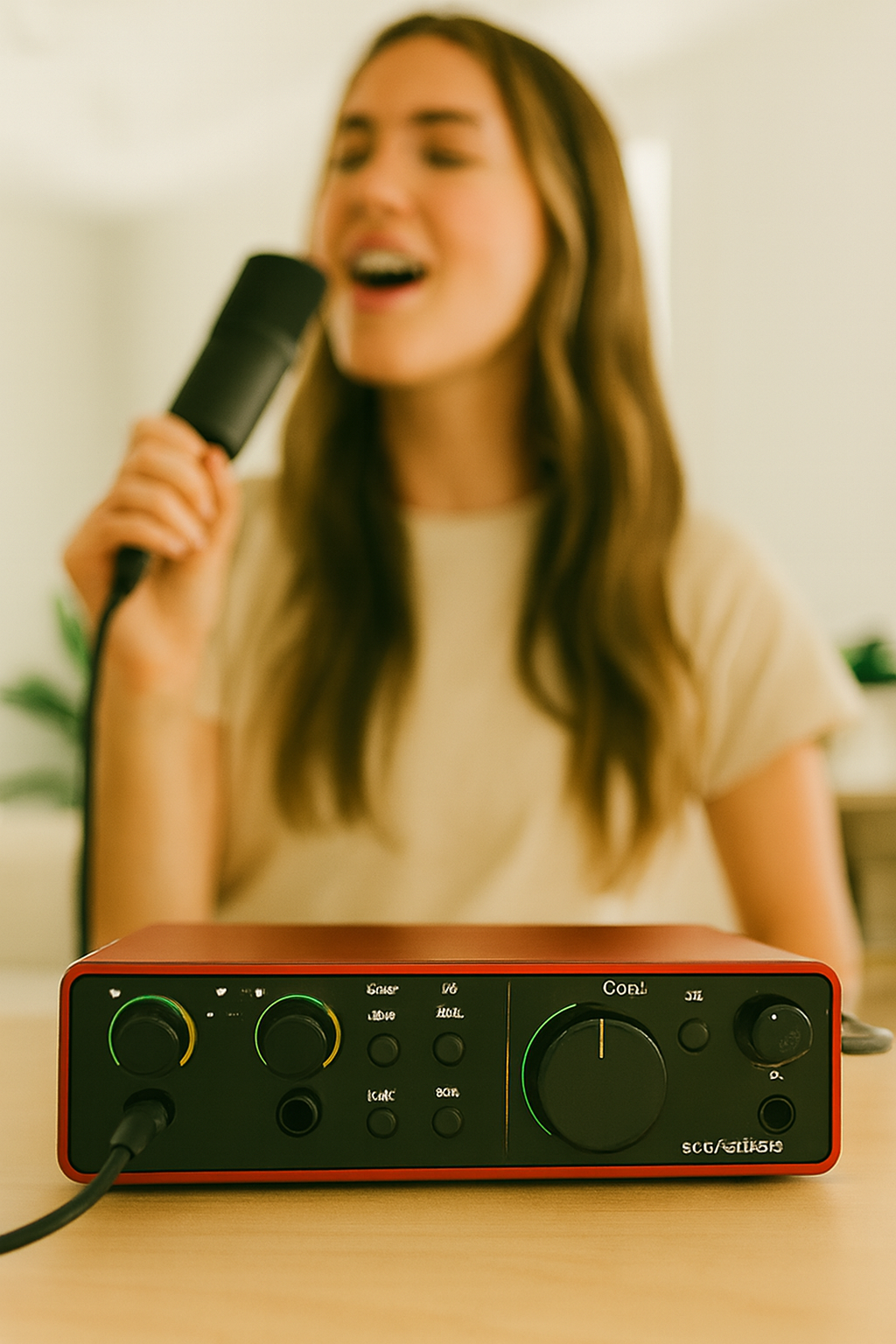
An audio interface is one of the most essential tools in any modern home studio, providing the foundation for clean, reliable, and flexible audio capture and if you want a quick visual overview, check out this 1 minute 2 know about the Focusrite Scarlett 2i2. While USB microphones have become popular for beginners, there comes a point where most creators and musicians need more control, better sound quality, and stronger connectivity. This is where a dedicated audio interface becomes far more important than relying on a microphone with its own built in USB output. An interface is designed specifically to convert analog sound into high quality digital audio with consistency and precision, making it the central hub of most professional and semi professional recording setups.
At its core, an audio interface handles two critical tasks. First, it amplifies microphone and instrument signals so they reach strong and usable recording levels. Second, it converts those signals into digital data that your computer can process. This conversion stage is where the major difference between a simple USB microphone and a high quality interface becomes clear. Interfaces typically use better preamps and converters, which results in lower noise, greater detail, and a cleaner overall recording. When you use a USB microphone, you are stuck with the built in electronics inside the mic's casing, leaving no room to improve or expand your setup. An audio interface, on the other hand, lets you choose any microphone you want and grow your studio as your needs evolve.
One of the most popular choices for home studios is the Focusrite Scarlett 2i2 v4. This model continues the long tradition of Scarlett interfaces offering reliable performance at a fair price point. The 2i2 v4 includes upgraded preamps, improved converters, and a modern design tailored for creators, musicians, podcasters, and voice over artists. The clean gain structure means your recordings stay accurate and transparent, even when using demanding microphones. The 2i2 v4 also features two combo inputs, which makes it easy to switch between microphones, guitars, keyboards, and other instruments. Musicians who want to record at home will appreciate how quickly they can plug in and capture ideas without complicated routing or setup.
USB connectivity plays a crucial role in the user experience as well. A high quality USB connection reduces latency, the delay between your performance and what you hear in your headphones. When latency is too high, recording becomes uncomfortable and difficult, especially for musicians who rely on tight timing. A dedicated interface is built to manage this data flow efficiently, maintaining a stable connection and ensuring that what you hear matches what you play or speak. The Scarlett 2i2 v4, for example, uses updated USB technology that helps maintain low latency and strong overall system stability. This type of reliability is not something you typically get from a basic USB microphone.
Another advantage of an audio interface is flexibility. With an interface, you can use XLR microphones, dynamic or condenser models, and even ribbon microphones if your interface includes the proper gain levels. You can connect instruments directly, run external gear, and adjust levels using physical knobs that give you far more control than software alone. For musicians, this flexibility is essential. Being able to connect a guitar, a synth, or a full keyboard workstation without relying on adapters helps maintain signal quality and keeps the workflow smooth.
Room for improvement is another major benefit. When you buy a USB microphone, the quality ceiling is fixed. When you invest in an interface, you can start with an affordable microphone and upgrade later without replacing your entire setup. Many creators begin with a basic dynamic microphone, add a condenser later, and eventually build a full recording chain. An interface supports each of these stages.
Ultimately, an audio interface provides reliability, sound quality, and long term value that a USB microphone simply cannot match. Whether you are a musician tracking instruments, a podcaster recording weekly episodes, or a voice over artist building a professional workflow, the interface remains one of the most important investments in your studio.
At its core, an audio interface handles two critical tasks. First, it amplifies microphone and instrument signals so they reach strong and usable recording levels. Second, it converts those signals into digital data that your computer can process. This conversion stage is where the major difference between a simple USB microphone and a high quality interface becomes clear. Interfaces typically use better preamps and converters, which results in lower noise, greater detail, and a cleaner overall recording. When you use a USB microphone, you are stuck with the built in electronics inside the mic's casing, leaving no room to improve or expand your setup. An audio interface, on the other hand, lets you choose any microphone you want and grow your studio as your needs evolve.
One of the most popular choices for home studios is the Focusrite Scarlett 2i2 v4. This model continues the long tradition of Scarlett interfaces offering reliable performance at a fair price point. The 2i2 v4 includes upgraded preamps, improved converters, and a modern design tailored for creators, musicians, podcasters, and voice over artists. The clean gain structure means your recordings stay accurate and transparent, even when using demanding microphones. The 2i2 v4 also features two combo inputs, which makes it easy to switch between microphones, guitars, keyboards, and other instruments. Musicians who want to record at home will appreciate how quickly they can plug in and capture ideas without complicated routing or setup.
USB connectivity plays a crucial role in the user experience as well. A high quality USB connection reduces latency, the delay between your performance and what you hear in your headphones. When latency is too high, recording becomes uncomfortable and difficult, especially for musicians who rely on tight timing. A dedicated interface is built to manage this data flow efficiently, maintaining a stable connection and ensuring that what you hear matches what you play or speak. The Scarlett 2i2 v4, for example, uses updated USB technology that helps maintain low latency and strong overall system stability. This type of reliability is not something you typically get from a basic USB microphone.
Another advantage of an audio interface is flexibility. With an interface, you can use XLR microphones, dynamic or condenser models, and even ribbon microphones if your interface includes the proper gain levels. You can connect instruments directly, run external gear, and adjust levels using physical knobs that give you far more control than software alone. For musicians, this flexibility is essential. Being able to connect a guitar, a synth, or a full keyboard workstation without relying on adapters helps maintain signal quality and keeps the workflow smooth.
Room for improvement is another major benefit. When you buy a USB microphone, the quality ceiling is fixed. When you invest in an interface, you can start with an affordable microphone and upgrade later without replacing your entire setup. Many creators begin with a basic dynamic microphone, add a condenser later, and eventually build a full recording chain. An interface supports each of these stages.
Ultimately, an audio interface provides reliability, sound quality, and long term value that a USB microphone simply cannot match. Whether you are a musician tracking instruments, a podcaster recording weekly episodes, or a voice over artist building a professional workflow, the interface remains one of the most important investments in your studio.
You may purchase items mentioned in this article here. Affiliate links earn me a commission at no extra cost to you. Thanks for supporting IanGardner.com