Fix Your Room, Fix Your Voice
How to treat real world rooms that were never meant to be studios. A guide to acoustic treatment.
Ian Gardner is a British-American broadcaster, voice artist and audio enthusiast, sharing years of experience building creative workflows from a modern home studio. He helps readers make smarter buying decisions across studio gear, production tools and home comforts for both inside and outside the workspace. Broadcasters, podcasters, voice artists, producers and digital creators will find guidance that supports high production values and efficient workflows for building a successful home studio business. Similar articles can be found in the studio-essentials blog.
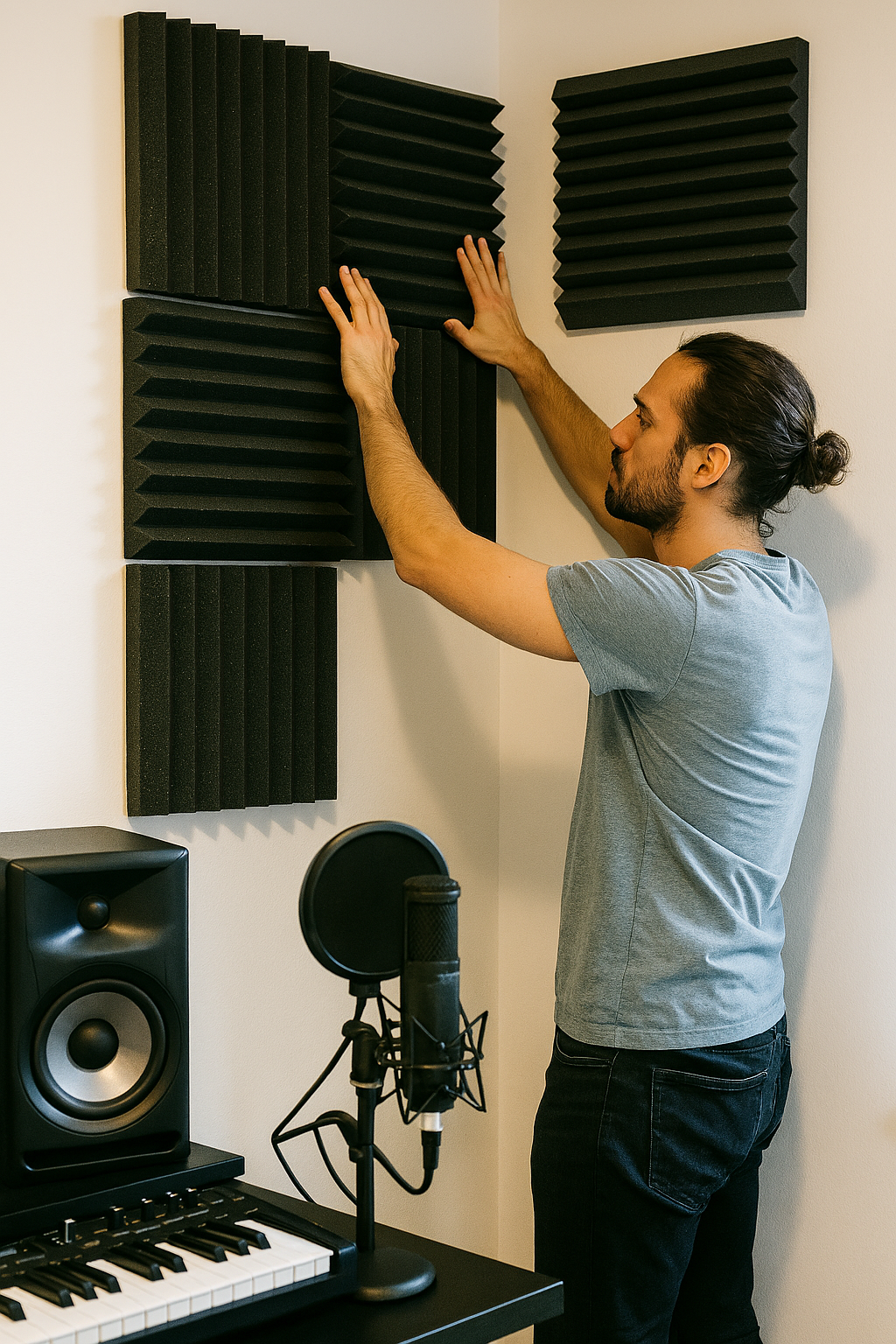
You can own the world's best microphone and still sound like you are recording inside a cereal box. Acoustic treatment is the unglamorous hero of great audio, and it matters far more than most home studio owners realise.
If microphones were cars, acoustic treatment would be the road. You can spend a fortune on a sleek performance machine, but if you are driving it across potholes and gravel, the experience will still be rough. Acoustic treatment is the least exciting purchase in a home studio and easily the most important. Before chasing another mic upgrade, your room deserves your attention.
Acoustic foam panels are not about making your space look like a sci fi movie set. Their job is to control reflections, tame flutter echo, and stop your voice from bouncing around the room like a pinball. Bare walls, hard floors, and low ceilings all gang up on your audio. The result is boxiness, harshness, and that distant hollow sound that screams home recording even when the performance is great.
The uncomfortable truth is that the room always wins. A modest microphone in a treated space will usually outperform a premium mic in an untreated room. That is because microphones are brutally honest. They capture not just your voice, but every reflection, resonance, and slap echo your room throws back at them. Treatment reduces the rooms influence so the mic hears more of you and less of your surroundings.
Foam panels are often the first step because they are affordable and easy to install. They are particularly effective at absorbing mid and high frequencies, which is where speech clarity lives. Placing panels at first reflection points, behind the mic, and behind you can dramatically tighten your sound. The goal is not total silence, but controlled acoustics that do not fight your voice.
Large rooms present their own challenge. While it sounds counterintuitive, a bigger space is not always better for voice work. High ceilings and wide open areas can create long reflections that are difficult to control without extensive treatment. In these cases, building a vocal booth or vocal corner can be a practical solution. This does not mean constructing a permanent padded box worthy of a panic attack. A simple frame, movable panels, thick duvets, or portable isolation shields can create a smaller, more manageable acoustic zone.
A vocal booth helps by reducing the size of the space the mic hears. You are essentially shrinking the room to something more predictable. The key is balance. Over treat the booth and you risk a dull, lifeless sound. Under treat it and the reflections creep back in. Breathability matters too. Comfort affects performance, and a sweaty, cramped booth will always show up in the take.
Room treatment should not stop at the microphone. Your editing and listening position needs attention as well. If your speakers are firing sound into untreated walls, you are making decisions based on lies. Reflections can exaggerate bass, smear detail, or mask problems that will appear later on other systems. Even basic panels behind monitors and at side reflection points can improve accuracy and reduce ear fatigue.
Home studios rarely live in perfect environments. Bedrooms, spare rooms, basements, and dining rooms all come with compromises. You may have a wardrobe you cannot move, a window you cannot cover, or neighbours who think silence is suspicious. Acoustic treatment is about working with these limitations, not fighting them. Strategic placement beats total coverage, and consistency beats perfection.
One of the biggest mistakes is assuming treatment is only for recording. Editing in a poorly treated space leads to over processing. You compensate for problems that only exist in your room. Later, when the audio leaves your studio, it sounds thin, boomy, or harsh. Treating your listening environment helps you trust what you hear and make lighter, more confident decisions.
Acoustic treatment will never be as exciting as unboxing a new microphone. There are no glowing reviews about how fun foam panels are to install. But they quietly elevate everything you do. Performances sound closer, edits translate better, and clients hear professionalism rather than apologies.
In a home studio, perfection is unrealistic. Improvement is not. A few well placed acoustic panels, a sensible vocal booth setup, and attention to your editing space can transform your results. Put your room in its place, and suddenly every microphone you already own gets an upgrade.
If microphones were cars, acoustic treatment would be the road. You can spend a fortune on a sleek performance machine, but if you are driving it across potholes and gravel, the experience will still be rough. Acoustic treatment is the least exciting purchase in a home studio and easily the most important. Before chasing another mic upgrade, your room deserves your attention.
Acoustic foam panels are not about making your space look like a sci fi movie set. Their job is to control reflections, tame flutter echo, and stop your voice from bouncing around the room like a pinball. Bare walls, hard floors, and low ceilings all gang up on your audio. The result is boxiness, harshness, and that distant hollow sound that screams home recording even when the performance is great.
The uncomfortable truth is that the room always wins. A modest microphone in a treated space will usually outperform a premium mic in an untreated room. That is because microphones are brutally honest. They capture not just your voice, but every reflection, resonance, and slap echo your room throws back at them. Treatment reduces the rooms influence so the mic hears more of you and less of your surroundings.
Foam panels are often the first step because they are affordable and easy to install. They are particularly effective at absorbing mid and high frequencies, which is where speech clarity lives. Placing panels at first reflection points, behind the mic, and behind you can dramatically tighten your sound. The goal is not total silence, but controlled acoustics that do not fight your voice.
Large rooms present their own challenge. While it sounds counterintuitive, a bigger space is not always better for voice work. High ceilings and wide open areas can create long reflections that are difficult to control without extensive treatment. In these cases, building a vocal booth or vocal corner can be a practical solution. This does not mean constructing a permanent padded box worthy of a panic attack. A simple frame, movable panels, thick duvets, or portable isolation shields can create a smaller, more manageable acoustic zone.
A vocal booth helps by reducing the size of the space the mic hears. You are essentially shrinking the room to something more predictable. The key is balance. Over treat the booth and you risk a dull, lifeless sound. Under treat it and the reflections creep back in. Breathability matters too. Comfort affects performance, and a sweaty, cramped booth will always show up in the take.
Room treatment should not stop at the microphone. Your editing and listening position needs attention as well. If your speakers are firing sound into untreated walls, you are making decisions based on lies. Reflections can exaggerate bass, smear detail, or mask problems that will appear later on other systems. Even basic panels behind monitors and at side reflection points can improve accuracy and reduce ear fatigue.
Home studios rarely live in perfect environments. Bedrooms, spare rooms, basements, and dining rooms all come with compromises. You may have a wardrobe you cannot move, a window you cannot cover, or neighbours who think silence is suspicious. Acoustic treatment is about working with these limitations, not fighting them. Strategic placement beats total coverage, and consistency beats perfection.
One of the biggest mistakes is assuming treatment is only for recording. Editing in a poorly treated space leads to over processing. You compensate for problems that only exist in your room. Later, when the audio leaves your studio, it sounds thin, boomy, or harsh. Treating your listening environment helps you trust what you hear and make lighter, more confident decisions.
Acoustic treatment will never be as exciting as unboxing a new microphone. There are no glowing reviews about how fun foam panels are to install. But they quietly elevate everything you do. Performances sound closer, edits translate better, and clients hear professionalism rather than apologies.
In a home studio, perfection is unrealistic. Improvement is not. A few well placed acoustic panels, a sensible vocal booth setup, and attention to your editing space can transform your results. Put your room in its place, and suddenly every microphone you already own gets an upgrade.
You may purchase items mentioned in this article here. Affiliate links earn me a commission at no extra cost to you. Thanks for supporting IanGardner.com