Synth and Sensibility
Retro synthesizers like the Juno-106, Prophet-5 and Jupiter-8 have never been more desirable and expensive. So is buying one still a rational decision?
Ian Gardner is a British-American broadcaster, voice artist and audio enthusiast, sharing years of experience building creative workflows from a modern home studio. He helps readers make smarter buying decisions across studio gear, production tools and home comforts for both inside and outside the workspace. Broadcasters, podcasters, voice artists, producers and digital creators will find guidance that supports high production values and efficient workflows for building a successful home studio business. Similar articles can be found in the studio-essentials blog.
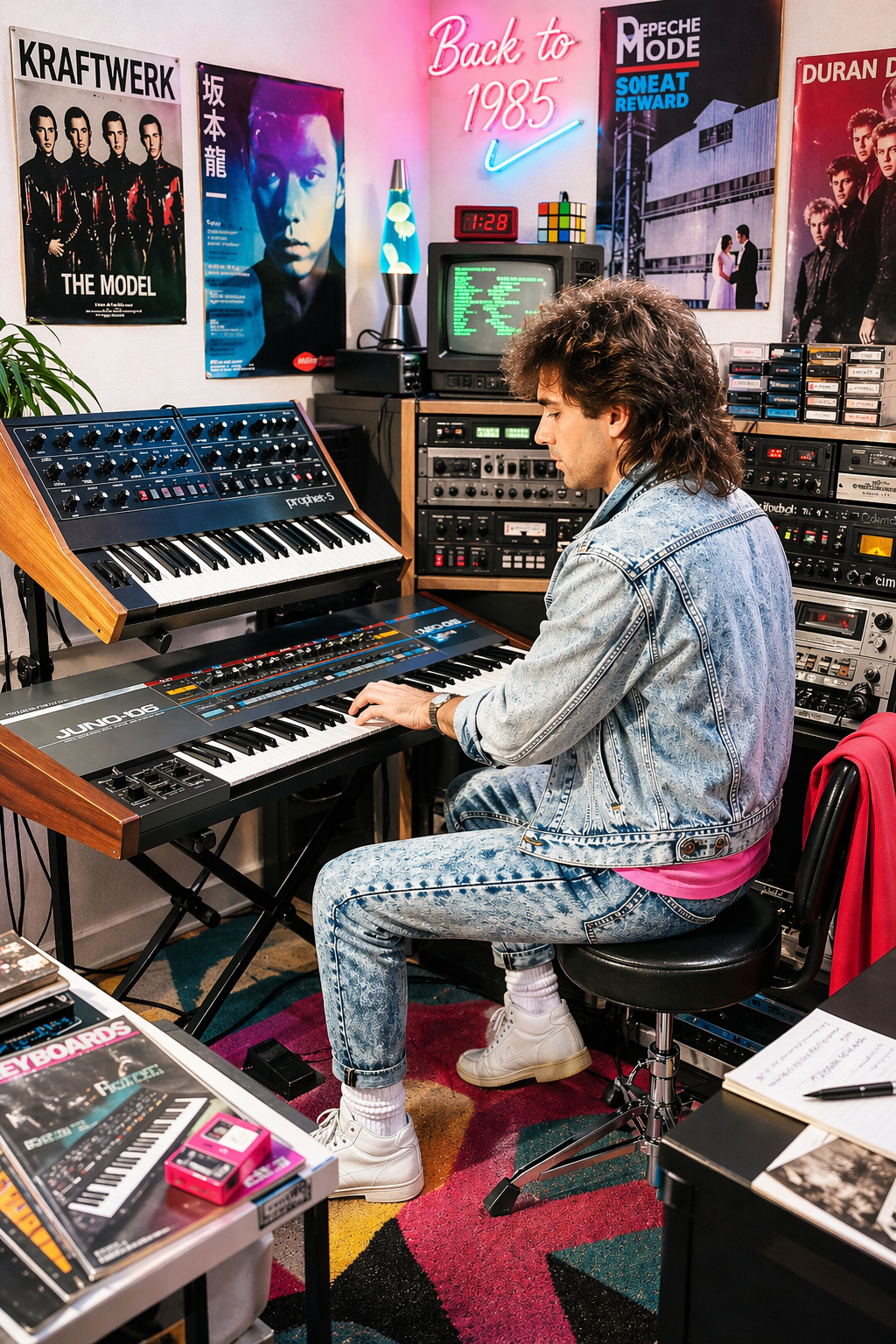
Retro synths have become one of the most unlikely obsessions in modern home studios, sitting somewhere between nostalgic gear worship and full-on sonic archaeology. Walk into any producer's space today and you'll see laptops running pristine virtual instruments that can emulate almost anything, yet there's often a dusty, slightly battered keyboard in the corner that cost more than the entire computer setup. That is the paradox of retro synthesis in 2026 - we have infinite digital recreations of 80s and 90s synths, yet musicians are still paying thousands, sometimes absurd thousands, for the real physical instruments that defined those decades. The appeal is not just sound, although that is a huge part of it, but the tactile unpredictability, the slightly unstable oscillators, and the feeling that the machine itself is contributing something alive to the music. A plugin will give you accuracy, but an old synth gives you character, and character is something no algorithm has fully managed to fake convincingly yet. For home studio producers, especially those working late at night with limited space and infinite ambition, these synths represent both a creative shortcut and a kind of creative dare - can you justify the space, the cost, and the occasional maintenance headache for a sound that is technically available in software form? The answer, increasingly, is yes, because once you sit with one of these machines, you realize you're not just producing music anymore - you're interacting with history. Here are the machines worth knowing about from the surprisingly affordable to the genuinely out-of-reach.
Yamaha DX7 The Yamaha DX7 is arguably the sound of the 80s, whether you realize it or not. Famous for its FM synthesis engine, it produced the iconic electric piano, bell, and bass sounds that defined countless pop records. Specs-wise, it offered 16-note polyphony, 6-operator FM synthesis, and MIDI implementation that was ahead of its time. Artists like Brian Eno, Phil Collins, and even modern producers referencing retro aesthetics have used it heavily. Today, a well-maintained DX7 typically sells for around $300 to $800, although rare variants or pristine units can climb higher. It is heavy, slightly unintuitive, and absolutely essential if you want that glassy, metallic 80s sheen.
Korg M1 The Korg M1 is basically the workstation that changed everything. Released in 1988, it combined sampling and synthesis in a way that made it a studio in a box. Its famous piano, organ, and slap bass sounds are still instantly recognizable. It features AI synthesis, 16-bit PCM samples, and onboard effects that were revolutionary at the time. Artists like Madonna, U2, and Enya used it extensively. On today's market, the M1 usually goes for $400 to $900 depending on condition. It is the sound of early 90s house music, wedding bands, and every stock keyboard preset you forgot you knew.
Roland Jupiter-8 The Roland Jupiter-8 is the definition of analog luxury. Released in the early 80s, it features 8-voice polyphony, dual oscillators per voice, and a lush filter section that has become legendary. This is the synth you hear on countless Prince tracks, as well as in the work of Duran Duran and Jean-Michel Jarre. It is big, heavy, and unapologetically expensive. Current prices often range from $8,000 to $15,000 depending on condition. In a home studio, it is less of a tool and more of a statement - like parking a vintage sports car in a compact driveway.
Sequential Prophet-5 The Prophet-5 is the synth that made polyphonic analog synthesis practical. It introduced patch memory, which alone changed the workflow of countless musicians. It uses analog oscillators and filters with a warm, slightly unstable character that modern recreations still struggle to perfectly capture. Used by artists like Peter Gabriel, Radiohead, and countless film composers, it remains a studio staple. Prices today range from $4,000 to $10,000 depending on revision and condition. It is famously immediate - you turn it on, and it already sounds like a record.
Roland D-50 The Roland D-50 brought digital synthesis into the mainstream in a big way in 1987. Its LA synthesis combined samples with digital oscillators, creating iconic sounds like 'Digital Native Dance' and lush pads that defined late 80s ballads. Specs include 16-voice polyphony and built-in effects that were unusually high quality for the time. Artists like Michael Jackson and Vangelis used it extensively. Today it typically sells for $300 to $700. It is the sound of VHS-era emotional intensity and glossy production.
Roland Juno-106 The Roland Juno-106 is one of the most beloved analog synths ever made, partly because it is relatively affordable and partly because it just sounds incredible. It features a single oscillator per voice but makes up for it with a gorgeous chorus effect. Used by artists like The Cure, Daft Punk, and countless synthwave producers, it is a staple in modern retro-inspired music. Prices usually sit between $1,200 and $2,500 depending on condition. It is the synth equivalent of comfort food - simple, reliable, and always satisfying.
Yamaha CS-80 The Yamaha CS-80 is the mythical beast of synthesizers. Known for its expressive polyphonic aftertouch and massive analog sound, it is famously used by Vangelis in the Blade Runner soundtrack. It features 8-voice polyphony, dual layers, and a ribbon controller that feels almost alien today. It is extremely heavy and notoriously unreliable, which is part of its legend. Prices can exceed $20,000 when one appears in good condition. It is less a keyboard and more a commitment to sonic storytelling.
Fairlight CMI The Fairlight CMI is where sampling really began to feel futuristic. Introduced in the late 70s and popularized in the 80s, it allowed users to sample and manipulate audio in ways that were previously unimaginable. Its light pen interface feels prehistoric and futuristic at the same time. Artists like Kate Bush, Peter Gabriel, and Trevor Horn made extensive use of it. Prices today are often $10,000 to $30,000 if you can even find a working unit. It is the sound of early digital ambition, slightly awkward but wildly influential.
E-MU Emulator II The E-MU Emulator II brought sampling into more accessible studios with a warmer, grittier sound than later digital systems. It featured 8-bit sampling, analog filters, and floppy disk storage that feels charmingly archaic today. Used by Depeche Mode, New Order, and countless film composers, it defined early electronic atmospheres. Prices range from $2,000 to $5,000 depending on condition. It is lo-fi before lo-fi was cool, and it still holds up surprisingly well in modern production.
Minimoog Model D The Minimoog Model D is arguably the most famous monosynth ever made. With three oscillators, a legendary ladder filter, and immediate hands-on control, it became the backbone of basslines and leads across decades of music. Used by artists like Kraftwerk, Stevie Wonder, and Rush, it is still a studio essential. Prices range from $3,000 to $6,000 depending on vintage and condition. It is simple, powerful, and impossible to misuse in a bad way.
Oberheim OB-8 The Oberheim OB-8 represents the peak of lush analog polyphony in the early 80s. It features 8-voice polyphony, dual VCOs per voice, and a famously wide, cinematic sound. Used by artists like Van Halen, Prince, and film composers, it delivers that unmistakable 'wide open' analog tone. Prices typically range from $5,000 to $9,000. It is the synth equivalent of stepping into a widescreen 80s movie scene.
Korg Polysix The Korg Polysix is often overshadowed but deeply loved in retro circles. It features 6-voice polyphony, analog oscillators, and built-in ensemble effects that give it a dreamy, slightly detuned character. Used in early synthpop and ambient work, it remains a hidden gem. Prices are usually $1,200 to $2,000. It is affordable compared to its peers, but sonically it punches well above its weight.
Sequential Prophet-600 The Prophet-600 is the slightly more affordable cousin of the Prophet-5 and one of the first MIDI-equipped analog synths. It features 6-voice polyphony, digital control of analog oscillators, and a slightly raw, unstable character that modern producers often love. Used by early electronic artists exploring MIDI workflows, it sits in the $1,000 to $2,000 range today. It is a reminder that sometimes 'less refined' is exactly what a track needs.
In a modern home studio, these instruments exist in a strange dual reality. On one hand, they are expensive, heavy, and occasionally temperamental relics of a pre-plugin era. On the other hand, they are creative accelerators that force decisions, inspire riffs, and introduce imperfections that software still struggles to replicate convincingly. You can absolutely recreate most of these sounds digitally, and many producers do exactly that every day, but there is a reason the originals continue to circulate, trade hands, and quietly appreciate in value. They are not just instruments, they are time machines with keys. And once you start hearing your music through that lens, it becomes very hard to go back to perfectly sterile presets without wondering what you might be missing.
Yamaha DX7 The Yamaha DX7 is arguably the sound of the 80s, whether you realize it or not. Famous for its FM synthesis engine, it produced the iconic electric piano, bell, and bass sounds that defined countless pop records. Specs-wise, it offered 16-note polyphony, 6-operator FM synthesis, and MIDI implementation that was ahead of its time. Artists like Brian Eno, Phil Collins, and even modern producers referencing retro aesthetics have used it heavily. Today, a well-maintained DX7 typically sells for around $300 to $800, although rare variants or pristine units can climb higher. It is heavy, slightly unintuitive, and absolutely essential if you want that glassy, metallic 80s sheen.
Korg M1 The Korg M1 is basically the workstation that changed everything. Released in 1988, it combined sampling and synthesis in a way that made it a studio in a box. Its famous piano, organ, and slap bass sounds are still instantly recognizable. It features AI synthesis, 16-bit PCM samples, and onboard effects that were revolutionary at the time. Artists like Madonna, U2, and Enya used it extensively. On today's market, the M1 usually goes for $400 to $900 depending on condition. It is the sound of early 90s house music, wedding bands, and every stock keyboard preset you forgot you knew.
Roland Jupiter-8 The Roland Jupiter-8 is the definition of analog luxury. Released in the early 80s, it features 8-voice polyphony, dual oscillators per voice, and a lush filter section that has become legendary. This is the synth you hear on countless Prince tracks, as well as in the work of Duran Duran and Jean-Michel Jarre. It is big, heavy, and unapologetically expensive. Current prices often range from $8,000 to $15,000 depending on condition. In a home studio, it is less of a tool and more of a statement - like parking a vintage sports car in a compact driveway.
Sequential Prophet-5 The Prophet-5 is the synth that made polyphonic analog synthesis practical. It introduced patch memory, which alone changed the workflow of countless musicians. It uses analog oscillators and filters with a warm, slightly unstable character that modern recreations still struggle to perfectly capture. Used by artists like Peter Gabriel, Radiohead, and countless film composers, it remains a studio staple. Prices today range from $4,000 to $10,000 depending on revision and condition. It is famously immediate - you turn it on, and it already sounds like a record.
Roland D-50 The Roland D-50 brought digital synthesis into the mainstream in a big way in 1987. Its LA synthesis combined samples with digital oscillators, creating iconic sounds like 'Digital Native Dance' and lush pads that defined late 80s ballads. Specs include 16-voice polyphony and built-in effects that were unusually high quality for the time. Artists like Michael Jackson and Vangelis used it extensively. Today it typically sells for $300 to $700. It is the sound of VHS-era emotional intensity and glossy production.
Roland Juno-106 The Roland Juno-106 is one of the most beloved analog synths ever made, partly because it is relatively affordable and partly because it just sounds incredible. It features a single oscillator per voice but makes up for it with a gorgeous chorus effect. Used by artists like The Cure, Daft Punk, and countless synthwave producers, it is a staple in modern retro-inspired music. Prices usually sit between $1,200 and $2,500 depending on condition. It is the synth equivalent of comfort food - simple, reliable, and always satisfying.
Yamaha CS-80 The Yamaha CS-80 is the mythical beast of synthesizers. Known for its expressive polyphonic aftertouch and massive analog sound, it is famously used by Vangelis in the Blade Runner soundtrack. It features 8-voice polyphony, dual layers, and a ribbon controller that feels almost alien today. It is extremely heavy and notoriously unreliable, which is part of its legend. Prices can exceed $20,000 when one appears in good condition. It is less a keyboard and more a commitment to sonic storytelling.
Fairlight CMI The Fairlight CMI is where sampling really began to feel futuristic. Introduced in the late 70s and popularized in the 80s, it allowed users to sample and manipulate audio in ways that were previously unimaginable. Its light pen interface feels prehistoric and futuristic at the same time. Artists like Kate Bush, Peter Gabriel, and Trevor Horn made extensive use of it. Prices today are often $10,000 to $30,000 if you can even find a working unit. It is the sound of early digital ambition, slightly awkward but wildly influential.
E-MU Emulator II The E-MU Emulator II brought sampling into more accessible studios with a warmer, grittier sound than later digital systems. It featured 8-bit sampling, analog filters, and floppy disk storage that feels charmingly archaic today. Used by Depeche Mode, New Order, and countless film composers, it defined early electronic atmospheres. Prices range from $2,000 to $5,000 depending on condition. It is lo-fi before lo-fi was cool, and it still holds up surprisingly well in modern production.
Minimoog Model D The Minimoog Model D is arguably the most famous monosynth ever made. With three oscillators, a legendary ladder filter, and immediate hands-on control, it became the backbone of basslines and leads across decades of music. Used by artists like Kraftwerk, Stevie Wonder, and Rush, it is still a studio essential. Prices range from $3,000 to $6,000 depending on vintage and condition. It is simple, powerful, and impossible to misuse in a bad way.
Oberheim OB-8 The Oberheim OB-8 represents the peak of lush analog polyphony in the early 80s. It features 8-voice polyphony, dual VCOs per voice, and a famously wide, cinematic sound. Used by artists like Van Halen, Prince, and film composers, it delivers that unmistakable 'wide open' analog tone. Prices typically range from $5,000 to $9,000. It is the synth equivalent of stepping into a widescreen 80s movie scene.
Korg Polysix The Korg Polysix is often overshadowed but deeply loved in retro circles. It features 6-voice polyphony, analog oscillators, and built-in ensemble effects that give it a dreamy, slightly detuned character. Used in early synthpop and ambient work, it remains a hidden gem. Prices are usually $1,200 to $2,000. It is affordable compared to its peers, but sonically it punches well above its weight.
Sequential Prophet-600 The Prophet-600 is the slightly more affordable cousin of the Prophet-5 and one of the first MIDI-equipped analog synths. It features 6-voice polyphony, digital control of analog oscillators, and a slightly raw, unstable character that modern producers often love. Used by early electronic artists exploring MIDI workflows, it sits in the $1,000 to $2,000 range today. It is a reminder that sometimes 'less refined' is exactly what a track needs.
In a modern home studio, these instruments exist in a strange dual reality. On one hand, they are expensive, heavy, and occasionally temperamental relics of a pre-plugin era. On the other hand, they are creative accelerators that force decisions, inspire riffs, and introduce imperfections that software still struggles to replicate convincingly. You can absolutely recreate most of these sounds digitally, and many producers do exactly that every day, but there is a reason the originals continue to circulate, trade hands, and quietly appreciate in value. They are not just instruments, they are time machines with keys. And once you start hearing your music through that lens, it becomes very hard to go back to perfectly sterile presets without wondering what you might be missing.
You may purchase items mentioned in this article here. Affiliate links earn me a commission at no extra cost to you. Thanks for supporting IanGardner.com