Sound Investment in Sonic Branding
From radio earworms to modern sonic logos, discover how jingles and audio branding help companies build recognition and create memorable customer experiences that drive real business value.
Ian Gardner is a British-American broadcaster, voice artist and audio enthusiast, sharing years of experience building creative workflows from a modern home studio. He helps readers make smarter buying decisions across studio gear, production tools and home comforts for both inside and outside the workspace. Broadcasters, podcasters, voice artists, producers and digital creators will find guidance that supports high production values and efficient workflows for building a successful home studio business. Similar articles can be found in the business blog.
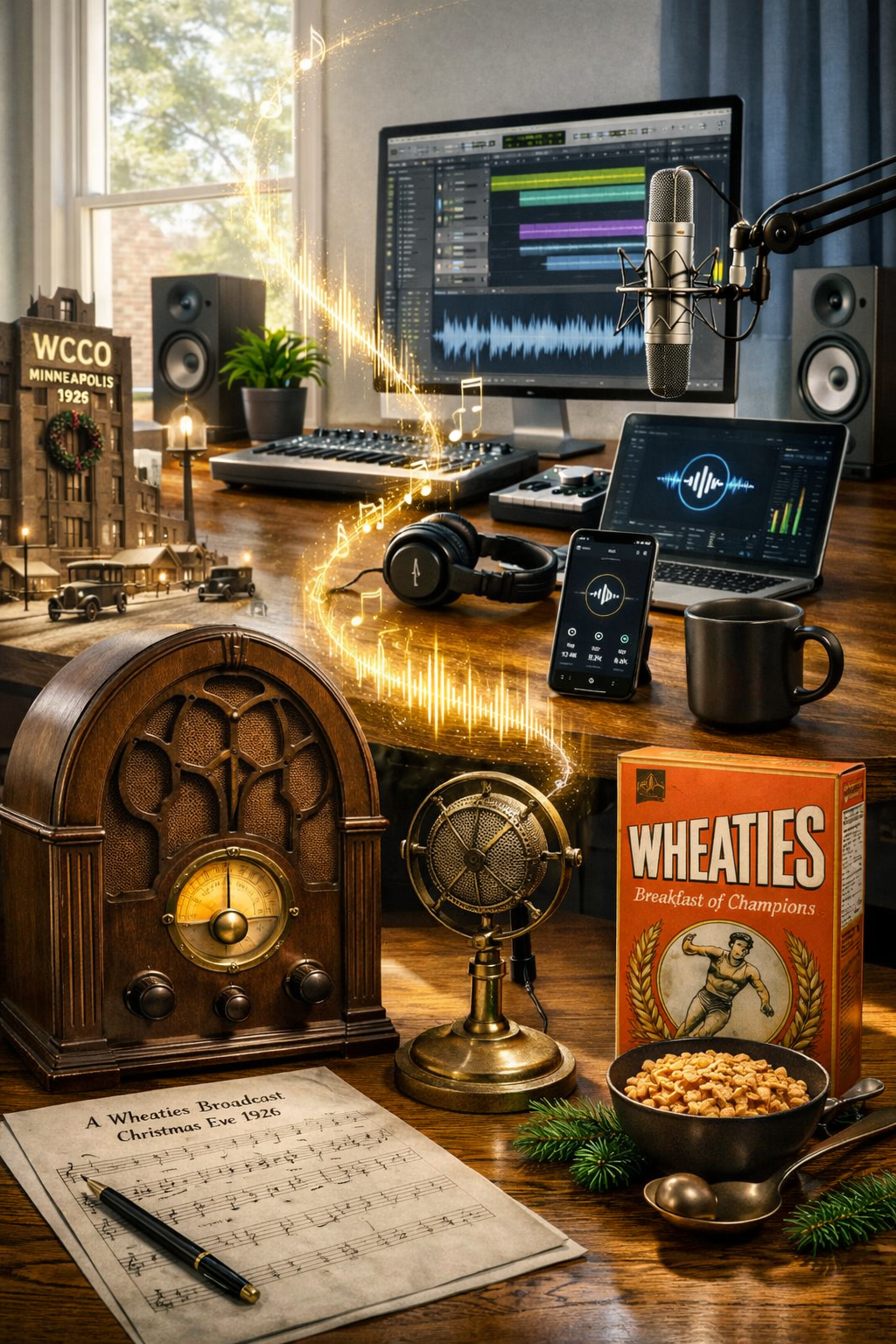
If you have ever spent 45 minutes tweaking a snare drum nobody else will notice while surviving on coffee, congratulations - you are already psychologically prepared for the strange, wonderful world of jingles and sonic branding. Long before TikTok hooks, YouTube intros, and streaming startup sounds, brands discovered something powerful. People forget slogans. People ignore ads. But give somebody a catchy tune and suddenly they are singing about breakfast cereal, hamburgers, or insurance while unloading groceries. Music has a suspicious talent for sneaking past our defenses. One of the greatest examples has roots right here in my home city of Minneapolis. On Christmas Eve in 1926, WCCO Radio aired what is widely recognized as the world's first radio commercial jingle. It was for Wheaties. The cereal was not selling particularly well, and somebody had the bright idea of letting a barbershop quartet sing about breakfast. Against all reasonable expectations, it worked. The catchy little tune helped save the brand, and a marketing tradition was born.
From there, radio jingles exploded. Suddenly, products needed melodies. Brands wanted earworms. Advertising executives discovered that if you repeat a simple musical phrase often enough, it can survive in the human brain longer than passwords, anniversaries, and where you left your car keys.
Some commercial jingles became cultural landmarks. "I'd Like to Buy the World a Coke." "Nationwide is on your side." McDonald's "I'm Lovin' It." These weren't just ads. They became part of the background soundtrack of everyday life. They crossed generations. Parents remembered them. Kids inherited them. Somewhere, somebody is still humming a commercial from the 1980s without realizing it.
Why do catchy jingles last so long? Partly because music taps into memory in a way plain speech rarely does. Melody, rhythm, repetition, emotional association - it is basically cognitive Velcro. Your brain files songs differently. A five second musical phrase can become attached to a brand identity for decades. That is an astonishing return on investment for a few carefully chosen notes. This Patty Shack Restaurant jingle and this Legal Company jingle both from Personata Studios are playful examples of how even a few seconds of music can stick surprisingly quickly.
Then television arrived and jingles got bigger, shinier, and far more visual. Radio had imagination. TV had production budgets, smiling actors, choreographed families, and aggressively enthusiastic closeups of food. Suddenly brands could combine music, visuals, storytelling, and repetition into one highly efficient machine for occupying your subconscious.
Television gave us some unforgettable moments. The NBC chimes became one of the most recognizable audio signatures in broadcasting history. Here in Minnesota, some of those famous chimes can even be played at the local Pavek Museum, something I mention in my guide to TV museums in the USA. The MGM lion's roar became synonymous with movie magic. Entire generations can identify a brand from a couple of notes before a logo even appears. Eventually, branding evolved beyond full jingles into something slightly more compact but no less powerful - sonic branding, sonic logos, and audio idents.
You know these sounds instantly. Intel's iconic five note audio logo. Netflix's dramatic "ta-dum." The THX Deep Note rattling theater seats and occasionally alarming household pets. Dolby's polished cinematic identity. Microsoft's startup sounds welcoming users into another day of software updates and browser tabs. Apple's startup tones. The T-Mobile mnemonic. PlayStation boot sounds that instantly transport gamers back to particular consoles, bedrooms, and eras of life. Most of these examples are incredibly short. Some last only a couple of seconds. Yet they carry enormous brand recognition. That is the magic trick. A sonic ident does not need a full chorus and key change. Sometimes it just needs the right emotional fingerprint.
From a home studio perspective, this is fascinating territory. We are no longer talking about million dollar Madison Avenue productions requiring forty session players and a rented orchestra hall. A modern producer with a DAW, decent monitors, a microphone, some creativity, and perhaps slightly too many plugin subscriptions can create compelling branded audio from a spare bedroom studio. And there is a growing opportunity here. Brands need more audio than ever. Podcasts. Video intros. Social media reels. App sounds. Product launches. Corporate presentations. In store environments. On hold systems that sound like they belong in this century. Audio branding is no longer limited to giant corporations with giant budgets.
Personalized songs are becoming an increasingly interesting niche for home studio creators. Custom music, branded music, personalized experiences - they all tap into the same fundamental idea. People respond when audio feels specific, memorable, and made for them. Through my collaboration with Personata Studios, I work on exactly these kinds of projects. That can include jingles and sonic branding, but also broader audio solutions for businesses and organizations looking to define how they sound.
Corporate & Event Audio can help shape the mood of presentations, launches, conferences, and branded experiences. On-Hold & In-Store Audio can turn dead air and forgettable background music into something that actually reinforces a brand identity. Social Media Audio can give short form content a recognizable sonic signature in a world where attention spans are measured in milliseconds. And yes, sometimes that still means chasing the perfect hook from a home studio while staring at a waveform and wondering whether the hi-hat should be 0.7 dB quieter.
A century after a Minneapolis barbershop quartet sang about Wheaties on WCCO Radio, the basic principle has not changed very much. Give people a memorable sound and they remember you. Whether it is a classic radio jingle, a TV commercial earworm, a cinematic audio logo, or a modern social media ident, good branding does not just look distinctive. It sounds distinctive too. In a world overflowing with noise, the right few notes can still make all the difference.
From there, radio jingles exploded. Suddenly, products needed melodies. Brands wanted earworms. Advertising executives discovered that if you repeat a simple musical phrase often enough, it can survive in the human brain longer than passwords, anniversaries, and where you left your car keys.
Some commercial jingles became cultural landmarks. "I'd Like to Buy the World a Coke." "Nationwide is on your side." McDonald's "I'm Lovin' It." These weren't just ads. They became part of the background soundtrack of everyday life. They crossed generations. Parents remembered them. Kids inherited them. Somewhere, somebody is still humming a commercial from the 1980s without realizing it.
Why do catchy jingles last so long? Partly because music taps into memory in a way plain speech rarely does. Melody, rhythm, repetition, emotional association - it is basically cognitive Velcro. Your brain files songs differently. A five second musical phrase can become attached to a brand identity for decades. That is an astonishing return on investment for a few carefully chosen notes. This Patty Shack Restaurant jingle and this Legal Company jingle both from Personata Studios are playful examples of how even a few seconds of music can stick surprisingly quickly.
Then television arrived and jingles got bigger, shinier, and far more visual. Radio had imagination. TV had production budgets, smiling actors, choreographed families, and aggressively enthusiastic closeups of food. Suddenly brands could combine music, visuals, storytelling, and repetition into one highly efficient machine for occupying your subconscious.
Television gave us some unforgettable moments. The NBC chimes became one of the most recognizable audio signatures in broadcasting history. Here in Minnesota, some of those famous chimes can even be played at the local Pavek Museum, something I mention in my guide to TV museums in the USA. The MGM lion's roar became synonymous with movie magic. Entire generations can identify a brand from a couple of notes before a logo even appears. Eventually, branding evolved beyond full jingles into something slightly more compact but no less powerful - sonic branding, sonic logos, and audio idents.
You know these sounds instantly. Intel's iconic five note audio logo. Netflix's dramatic "ta-dum." The THX Deep Note rattling theater seats and occasionally alarming household pets. Dolby's polished cinematic identity. Microsoft's startup sounds welcoming users into another day of software updates and browser tabs. Apple's startup tones. The T-Mobile mnemonic. PlayStation boot sounds that instantly transport gamers back to particular consoles, bedrooms, and eras of life. Most of these examples are incredibly short. Some last only a couple of seconds. Yet they carry enormous brand recognition. That is the magic trick. A sonic ident does not need a full chorus and key change. Sometimes it just needs the right emotional fingerprint.
From a home studio perspective, this is fascinating territory. We are no longer talking about million dollar Madison Avenue productions requiring forty session players and a rented orchestra hall. A modern producer with a DAW, decent monitors, a microphone, some creativity, and perhaps slightly too many plugin subscriptions can create compelling branded audio from a spare bedroom studio. And there is a growing opportunity here. Brands need more audio than ever. Podcasts. Video intros. Social media reels. App sounds. Product launches. Corporate presentations. In store environments. On hold systems that sound like they belong in this century. Audio branding is no longer limited to giant corporations with giant budgets.
Personalized songs are becoming an increasingly interesting niche for home studio creators. Custom music, branded music, personalized experiences - they all tap into the same fundamental idea. People respond when audio feels specific, memorable, and made for them. Through my collaboration with Personata Studios, I work on exactly these kinds of projects. That can include jingles and sonic branding, but also broader audio solutions for businesses and organizations looking to define how they sound.
Corporate & Event Audio can help shape the mood of presentations, launches, conferences, and branded experiences. On-Hold & In-Store Audio can turn dead air and forgettable background music into something that actually reinforces a brand identity. Social Media Audio can give short form content a recognizable sonic signature in a world where attention spans are measured in milliseconds. And yes, sometimes that still means chasing the perfect hook from a home studio while staring at a waveform and wondering whether the hi-hat should be 0.7 dB quieter.
A century after a Minneapolis barbershop quartet sang about Wheaties on WCCO Radio, the basic principle has not changed very much. Give people a memorable sound and they remember you. Whether it is a classic radio jingle, a TV commercial earworm, a cinematic audio logo, or a modern social media ident, good branding does not just look distinctive. It sounds distinctive too. In a world overflowing with noise, the right few notes can still make all the difference.
You may purchase items mentioned in this article here. Affiliate links earn me a commission at no extra cost to you. Thanks for supporting IanGardner.com