Neumann TLM 103 Review
A transformerless design, ultra-low noise floor and a price tag that makes you think twice. Is the TLM 103 the right upgrade for your studio?
Ian Gardner is a British-American broadcaster, voice artist and audio enthusiast, sharing years of experience building creative workflows from a modern home studio. He helps readers make smarter buying decisions across studio gear, production tools and home comforts for both inside and outside the workspace. Broadcasters, podcasters, voice artists, producers and digital creators will find guidance that supports high production values and efficient workflows for building a successful home studio business. Similar articles can be found in the microphones blog.
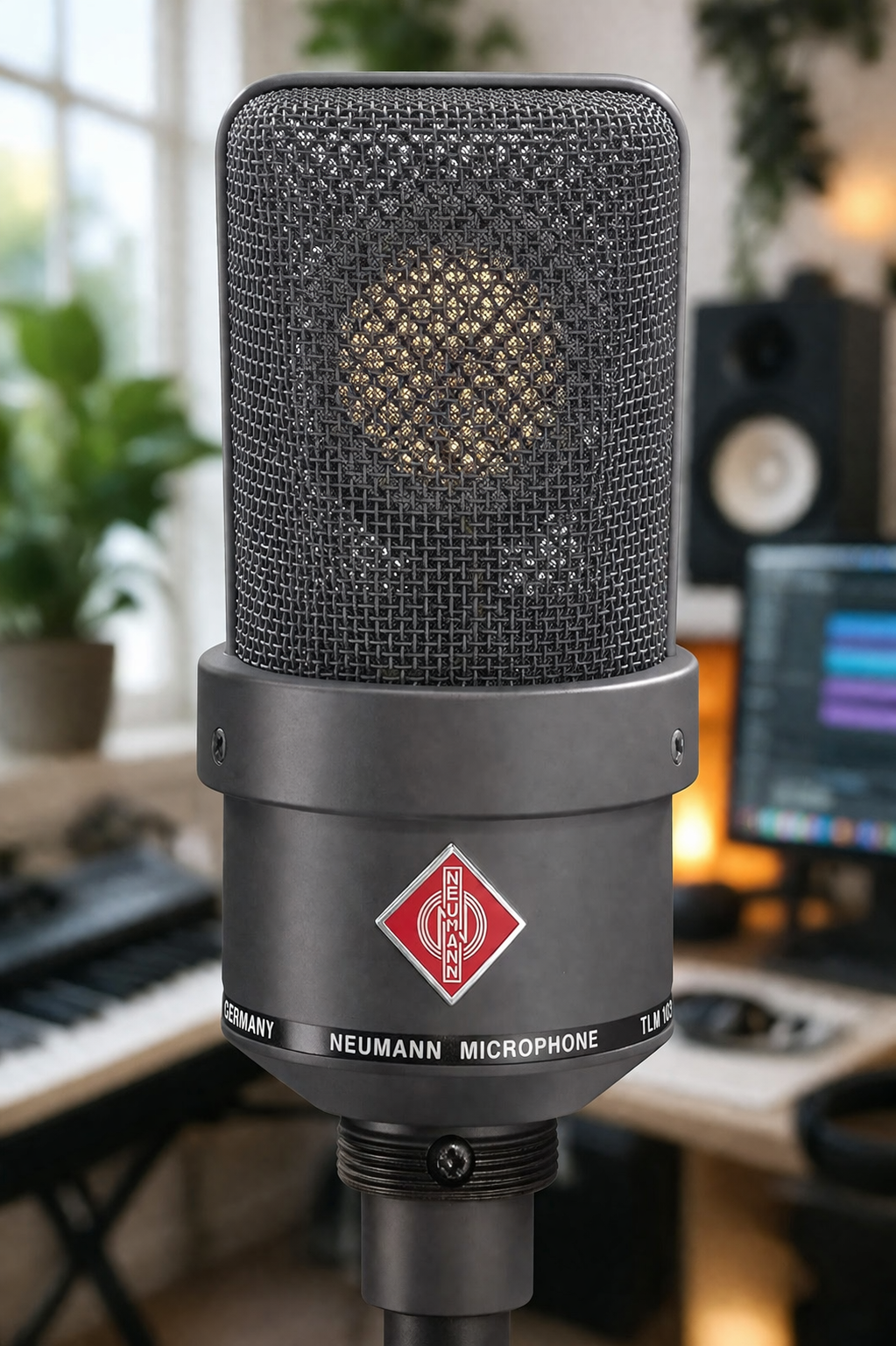
If you've spent any time around home studio forums, voiceover groups, or late night YouTube rabbit holes, you've probably seen the Neumann TLM 103 pop up again and again. It's one of those microphones that carries a kind of quiet authority - not flashy, not trendy, just consistently excellent. And if you're building a home studio where your voice or instruments need to sound polished without endless tweaking, it's easy to see why this mic has become such a go-to.
Let's rewind a bit. The TLM 103 was introduced by Neumann in the late 1990s as a more accessible alternative to their flagship models. Neumann, of course, has been shaping the sound of recorded audio since the early 20th century, with microphones that have captured everything from orchestras to iconic vocal performances. The idea behind the TLM 103 was simple - take the sonic DNA of legendary mics like the Neumann U87, streamline the design, and make it more attainable for smaller studios and independent creators.
The 'TLM' in the name stands for 'transformerless microphone,' which is more than just a technical footnote. Traditional condenser mics often use output transformers that can add subtle coloration. By removing that transformer, the TLM 103 delivers an ultra-clean signal with very low self-noise. In fact, its self-noise is famously low - around 7 dB-A - which means when you're recording quiet voiceovers or intimate vocals, you're capturing detail, not hiss. In a home studio environment where isolation isn't always perfect, that matters more than you might think.
In terms of specs, the TLM 103 is a large diaphragm condenser microphone with a cardioid polar pattern. That cardioid pickup is ideal for home setups because it focuses on what's directly in front of the mic while rejecting a good amount of room noise from the sides and rear. It also boasts a wide frequency response from 20 Hz to 20 kHz, with a noticeable presence boost in the upper mids. That boost is part of what gives recordings that 'finished' sound right out of the box - vocals tend to sit nicely in a mix without needing much EQ.
But specs only tell part of the story. The real reason people fall in love with the TLM 103 is how it sounds in practice. For voice artists, it delivers a crisp, articulate top end without sounding brittle. There's a sense of clarity that makes spoken word feel immediate and professional, even in a spare bedroom studio. For singers, it can add a bit of polish and presence that helps vocals cut through dense arrangements. And if you're recording acoustic instruments, it captures detail in a way that feels honest rather than hyped.
That said, it's not a one-size-fits-all miracle mic. The same presence boost that makes voices pop can sometimes be a bit unforgiving, especially on sibilant voices or harsh sources. If your room is lively or untreated, the clarity of the TLM 103 might actually highlight those imperfections rather than hide them. It's a bit like switching from soft lighting to full daylight - everything is more visible, for better or worse.
Then there's the price. The TLM 103 sits firmly in the 'serious investment' category for a home studio. It's not entry-level, and it's not pretending to be. You're paying for Neumann's engineering, consistency, and reputation. For many users, it's a 'buy once, cry once' piece of gear that they end up using for years. But if you're just starting out, it can feel like a big leap compared to more budget-friendly options.
Another small but slightly annoying detail - it doesn't come with a shockmount. At this price point, that feels like something that should be included. You'll likely need to factor in the cost of Neumann's elastic suspension mount or a compatible alternative to get the best performance and reduce vibrations from your desk or stand.
Despite those drawbacks, the TLM 103 continues to earn its place in home studios around the world. It hits a sweet spot between high-end studio pedigree and practical usability. It doesn't try to be overly characterful or vintage - it just delivers clean, professional audio that works across a wide range of applications.
If you're curious how it compares to Neumann's more premium offerings, you can dive deeper into the Neumann U87, which takes things even further in terms of flexibility and heritage. And if you want to better understand what's actually happening inside a mic like this, it's worth brushing up on the fundamentals in How Microphones Work. It'll give you a whole new appreciation for what the TLM 103 is doing so effortlessly.
At the end of the day, the Neumann TLM 103 isn't about hype. It's about reliability, clarity, and that subtle sense that your recordings just sound 'finished' without a fight. In a home studio world full of compromises, that's a pretty compelling reason to keep seeing it everywhere.
Let's rewind a bit. The TLM 103 was introduced by Neumann in the late 1990s as a more accessible alternative to their flagship models. Neumann, of course, has been shaping the sound of recorded audio since the early 20th century, with microphones that have captured everything from orchestras to iconic vocal performances. The idea behind the TLM 103 was simple - take the sonic DNA of legendary mics like the Neumann U87, streamline the design, and make it more attainable for smaller studios and independent creators.
The 'TLM' in the name stands for 'transformerless microphone,' which is more than just a technical footnote. Traditional condenser mics often use output transformers that can add subtle coloration. By removing that transformer, the TLM 103 delivers an ultra-clean signal with very low self-noise. In fact, its self-noise is famously low - around 7 dB-A - which means when you're recording quiet voiceovers or intimate vocals, you're capturing detail, not hiss. In a home studio environment where isolation isn't always perfect, that matters more than you might think.
In terms of specs, the TLM 103 is a large diaphragm condenser microphone with a cardioid polar pattern. That cardioid pickup is ideal for home setups because it focuses on what's directly in front of the mic while rejecting a good amount of room noise from the sides and rear. It also boasts a wide frequency response from 20 Hz to 20 kHz, with a noticeable presence boost in the upper mids. That boost is part of what gives recordings that 'finished' sound right out of the box - vocals tend to sit nicely in a mix without needing much EQ.
But specs only tell part of the story. The real reason people fall in love with the TLM 103 is how it sounds in practice. For voice artists, it delivers a crisp, articulate top end without sounding brittle. There's a sense of clarity that makes spoken word feel immediate and professional, even in a spare bedroom studio. For singers, it can add a bit of polish and presence that helps vocals cut through dense arrangements. And if you're recording acoustic instruments, it captures detail in a way that feels honest rather than hyped.
That said, it's not a one-size-fits-all miracle mic. The same presence boost that makes voices pop can sometimes be a bit unforgiving, especially on sibilant voices or harsh sources. If your room is lively or untreated, the clarity of the TLM 103 might actually highlight those imperfections rather than hide them. It's a bit like switching from soft lighting to full daylight - everything is more visible, for better or worse.
Then there's the price. The TLM 103 sits firmly in the 'serious investment' category for a home studio. It's not entry-level, and it's not pretending to be. You're paying for Neumann's engineering, consistency, and reputation. For many users, it's a 'buy once, cry once' piece of gear that they end up using for years. But if you're just starting out, it can feel like a big leap compared to more budget-friendly options.
Another small but slightly annoying detail - it doesn't come with a shockmount. At this price point, that feels like something that should be included. You'll likely need to factor in the cost of Neumann's elastic suspension mount or a compatible alternative to get the best performance and reduce vibrations from your desk or stand.
Despite those drawbacks, the TLM 103 continues to earn its place in home studios around the world. It hits a sweet spot between high-end studio pedigree and practical usability. It doesn't try to be overly characterful or vintage - it just delivers clean, professional audio that works across a wide range of applications.
If you're curious how it compares to Neumann's more premium offerings, you can dive deeper into the Neumann U87, which takes things even further in terms of flexibility and heritage. And if you want to better understand what's actually happening inside a mic like this, it's worth brushing up on the fundamentals in How Microphones Work. It'll give you a whole new appreciation for what the TLM 103 is doing so effortlessly.
At the end of the day, the Neumann TLM 103 isn't about hype. It's about reliability, clarity, and that subtle sense that your recordings just sound 'finished' without a fight. In a home studio world full of compromises, that's a pretty compelling reason to keep seeing it everywhere.
You may purchase items mentioned in this article here. Affiliate links earn me a commission at no extra cost to you. Thanks for supporting IanGardner.com