Laptop vs Desktop for Music Production
Touring musicians swear by laptops. Home producers swear at CPU spikes. Somewhere in between is the setup that actually works.
Ian Gardner is a British-American broadcaster, voice artist and audio enthusiast, sharing years of experience building creative workflows from a modern home studio. He helps readers make smarter buying decisions across studio gear, production tools and home comforts for both inside and outside the workspace. Broadcasters, podcasters, voice artists, producers and digital creators will find guidance that supports high production values and efficient workflows for building a successful home studio business. Similar articles can be found in the computers blog.
Picture this: you are in your home studio, surrounded by cables, a half-drunk coffee, and a project file called 'FINAL_v7_THISONE.wav' that you absolutely know is not the final version. Your DAW is open, CPU meter is flirting dangerously with red, and you are wondering if the problem is your mix or the machine itself. This is where the eternal debate begins: laptop vs desktop for music production. It is a topic we have already hinted at in discussions about workflow, reliability, and creative flexibility, but here we are digging into it properly, with a bit more realism and a bit less marketing nonsense.
At its core, this is not really a question about computers. It is a question about lifestyle. Are you someone who records ideas on the move, maybe backstage before a gig, in hotel rooms, or on tour buses that smell faintly of regret and espresso? Or are you someone who sits in a dedicated space, monitors perfectly positioned, acoustic foam slightly uneven but proudly installed, building tracks layer by layer like a slightly sleep-deprived architect of sound? The answer to that question already points you in the right direction more than any spec sheet ever will.
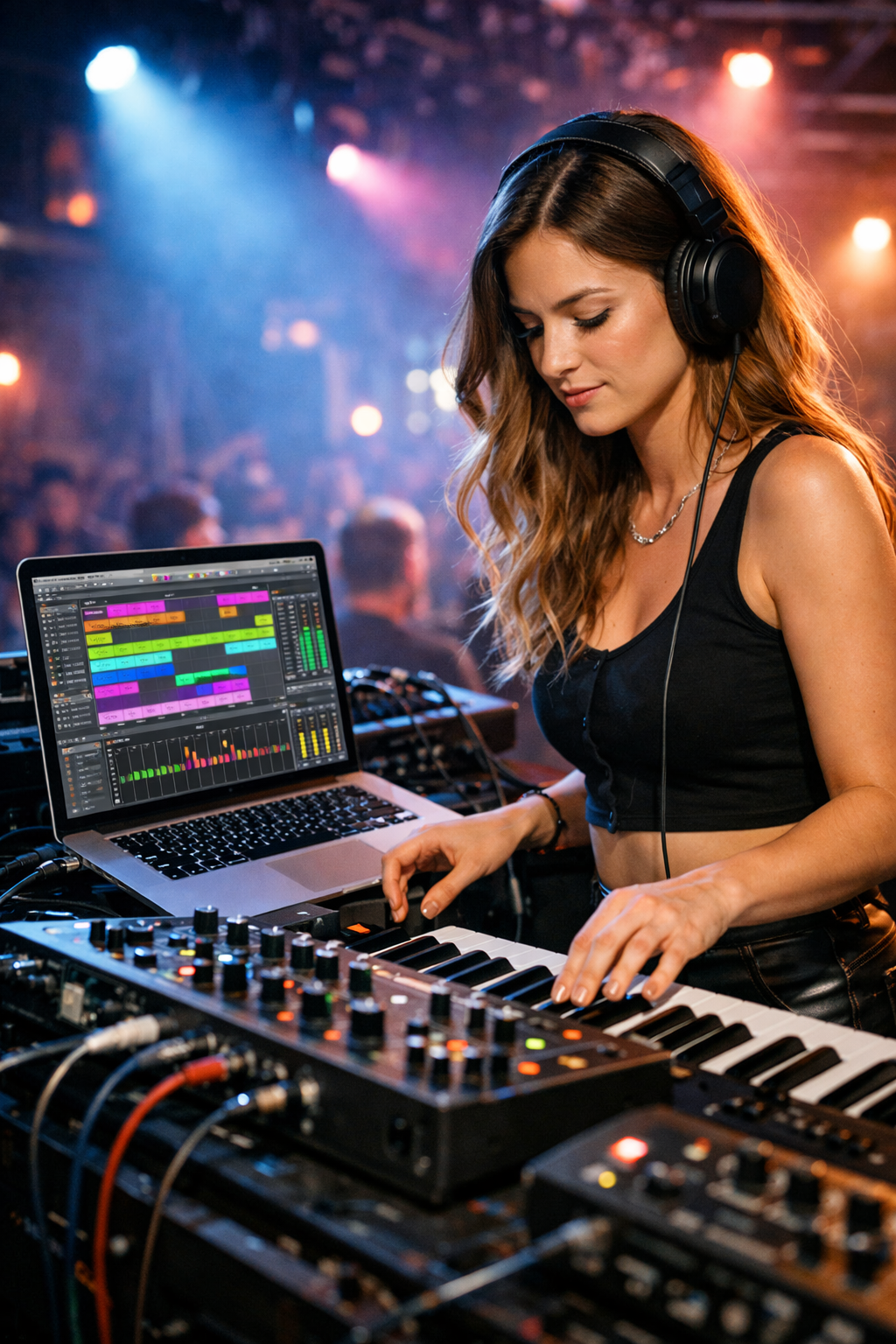
Laptops have become the modern musician's sketchbook. They are portable, convenient, and increasingly powerful. If you are on tour or running a live set, a laptop is not just useful - it is essential. Nobody is dragging a full desktop tower into a festival green room unless they are making a very specific statement about their life choices. With a laptop, you can open your DAW anywhere, capture ideas quickly, and even run full live performance rigs if you have your setup dialed in. In many modern setups, the laptop is also quietly acting as the brain of the operation, sending MIDI data to synths, triggering sequences, and keeping everything in sync without anyone in the audience ever thinking about it. That invisible control layer is often overlooked, but it is exactly where understanding why MIDI matters becomes part of the bigger picture. As we touched on earlier in this discussion, mobility is not just a luxury for some musicians, it is the entire workflow.
But laptops come with a quiet truth that reveals itself after the excitement wears off. They are brilliant until they are not. Push them too hard with heavy plugin chains, virtual instruments, and large sessions, and you will meet the infamous thermal throttling phase. That is the moment your machine stops being a creative partner and starts sounding like it is preparing for takeoff. Fans spin up, CPU performance dips, and suddenly your lush reverb tail feels like it is being processed inside a hairdryer.
Desktops, on the other hand, are the studio workhorses that quietly judge your bad mix decisions without ever breaking a sweat. In a home studio environment, they make a lot of sense. You get sustained performance, better cooling, and the ability to upgrade components over time instead of replacing the entire system every few years. This is where desktops shine in a way laptops still struggle to match. They are not trying to be everything at once. They are trying to be one thing very well: stable, consistent performance under pressure.
From a pure production standpoint, desktops tend to win when sessions get serious. Large track counts, multiple synths, heavy mastering chains, sample libraries that feel like they require their own postcode - this is where desktops stay calm while laptops start negotiating terms. It is not that laptops cannot handle it, but they often do so with more compromise, like someone carrying all their shopping bags in one trip just to prove a point.
Then there is the matter of audio interfaces, latency, and the general chaos of real-world recording setups. Both laptops and desktops rely heavily on external gear, but desktops often provide a more stable environment simply because they are not juggling power-saving modes, battery management, and portability features in the background. When you are tracking vocals or instruments, stability matters more than anything else. A single drop-out in the middle of a perfect take is enough to make even the calmest producer briefly question their life choices.
Cost also plays an interesting role in this debate. Laptops tend to cost more for equivalent performance because you are paying for portability and integration. Desktops usually give you more power per dollar, plus the ability to upgrade piece by piece. That upgrade path is often overlooked. A desktop can evolve with your production needs, while a laptop tends to age in a more binary way - it is either fine or suddenly not fine anymore, with very little warning in between.
Of course, many modern producers end up in a hybrid situation, which is probably the most honest answer to the whole debate. A laptop for sketching ideas, capturing inspiration, or working on the move. A desktop in the home studio for final production, mixing, and mastering. In practice, this is also where MIDI workflows quietly bridge the gap between environments. You might start a sketch on a laptop, trigger a few synth lines via MIDI, refine patterns on the road, and later rebuild or expand the same session on a desktop with more processing headroom. This setup reflects how music is actually made today - not in a single controlled environment, but across multiple spaces, moods, and moments of inspiration that do not respect office hours.
There is also something psychological about the difference. A laptop feels temporary, like you could close it and walk away at any moment, which is great for creativity but not always great for discipline. A desktop setup feels like a commitment. You sit down in front of it and your brain knows this is where work happens. Even if you are still just tweaking a hi-hat pattern for 45 minutes, at least it feels official.
We have already explored how different workflows shape gear choices, and this is where it all comes together. Touring musicians, live performers, and travelling producers will almost always lean toward laptops because mobility is not optional for them. But for the home studio producer, especially someone building tracks over time, refining mixes, and layering productions in a dedicated space, the desktop remains the more reliable foundation.
So which one wins? The slightly annoying but honest answer is: neither. The better question is which compromises you are willing to live with. If you need freedom, portability, and flexibility, the laptop is your friend. If you want stability, power, and a system that quietly gets out of your way while you work, the desktop is hard to beat. And if you are like most producers, you will eventually end up with both, wondering how you ever convinced yourself one machine could do everything in the first place.
At its core, this is not really a question about computers. It is a question about lifestyle. Are you someone who records ideas on the move, maybe backstage before a gig, in hotel rooms, or on tour buses that smell faintly of regret and espresso? Or are you someone who sits in a dedicated space, monitors perfectly positioned, acoustic foam slightly uneven but proudly installed, building tracks layer by layer like a slightly sleep-deprived architect of sound? The answer to that question already points you in the right direction more than any spec sheet ever will.
Laptops have become the modern musician's sketchbook. They are portable, convenient, and increasingly powerful. If you are on tour or running a live set, a laptop is not just useful - it is essential. Nobody is dragging a full desktop tower into a festival green room unless they are making a very specific statement about their life choices. With a laptop, you can open your DAW anywhere, capture ideas quickly, and even run full live performance rigs if you have your setup dialed in. In many modern setups, the laptop is also quietly acting as the brain of the operation, sending MIDI data to synths, triggering sequences, and keeping everything in sync without anyone in the audience ever thinking about it. That invisible control layer is often overlooked, but it is exactly where understanding why MIDI matters becomes part of the bigger picture. As we touched on earlier in this discussion, mobility is not just a luxury for some musicians, it is the entire workflow.
But laptops come with a quiet truth that reveals itself after the excitement wears off. They are brilliant until they are not. Push them too hard with heavy plugin chains, virtual instruments, and large sessions, and you will meet the infamous thermal throttling phase. That is the moment your machine stops being a creative partner and starts sounding like it is preparing for takeoff. Fans spin up, CPU performance dips, and suddenly your lush reverb tail feels like it is being processed inside a hairdryer.
Desktops, on the other hand, are the studio workhorses that quietly judge your bad mix decisions without ever breaking a sweat. In a home studio environment, they make a lot of sense. You get sustained performance, better cooling, and the ability to upgrade components over time instead of replacing the entire system every few years. This is where desktops shine in a way laptops still struggle to match. They are not trying to be everything at once. They are trying to be one thing very well: stable, consistent performance under pressure.
From a pure production standpoint, desktops tend to win when sessions get serious. Large track counts, multiple synths, heavy mastering chains, sample libraries that feel like they require their own postcode - this is where desktops stay calm while laptops start negotiating terms. It is not that laptops cannot handle it, but they often do so with more compromise, like someone carrying all their shopping bags in one trip just to prove a point.
Then there is the matter of audio interfaces, latency, and the general chaos of real-world recording setups. Both laptops and desktops rely heavily on external gear, but desktops often provide a more stable environment simply because they are not juggling power-saving modes, battery management, and portability features in the background. When you are tracking vocals or instruments, stability matters more than anything else. A single drop-out in the middle of a perfect take is enough to make even the calmest producer briefly question their life choices.
Cost also plays an interesting role in this debate. Laptops tend to cost more for equivalent performance because you are paying for portability and integration. Desktops usually give you more power per dollar, plus the ability to upgrade piece by piece. That upgrade path is often overlooked. A desktop can evolve with your production needs, while a laptop tends to age in a more binary way - it is either fine or suddenly not fine anymore, with very little warning in between.
Of course, many modern producers end up in a hybrid situation, which is probably the most honest answer to the whole debate. A laptop for sketching ideas, capturing inspiration, or working on the move. A desktop in the home studio for final production, mixing, and mastering. In practice, this is also where MIDI workflows quietly bridge the gap between environments. You might start a sketch on a laptop, trigger a few synth lines via MIDI, refine patterns on the road, and later rebuild or expand the same session on a desktop with more processing headroom. This setup reflects how music is actually made today - not in a single controlled environment, but across multiple spaces, moods, and moments of inspiration that do not respect office hours.
There is also something psychological about the difference. A laptop feels temporary, like you could close it and walk away at any moment, which is great for creativity but not always great for discipline. A desktop setup feels like a commitment. You sit down in front of it and your brain knows this is where work happens. Even if you are still just tweaking a hi-hat pattern for 45 minutes, at least it feels official.
We have already explored how different workflows shape gear choices, and this is where it all comes together. Touring musicians, live performers, and travelling producers will almost always lean toward laptops because mobility is not optional for them. But for the home studio producer, especially someone building tracks over time, refining mixes, and layering productions in a dedicated space, the desktop remains the more reliable foundation.
So which one wins? The slightly annoying but honest answer is: neither. The better question is which compromises you are willing to live with. If you need freedom, portability, and flexibility, the laptop is your friend. If you want stability, power, and a system that quietly gets out of your way while you work, the desktop is hard to beat. And if you are like most producers, you will eventually end up with both, wondering how you ever convinced yourself one machine could do everything in the first place.
You may purchase items mentioned in this article here. Affiliate links earn me a commission at no extra cost to you. Thanks for supporting IanGardner.com