Great British Ads
Explore 25 UK commercials that proved a memorable tune, a catchphrase, or laugh-out-loud comedy could capture the hearts and minds of an entire nation.
Ian Gardner is a British-American broadcaster, voice artist and audio enthusiast, sharing years of experience building creative workflows from a modern home studio. He helps readers make smarter buying decisions across studio gear, production tools and home comforts for both inside and outside the workspace. Broadcasters, podcasters, voice artists, producers and digital creators will find guidance that supports high production values and efficient workflows for building a successful home studio business. Similar articles can be found in the televisions blog.
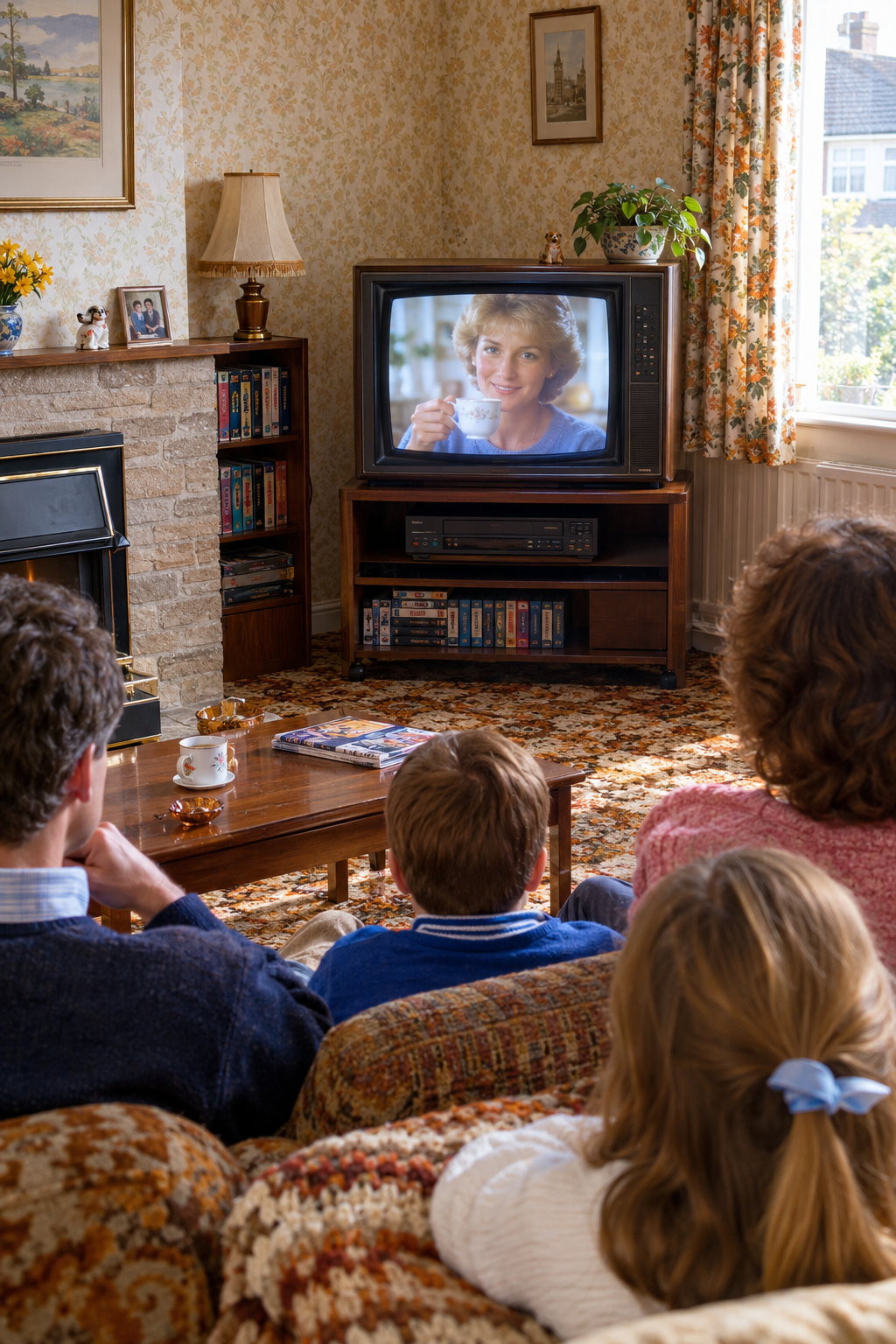
Long before anyone talked about 'sonic branding,' British television advertising was already shaping how a nation listened. Commercial TV only arrived in the UK in 1955, decades after cinema had already trained audiences on jingles and voiceover, and from the start British ads leaned into short-film storytelling, dry humour, and music in ways that gave the format its own distinct personality compared to the more hard-sell tradition across the Atlantic, a tradition I explored on my blog in 25 American TV commercials. Growing up in London in the 1980s, watching those ads wasn't optional the way it is now. There was no DVR, no on-demand, no fast-forwarding through the break. If you were watching telly, you sat through the ads along with everyone else, and because so much of the country was doing exactly the same thing at exactly the same time, a good ad genuinely became part of the national conversation the next day at school or in the office.
That shared, captive audience is a big part of why so many of these commercials became as culturally embedded as they did. While the American lessons in sonic branding are mostly learned from old broadcast reels and YouTube archives now, here in Minneapolis there's a much more direct way to experience British advertising's best work: every December, the Walker Art Center hosts the British Arrows Awards, an annual anthology of the year's gold, silver, and bronze winning UK commercials, compiled into a single feature length reel. It's been a Twin Cities holiday tradition since 1985, selling out screening after screening, and it remains one of the only places in the US where you can see British advertising presented the way the industry itself judges it: as short films first, sales pitches second. The Walker leans into the theme too, with British food on offer during the run, fish and chips among it, turning the whole evening into a mini cultural exchange as much as a night at the cinema.
For anyone working in a home studio, this space is particularly valuable because it shows how sound alone, a phrase, a tone, a jingle, or a piece of borrowed pop music, can define an entire brand identity in seconds. If you want to go deeper into this side of audio strategy, see sound investment in sonic branding, along with real-world examples of custom jingles. What follows is a 25-ad tour through British television history, from the very first commercial ever aired to modern viral storytelling, with each entry highlighting what it teaches us about audio and attention.
1. Gibbs SR Toothpaste (1955 - first UK TV commercial) The first advert ever screened on British television was disarmingly plain, a block of ice, a tube of toothpaste, and a calm voiceover describing a 'tingling fresh' clean. There was no music, no jingle, nothing beyond a single confident voice doing all the selling. For anyone in a home studio, it is proof that clarity of delivery, not production polish, is what actually launches a new medium.
2. PG Tips - Mr Shifter and the Tea Chimps Britain's longest-running advertising campaign didn't rely on music at all, it relied on voice performance layered over trained chimpanzees, dressed and lip-synced to sound uncannily human. Peter Sellers voiced the very first ad in 1956, and by the time 'Mr Shifter' aired in 1971 the comic timing between father and son chimp had become genuinely sophisticated, scripted, edited radio comedy dressed up in fur. It shows how far voiceover casting and dialogue rhythm can carry a joke long after the visual gimmick alone would have worn thin.
3. Hamlet Cigars - Happiness Is a Cigar Called Hamlet (1966-1991) Every Hamlet advert followed the same structure: a character suffers an embarrassing failure, then finds calm by lighting a cigar, cued by a jazz rendition of Bach's Air on the G String played by Jacques Loussier. The music doesn't just underscore the punchline, it is the punchline, arriving at exactly the moment tension needs to drain out of the scene. It's a masterclass in using a single recurring musical cue as shorthand for an entire emotional arc, no dialogue required.
4. Smash - The Martians (1974) A trio of tinny-voiced robot Martians laughing uncontrollably at humans for peeling and boiling potatoes became one of the most quoted ads in British history. The vocal treatment on the Martians, robotic, echoey, and just slightly unsettling, did more to sell the product's convenience than any straight voiceover could have. It's an early example of using vocal processing itself as characterisation, not just a special effect.
5. Hovis - Boy on the Bike (1973) Ridley Scott's black-and-white film of a boy pushing his bread delivery bike up a steep cobbled hill is soundtracked almost entirely by Dvorak's New World Symphony, with barely a word of dialogue. The music does the emotional heavy lifting that voiceover usually would, turning a bread advert into a piece of nostalgic short cinema. It remains a strong argument for letting an existing piece of orchestral music, rather than an original score, carry the entire emotional register of a spot.
6. Heineken - Refreshes the Parts Other Beers Cannot Reach (1974 onward) Heineken's long-running tagline was delivered with a dry, almost throwaway line reading that undercut the visual joke rather than emphasising it. The restraint in the voiceover, understated rather than punchy, became the brand's signature and proved that a soft delivery can land a joke harder than a hard sell. It's a reminder that tone of voice, not volume, often decides whether a line becomes a catchphrase.
7. Cinzano - Leonard Rossiter and Joan Collins (1978-1983) This campaign ran almost entirely on physical comedy and character voice work between two very game actors, with Rossiter repeatedly spilling drinks on an increasingly exasperated Collins. There's barely a note of music in most of the entries, the comic rhythm comes purely from line delivery and reaction timing. It's a good study in how far performance chemistry alone can carry a script with no sonic branding at all.
8. Shake n' Vac - Put the Freshness Back (1980) A woman dancing round her living room in a swirling skirt while sprinkling carpet powder, set to an original jingle written specifically for the campaign, became one of the most parodied British ads ever made. The jingle's simple, sing-song melody was designed to be easy to hum along to on first listen, and it worked exactly as intended. It's proof that a purpose-written jingle, however unglamorous the product, can outlive the campaign that spawned it by decades.
9. The AA - Kevin, Where Exactly Did You Bury the Car? (1986) A boy on a beach holiday absentmindedly buries his father's car in the sand while digging, delivering the deadpan line 'I'm not helping very much, am I, Dad?' with the timing of a seasoned comic. There's no music here either, the entire ad rests on naturalistic child performance and a script built around a single punchline. It shows how a well-cast child actor and a tightly written line can do the work of an entire soundtrack.
10. Levi's 501 - Launderette (1985) Nick Kamen stripping down to his boxers in a launderette, set to Marvin Gaye's 'I Heard It Through the Grapevine,' turned a decades-old soul record into a chart hit all over again. The choice of an existing song rather than a jingle gave the ad instant emotional credibility, borrowing the record's own history rather than manufacturing new sonic branding from scratch. It's an early, well-executed example of licensed music doing more persuasive work than an original score ever could.
11. Yellow Pages - J.R. Hartley (1983) An elderly man's patient phone calls in search of a copy of his own out-of-print fly-fishing book culminate in a gentle, understated reveal that becomes genuinely moving. The voiceover work here is entirely conversational, warm rather than theatrical, and the emotional payoff lands because nothing about the performance oversells it. It's a good lesson in how restraint in vocal delivery can create more impact than a bigger, more obviously emotional read.
12. Nescafe Gold Blend - The Couple (1987-1993) Rather than a single spot, this campaign unfolded as an ongoing will-they-won't-they mini-drama across dozens of ads, with Anthony Head and Sharon Maughan's flirtatious dialogue doing all the storytelling. The pacing of their conversations, full of pauses and loaded glances, relied entirely on performance timing rather than music or jingle. It demonstrates how serialised audio-visual storytelling, told a few seconds at a time, can build far more anticipation than any single 30-second ad.
13. BT - Ology (1988) Maureen Lipman's performance as Beattie, delighted that her grandson passed an exam in 'sociology, psychology, and biology' despite failing everything else, turned a single word repetition into a national catchphrase. The comic timing rests entirely on Lipman's vocal inflection on each '-ology,' rising with mock enthusiasm each time. It's one of the clearest examples in British advertising of a voice performance alone creating a lasting cultural phrase.
14. R Whites Lemonade - Secret Lemonade Drinker (1970s-1980s) A man sneaking downstairs at night to secretly drink lemonade, set to an original song written and performed specifically for the campaign, became genuinely popular as a piece of music in its own right. The jingle's soulful, slightly theatrical vocal performance gave a soft drink advert more musical ambition than its modest subject matter would suggest. It's a useful reminder that investing real production value in a jingle can pay off even when the product itself is unglamorous.
15. Carling Black Label - Dambusters (1989) This campaign built its reputation on parodying famous film scenes, dropping in a beer-fuelled twist at the last second, with the joke landing entirely on the reveal of dialogue rather than any visual gag. The comic timing depends on the audience recognising the original film's tone before the punchline subverts it. It shows how effective a well-placed line of dialogue can be when it's playing against an audience's existing expectations.
16. Tango - You've Been Tango'd (1992) An enormous orange man slapping an unsuspecting drinker across both cheeks, accompanied by a distinctive smack and a synth-driven jingle, became so popular with children that the ad was eventually pulled after playground copycat incidents. HHCL's production leaned into exaggerated sound design, the slap itself was mixed for maximum impact, turning a sound effect into the entire joke. It's a strong example of a single sound effect becoming as memorable as any melody.
17. Guinness - Surfer (1999) Often voted the greatest British advert ever made, Surfer pairs Jonathan Glazer's black-and-white cinematography with Leftfield's pounding 'Phat Planet' and Louis Mellis's rhythmic, half-spoken voiceover ('He waits, that's what he does...'). The narration is treated almost like a percussion instrument itself, syllables landing on the beat rather than simply describing the action. It remains one of the finest examples of voiceover, music, and picture edited together as a single rhythmic unit rather than three separate elements.
18. Marmite - Love It or Hate It (1996 onward) Rather than trying to convince viewers to love the product, this long-running campaign leaned entirely into extreme reactions of disgust and delight, letting tone of voice do the polarising. The vocal performances swing deliberately between theatrical horror and theatrical rapture, with almost no middle ground in the delivery. It's a good study in how embracing a divisive product honestly, rather than smoothing it over, can become the entire creative strategy.
19. Honda - Cog (2003) A two-minute Rube Goldberg machine built entirely from disassembled Honda Accord parts unfolds with almost no dialogue beyond Garrison Keillor's closing line, 'Isn't it nice when things just work?' The soundtrack is built from the mechanical clicks, rolls, and clatters of the parts themselves, mixed with obsessive precision so every collision lands audibly on cue, before The Sugarhill Gang's 'Rapper's Delight' kicks in at the reveal. It's an extraordinary example of diegetic sound design, the real noise of the objects themselves, doing the job a musical score usually would.
20. Sony Bravia - Balls (2005) 250,000 real, coloured rubber balls bouncing down the steep streets of San Francisco needed a soundtrack that felt equally organic, and Jose Gonzalez's gentle acoustic cover of 'Heartbeats' gave the visuals a warmth that a synthetic score never could have. The stripped-back, almost fragile vocal performance contrasts deliberately with the sheer scale of the visual spectacle. It shows how an intimate, quiet piece of music can make a massive production feel human rather than overwhelming.
21. Cadbury - Gorilla (2007) A gorilla drumming along to Phil Collins's 'In the Air Tonight' ran for 90 seconds with no product shown until the final two seconds, an almost unheard-of restraint for a chocolate bar advert. The entire ad is built around one specific moment, the famous drum fill two-thirds through the track, timed exactly to the gorilla's payoff hit. It's a rare case of a piece of existing music dictating the entire structure and pacing of an ad, rather than the other way around.
22. Compare the Market - The Meerkats (2009 onward) Aleksandr Orlov, an aristocratic Russian meerkat voiced by Simon Greenall, was built almost entirely as a vocal performance, an accent, a cadence, a catchphrase ('Simples') designed to be endlessly quotable. The character's voice was crafted first, with the visual design built to match rather than the reverse. It's a strong example of a voice performance becoming a brand's entire identity, still running well over fifteen years later.
23. John Lewis Christmas - Monty the Penguin (2014) John Lewis has produced a near-annual Christmas advert since 2007, and each one has become a genuinely anticipated cultural event in its own right, built on the same formula of an emotional story paired with a stripped-back cover of a well-known song. Monty the Penguin, the story of a boy's friendship with an animated penguin who turns out to be a stuffed toy all along, used Tom Odell's hushed cover of John Lennon's 'Real Love' to land its final emotional beat. The reliance on a cover version rather than an original score, a familiar melody in an unfamiliar arrangement, is now a defining sonic device of the entire genre of British Christmas advertising.
24. Three Mobile - The Pony (2013) A pony let loose in a suburban house, trashing furniture to Extreme's 'More Than Words,' became an unlikely viral moment built almost entirely on the mismatch between gentle acoustic music and mounting visual chaos. The soft, romantic tone of the song plays completely against the escalating destruction on screen, and that tension is the entire joke. It's a useful example of deliberately mismatching music and visuals for comic effect, rather than reinforcing the mood.
25. Specsavers - Should've Gone to Specsavers (2002 onward) Running for over two decades, this campaign has never relied on a jingle or a piece of music at all, every single ad lands on the same flat, deadpan delivery of one line, 'Should've gone to Specsavers.' The joke depends entirely on comic timing and understatement, delivered the same way whether the setup involves a sheep-shearing farmer or a stray NASA rocket. It's the clearest possible illustration that a spoken line, performed with total consistency, can become as recognisable as any melody ever could.
This collection shows how British television advertising built its own distinct relationship with sound, one shaped less by original jingles and stadium-scale music production, and more by voice performance, comic timing, and the occasional perfectly chosen piece of existing music. For a home studio, the takeaway is the same as it is on the other side of the Atlantic: the best commercials do not just sell products, they imprint sound, whether that's a melody, a catchphrase, or a single slap, straight into a nation's memory.
That shared, captive audience is a big part of why so many of these commercials became as culturally embedded as they did. While the American lessons in sonic branding are mostly learned from old broadcast reels and YouTube archives now, here in Minneapolis there's a much more direct way to experience British advertising's best work: every December, the Walker Art Center hosts the British Arrows Awards, an annual anthology of the year's gold, silver, and bronze winning UK commercials, compiled into a single feature length reel. It's been a Twin Cities holiday tradition since 1985, selling out screening after screening, and it remains one of the only places in the US where you can see British advertising presented the way the industry itself judges it: as short films first, sales pitches second. The Walker leans into the theme too, with British food on offer during the run, fish and chips among it, turning the whole evening into a mini cultural exchange as much as a night at the cinema.
For anyone working in a home studio, this space is particularly valuable because it shows how sound alone, a phrase, a tone, a jingle, or a piece of borrowed pop music, can define an entire brand identity in seconds. If you want to go deeper into this side of audio strategy, see sound investment in sonic branding, along with real-world examples of custom jingles. What follows is a 25-ad tour through British television history, from the very first commercial ever aired to modern viral storytelling, with each entry highlighting what it teaches us about audio and attention.
1. Gibbs SR Toothpaste (1955 - first UK TV commercial) The first advert ever screened on British television was disarmingly plain, a block of ice, a tube of toothpaste, and a calm voiceover describing a 'tingling fresh' clean. There was no music, no jingle, nothing beyond a single confident voice doing all the selling. For anyone in a home studio, it is proof that clarity of delivery, not production polish, is what actually launches a new medium.
2. PG Tips - Mr Shifter and the Tea Chimps Britain's longest-running advertising campaign didn't rely on music at all, it relied on voice performance layered over trained chimpanzees, dressed and lip-synced to sound uncannily human. Peter Sellers voiced the very first ad in 1956, and by the time 'Mr Shifter' aired in 1971 the comic timing between father and son chimp had become genuinely sophisticated, scripted, edited radio comedy dressed up in fur. It shows how far voiceover casting and dialogue rhythm can carry a joke long after the visual gimmick alone would have worn thin.
3. Hamlet Cigars - Happiness Is a Cigar Called Hamlet (1966-1991) Every Hamlet advert followed the same structure: a character suffers an embarrassing failure, then finds calm by lighting a cigar, cued by a jazz rendition of Bach's Air on the G String played by Jacques Loussier. The music doesn't just underscore the punchline, it is the punchline, arriving at exactly the moment tension needs to drain out of the scene. It's a masterclass in using a single recurring musical cue as shorthand for an entire emotional arc, no dialogue required.
4. Smash - The Martians (1974) A trio of tinny-voiced robot Martians laughing uncontrollably at humans for peeling and boiling potatoes became one of the most quoted ads in British history. The vocal treatment on the Martians, robotic, echoey, and just slightly unsettling, did more to sell the product's convenience than any straight voiceover could have. It's an early example of using vocal processing itself as characterisation, not just a special effect.
5. Hovis - Boy on the Bike (1973) Ridley Scott's black-and-white film of a boy pushing his bread delivery bike up a steep cobbled hill is soundtracked almost entirely by Dvorak's New World Symphony, with barely a word of dialogue. The music does the emotional heavy lifting that voiceover usually would, turning a bread advert into a piece of nostalgic short cinema. It remains a strong argument for letting an existing piece of orchestral music, rather than an original score, carry the entire emotional register of a spot.
6. Heineken - Refreshes the Parts Other Beers Cannot Reach (1974 onward) Heineken's long-running tagline was delivered with a dry, almost throwaway line reading that undercut the visual joke rather than emphasising it. The restraint in the voiceover, understated rather than punchy, became the brand's signature and proved that a soft delivery can land a joke harder than a hard sell. It's a reminder that tone of voice, not volume, often decides whether a line becomes a catchphrase.
7. Cinzano - Leonard Rossiter and Joan Collins (1978-1983) This campaign ran almost entirely on physical comedy and character voice work between two very game actors, with Rossiter repeatedly spilling drinks on an increasingly exasperated Collins. There's barely a note of music in most of the entries, the comic rhythm comes purely from line delivery and reaction timing. It's a good study in how far performance chemistry alone can carry a script with no sonic branding at all.
8. Shake n' Vac - Put the Freshness Back (1980) A woman dancing round her living room in a swirling skirt while sprinkling carpet powder, set to an original jingle written specifically for the campaign, became one of the most parodied British ads ever made. The jingle's simple, sing-song melody was designed to be easy to hum along to on first listen, and it worked exactly as intended. It's proof that a purpose-written jingle, however unglamorous the product, can outlive the campaign that spawned it by decades.
9. The AA - Kevin, Where Exactly Did You Bury the Car? (1986) A boy on a beach holiday absentmindedly buries his father's car in the sand while digging, delivering the deadpan line 'I'm not helping very much, am I, Dad?' with the timing of a seasoned comic. There's no music here either, the entire ad rests on naturalistic child performance and a script built around a single punchline. It shows how a well-cast child actor and a tightly written line can do the work of an entire soundtrack.
10. Levi's 501 - Launderette (1985) Nick Kamen stripping down to his boxers in a launderette, set to Marvin Gaye's 'I Heard It Through the Grapevine,' turned a decades-old soul record into a chart hit all over again. The choice of an existing song rather than a jingle gave the ad instant emotional credibility, borrowing the record's own history rather than manufacturing new sonic branding from scratch. It's an early, well-executed example of licensed music doing more persuasive work than an original score ever could.
11. Yellow Pages - J.R. Hartley (1983) An elderly man's patient phone calls in search of a copy of his own out-of-print fly-fishing book culminate in a gentle, understated reveal that becomes genuinely moving. The voiceover work here is entirely conversational, warm rather than theatrical, and the emotional payoff lands because nothing about the performance oversells it. It's a good lesson in how restraint in vocal delivery can create more impact than a bigger, more obviously emotional read.
12. Nescafe Gold Blend - The Couple (1987-1993) Rather than a single spot, this campaign unfolded as an ongoing will-they-won't-they mini-drama across dozens of ads, with Anthony Head and Sharon Maughan's flirtatious dialogue doing all the storytelling. The pacing of their conversations, full of pauses and loaded glances, relied entirely on performance timing rather than music or jingle. It demonstrates how serialised audio-visual storytelling, told a few seconds at a time, can build far more anticipation than any single 30-second ad.
13. BT - Ology (1988) Maureen Lipman's performance as Beattie, delighted that her grandson passed an exam in 'sociology, psychology, and biology' despite failing everything else, turned a single word repetition into a national catchphrase. The comic timing rests entirely on Lipman's vocal inflection on each '-ology,' rising with mock enthusiasm each time. It's one of the clearest examples in British advertising of a voice performance alone creating a lasting cultural phrase.
14. R Whites Lemonade - Secret Lemonade Drinker (1970s-1980s) A man sneaking downstairs at night to secretly drink lemonade, set to an original song written and performed specifically for the campaign, became genuinely popular as a piece of music in its own right. The jingle's soulful, slightly theatrical vocal performance gave a soft drink advert more musical ambition than its modest subject matter would suggest. It's a useful reminder that investing real production value in a jingle can pay off even when the product itself is unglamorous.
15. Carling Black Label - Dambusters (1989) This campaign built its reputation on parodying famous film scenes, dropping in a beer-fuelled twist at the last second, with the joke landing entirely on the reveal of dialogue rather than any visual gag. The comic timing depends on the audience recognising the original film's tone before the punchline subverts it. It shows how effective a well-placed line of dialogue can be when it's playing against an audience's existing expectations.
16. Tango - You've Been Tango'd (1992) An enormous orange man slapping an unsuspecting drinker across both cheeks, accompanied by a distinctive smack and a synth-driven jingle, became so popular with children that the ad was eventually pulled after playground copycat incidents. HHCL's production leaned into exaggerated sound design, the slap itself was mixed for maximum impact, turning a sound effect into the entire joke. It's a strong example of a single sound effect becoming as memorable as any melody.
17. Guinness - Surfer (1999) Often voted the greatest British advert ever made, Surfer pairs Jonathan Glazer's black-and-white cinematography with Leftfield's pounding 'Phat Planet' and Louis Mellis's rhythmic, half-spoken voiceover ('He waits, that's what he does...'). The narration is treated almost like a percussion instrument itself, syllables landing on the beat rather than simply describing the action. It remains one of the finest examples of voiceover, music, and picture edited together as a single rhythmic unit rather than three separate elements.
18. Marmite - Love It or Hate It (1996 onward) Rather than trying to convince viewers to love the product, this long-running campaign leaned entirely into extreme reactions of disgust and delight, letting tone of voice do the polarising. The vocal performances swing deliberately between theatrical horror and theatrical rapture, with almost no middle ground in the delivery. It's a good study in how embracing a divisive product honestly, rather than smoothing it over, can become the entire creative strategy.
19. Honda - Cog (2003) A two-minute Rube Goldberg machine built entirely from disassembled Honda Accord parts unfolds with almost no dialogue beyond Garrison Keillor's closing line, 'Isn't it nice when things just work?' The soundtrack is built from the mechanical clicks, rolls, and clatters of the parts themselves, mixed with obsessive precision so every collision lands audibly on cue, before The Sugarhill Gang's 'Rapper's Delight' kicks in at the reveal. It's an extraordinary example of diegetic sound design, the real noise of the objects themselves, doing the job a musical score usually would.
20. Sony Bravia - Balls (2005) 250,000 real, coloured rubber balls bouncing down the steep streets of San Francisco needed a soundtrack that felt equally organic, and Jose Gonzalez's gentle acoustic cover of 'Heartbeats' gave the visuals a warmth that a synthetic score never could have. The stripped-back, almost fragile vocal performance contrasts deliberately with the sheer scale of the visual spectacle. It shows how an intimate, quiet piece of music can make a massive production feel human rather than overwhelming.
21. Cadbury - Gorilla (2007) A gorilla drumming along to Phil Collins's 'In the Air Tonight' ran for 90 seconds with no product shown until the final two seconds, an almost unheard-of restraint for a chocolate bar advert. The entire ad is built around one specific moment, the famous drum fill two-thirds through the track, timed exactly to the gorilla's payoff hit. It's a rare case of a piece of existing music dictating the entire structure and pacing of an ad, rather than the other way around.
22. Compare the Market - The Meerkats (2009 onward) Aleksandr Orlov, an aristocratic Russian meerkat voiced by Simon Greenall, was built almost entirely as a vocal performance, an accent, a cadence, a catchphrase ('Simples') designed to be endlessly quotable. The character's voice was crafted first, with the visual design built to match rather than the reverse. It's a strong example of a voice performance becoming a brand's entire identity, still running well over fifteen years later.
23. John Lewis Christmas - Monty the Penguin (2014) John Lewis has produced a near-annual Christmas advert since 2007, and each one has become a genuinely anticipated cultural event in its own right, built on the same formula of an emotional story paired with a stripped-back cover of a well-known song. Monty the Penguin, the story of a boy's friendship with an animated penguin who turns out to be a stuffed toy all along, used Tom Odell's hushed cover of John Lennon's 'Real Love' to land its final emotional beat. The reliance on a cover version rather than an original score, a familiar melody in an unfamiliar arrangement, is now a defining sonic device of the entire genre of British Christmas advertising.
24. Three Mobile - The Pony (2013) A pony let loose in a suburban house, trashing furniture to Extreme's 'More Than Words,' became an unlikely viral moment built almost entirely on the mismatch between gentle acoustic music and mounting visual chaos. The soft, romantic tone of the song plays completely against the escalating destruction on screen, and that tension is the entire joke. It's a useful example of deliberately mismatching music and visuals for comic effect, rather than reinforcing the mood.
25. Specsavers - Should've Gone to Specsavers (2002 onward) Running for over two decades, this campaign has never relied on a jingle or a piece of music at all, every single ad lands on the same flat, deadpan delivery of one line, 'Should've gone to Specsavers.' The joke depends entirely on comic timing and understatement, delivered the same way whether the setup involves a sheep-shearing farmer or a stray NASA rocket. It's the clearest possible illustration that a spoken line, performed with total consistency, can become as recognisable as any melody ever could.
This collection shows how British television advertising built its own distinct relationship with sound, one shaped less by original jingles and stadium-scale music production, and more by voice performance, comic timing, and the occasional perfectly chosen piece of existing music. For a home studio, the takeaway is the same as it is on the other side of the Atlantic: the best commercials do not just sell products, they imprint sound, whether that's a melody, a catchphrase, or a single slap, straight into a nation's memory.
You may purchase items mentioned in this article here. Affiliate links earn me a commission at no extra cost to you. Thanks for supporting IanGardner.com