Who Invented TV?
Television didn't appear overnight. Trace the fascinating journey from mechanical experiments to the high-definition smart screens of today.
Ian Gardner is a British-American broadcaster, voice artist and audio enthusiast, sharing years of experience building creative workflows from a modern home studio. He helps readers make smarter buying decisions across studio gear, production tools and home comforts for both inside and outside the workspace. Broadcasters, podcasters, voice artists, producers and digital creators will find guidance that supports high production values and efficient workflows for building a successful home studio business. Similar articles can be found in the televisions blog.
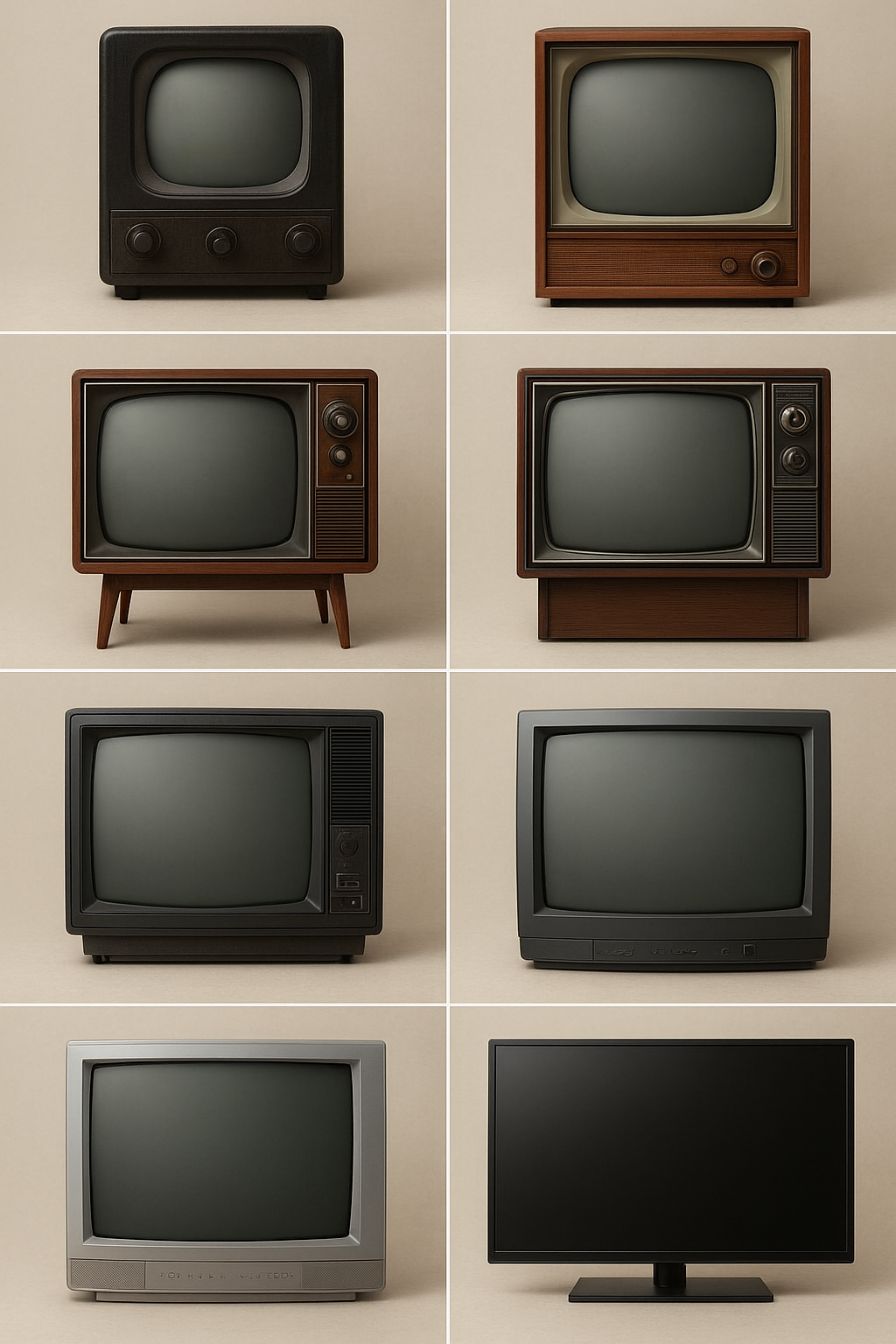
If you ask ten people who invented television you might get ten different answers - and that's before the argument starts over whether it was in a lab or a garage. The truth is, television didn't spring fully formed like Athena from Zeus' head - it was a messy, brilliant, international collaboration with sparks flying literally and figuratively. Some say John Logie Baird, the Scottish tinkerer, deserves the crown for showing the first moving images in 1926. Others argue for Philo Farnsworth, the American prodigy who, at age 21, demonstrated the first all-electronic TV system in 1927. And don't forget Vladimir Zworykin, the Russian-born engineer whose iconoscope camera tube became a backbone of broadcast technology.
Baird's early system was mechanical, using spinning disks with holes to scan images - basically a proto-Pixar light show. Farnsworth's and Zworykin's systems went electronic, which meant the moving image could be scanned by electron beams and reproduced on a cathode ray tube - the classic TV screen we all grew up staring at. The electron beam would sweep across a phosphor-coated screen, line by line, creating the picture while the sound was transmitted separately and synchronized. In the early days, these signals were fragile and prone to interference, but the promise was huge - suddenly people could see distant events without leaving their living room.
Once the tech existed, broadcasters jumped in. In the United States, NBC pioneered regular TV broadcasts in the 1930s, experimenting with limited programming in New York. Across the pond, the BBC had been dabbling in test transmissions from Alexandra Palace, London, using Baird's mechanical system before switching to the electronic Marconi-EMI system in 1937. Both countries had to figure out a way to standardize transmissions - what resolution, how many lines, and how to handle frame rates so that moving images looked smooth. In the US, this became NTSC - National Television System Committee - which settled on 525 lines at 30 frames per second. The UK went with a different approach, leading to the PAL system - Phase Alternating Line - with 625 lines at 25 frames per second, which would become standard across much of Europe.
Early broadcasts were limited, with only a handful of channels available in most cities. Programming was experimental - test patterns, occasional dramas, and variety shows broadcast for a lucky few who could afford the new technology. In the US, NBC, CBS, and a few others jostled for dominance, while the BBC essentially had a monopoly in the UK. The limited number of channels and the novelty of TV meant every broadcast felt like an event - families would gather around small, boxy sets to watch what seemed like magic.
Color came later, and it was a messy race. In the United States, RCA developed a color system compatible with existing black-and-white TVs - a clever hack that allowed gradual adoption. The first commercial color broadcast came in 1954, and the technology gradually trickled into homes, often reserved for the wealthy or for public events like the World Series. The UK, meanwhile, launched PAL color broadcasts in 1967 - slower than the US, but with fewer technical issues like color hue shifts that plagued NTSC. Color TVs required improvements in electronics and phosphor chemistry, as the three primary colors had to be combined precisely on the screen, making picture tubes more complex and expensive.
Through the 1960s and 70s, televisions grew bigger and more sophisticated. The classic vacuum tube, or cathode ray tube, dominated for decades, offering relatively reliable and bright images - though at a hefty weight. By the 1980s, alternative technologies began to appear. Plasma screens offered brighter, flatter panels for public displays, while LCD - liquid crystal display - started small on calculators and portable TVs before exploding in the 1990s for home use. Unlike cathode ray tubes, these screens could be incredibly thin, consume less power, and open up new possibilities for design and placement.
Throughout the decades, TV content expanded alongside the technology. From one or two channels broadcasting only a few hours a day, viewers gained dozens, then hundreds of channels through cable and satellite. The box in your living room became a portal to news, sports, movies, cartoons, and eventually on-demand streaming. As picture quality increased, so did expectations. Standard definition gave way to high definition, then full HD, and eventually 4K. Each step required smarter signal compression, more bandwidth, and better displays, but the principle remained the same as Farnsworth's and Baird's early experiments: transmit images line by line, synchronize them with sound, and light up your living room with moving pictures.
And now we're in the era of smart TVs - sleek, internet-connected screens that stream content, run apps, and even respond to voice commands. The technology has changed, but the essence is still there: a screen translating electrical signals into images and sound, connecting people to stories and events around the world. The controversy over who invented television may never be fully settled, but one thing is clear: every engineer, inventor, and broadcaster who contributed to the medium created a cultural revolution that transformed the 20th century and beyond.
From Baird's spinning disks to your smart TV's ultra-HD Netflix binge, television has come a long way. Early pioneers laid down the electron tracks and color phosphors that would become the foundation for decades of entertainment and information. Broadcasters like NBC and the BBC showed the world how to fill these new boxes with stories, drama, and live events. Standardization battles between NTSC and PAL ensured that a broadcast could be reliably watched, while the color revolution made TVs even more desirable household items. Tube technology dominated for decades, before plasma and LCD screens allowed thinner, brighter, and more energy-efficient displays.
Every generation has embraced television differently. In the 1950s, families gathered around one set in the living room. By the 1980s, multiple sets in a home became common, sometimes even in the kitchen. Today, your TV is part of a connected ecosystem - a smart hub, streaming device, and sometimes even a gaming console. Technology continues to evolve, with OLED, QLED, and microLED offering better contrast, brightness, and energy efficiency. The journey from spinning disk to smart screen is a testament to human curiosity, persistence, and sometimes friendly rivalry.
So who invented television? It's complicated, and honestly, it may not matter. What matters is that these brilliant minds created a window to the world - a device that has entertained, informed, and connected billions of people. Next time you binge your favorite show on a 65-inch smart TV, spare a thought for the mechanical disks, cathode ray tubes, and early broadcasters who made it possible. Television didn't just change technology - it changed society, culture, and the way we share our stories. And in the end, whether it was Baird, Farnsworth, or Zworykin, they all got us here - to the point where your living room can become a cinema, a concert hall, or a sports arena with just the click of a remote.
Baird's early system was mechanical, using spinning disks with holes to scan images - basically a proto-Pixar light show. Farnsworth's and Zworykin's systems went electronic, which meant the moving image could be scanned by electron beams and reproduced on a cathode ray tube - the classic TV screen we all grew up staring at. The electron beam would sweep across a phosphor-coated screen, line by line, creating the picture while the sound was transmitted separately and synchronized. In the early days, these signals were fragile and prone to interference, but the promise was huge - suddenly people could see distant events without leaving their living room.
Once the tech existed, broadcasters jumped in. In the United States, NBC pioneered regular TV broadcasts in the 1930s, experimenting with limited programming in New York. Across the pond, the BBC had been dabbling in test transmissions from Alexandra Palace, London, using Baird's mechanical system before switching to the electronic Marconi-EMI system in 1937. Both countries had to figure out a way to standardize transmissions - what resolution, how many lines, and how to handle frame rates so that moving images looked smooth. In the US, this became NTSC - National Television System Committee - which settled on 525 lines at 30 frames per second. The UK went with a different approach, leading to the PAL system - Phase Alternating Line - with 625 lines at 25 frames per second, which would become standard across much of Europe.
Early broadcasts were limited, with only a handful of channels available in most cities. Programming was experimental - test patterns, occasional dramas, and variety shows broadcast for a lucky few who could afford the new technology. In the US, NBC, CBS, and a few others jostled for dominance, while the BBC essentially had a monopoly in the UK. The limited number of channels and the novelty of TV meant every broadcast felt like an event - families would gather around small, boxy sets to watch what seemed like magic.
Color came later, and it was a messy race. In the United States, RCA developed a color system compatible with existing black-and-white TVs - a clever hack that allowed gradual adoption. The first commercial color broadcast came in 1954, and the technology gradually trickled into homes, often reserved for the wealthy or for public events like the World Series. The UK, meanwhile, launched PAL color broadcasts in 1967 - slower than the US, but with fewer technical issues like color hue shifts that plagued NTSC. Color TVs required improvements in electronics and phosphor chemistry, as the three primary colors had to be combined precisely on the screen, making picture tubes more complex and expensive.
Through the 1960s and 70s, televisions grew bigger and more sophisticated. The classic vacuum tube, or cathode ray tube, dominated for decades, offering relatively reliable and bright images - though at a hefty weight. By the 1980s, alternative technologies began to appear. Plasma screens offered brighter, flatter panels for public displays, while LCD - liquid crystal display - started small on calculators and portable TVs before exploding in the 1990s for home use. Unlike cathode ray tubes, these screens could be incredibly thin, consume less power, and open up new possibilities for design and placement.
Throughout the decades, TV content expanded alongside the technology. From one or two channels broadcasting only a few hours a day, viewers gained dozens, then hundreds of channels through cable and satellite. The box in your living room became a portal to news, sports, movies, cartoons, and eventually on-demand streaming. As picture quality increased, so did expectations. Standard definition gave way to high definition, then full HD, and eventually 4K. Each step required smarter signal compression, more bandwidth, and better displays, but the principle remained the same as Farnsworth's and Baird's early experiments: transmit images line by line, synchronize them with sound, and light up your living room with moving pictures.
And now we're in the era of smart TVs - sleek, internet-connected screens that stream content, run apps, and even respond to voice commands. The technology has changed, but the essence is still there: a screen translating electrical signals into images and sound, connecting people to stories and events around the world. The controversy over who invented television may never be fully settled, but one thing is clear: every engineer, inventor, and broadcaster who contributed to the medium created a cultural revolution that transformed the 20th century and beyond.
From Baird's spinning disks to your smart TV's ultra-HD Netflix binge, television has come a long way. Early pioneers laid down the electron tracks and color phosphors that would become the foundation for decades of entertainment and information. Broadcasters like NBC and the BBC showed the world how to fill these new boxes with stories, drama, and live events. Standardization battles between NTSC and PAL ensured that a broadcast could be reliably watched, while the color revolution made TVs even more desirable household items. Tube technology dominated for decades, before plasma and LCD screens allowed thinner, brighter, and more energy-efficient displays.
Every generation has embraced television differently. In the 1950s, families gathered around one set in the living room. By the 1980s, multiple sets in a home became common, sometimes even in the kitchen. Today, your TV is part of a connected ecosystem - a smart hub, streaming device, and sometimes even a gaming console. Technology continues to evolve, with OLED, QLED, and microLED offering better contrast, brightness, and energy efficiency. The journey from spinning disk to smart screen is a testament to human curiosity, persistence, and sometimes friendly rivalry.
So who invented television? It's complicated, and honestly, it may not matter. What matters is that these brilliant minds created a window to the world - a device that has entertained, informed, and connected billions of people. Next time you binge your favorite show on a 65-inch smart TV, spare a thought for the mechanical disks, cathode ray tubes, and early broadcasters who made it possible. Television didn't just change technology - it changed society, culture, and the way we share our stories. And in the end, whether it was Baird, Farnsworth, or Zworykin, they all got us here - to the point where your living room can become a cinema, a concert hall, or a sports arena with just the click of a remote.
You may purchase items mentioned in this article here. Affiliate links earn me a commission at no extra cost to you. Thanks for supporting IanGardner.com