Who Invented Microphones?
The microphone started as a slightly awkward gadget in early telephones. Today it powers singers, streamers and every conference call you have ever survived.
Ian Gardner is a British-American broadcaster, voice artist and audio enthusiast, sharing years of experience building creative workflows from a modern home studio. He helps readers make smarter buying decisions across studio gear, production tools and home comforts for both inside and outside the workspace. Broadcasters, podcasters, voice artists, producers and digital creators will find guidance that supports high production values and efficient workflows for building a successful home studio business. Similar articles can be found in the microphones blog.
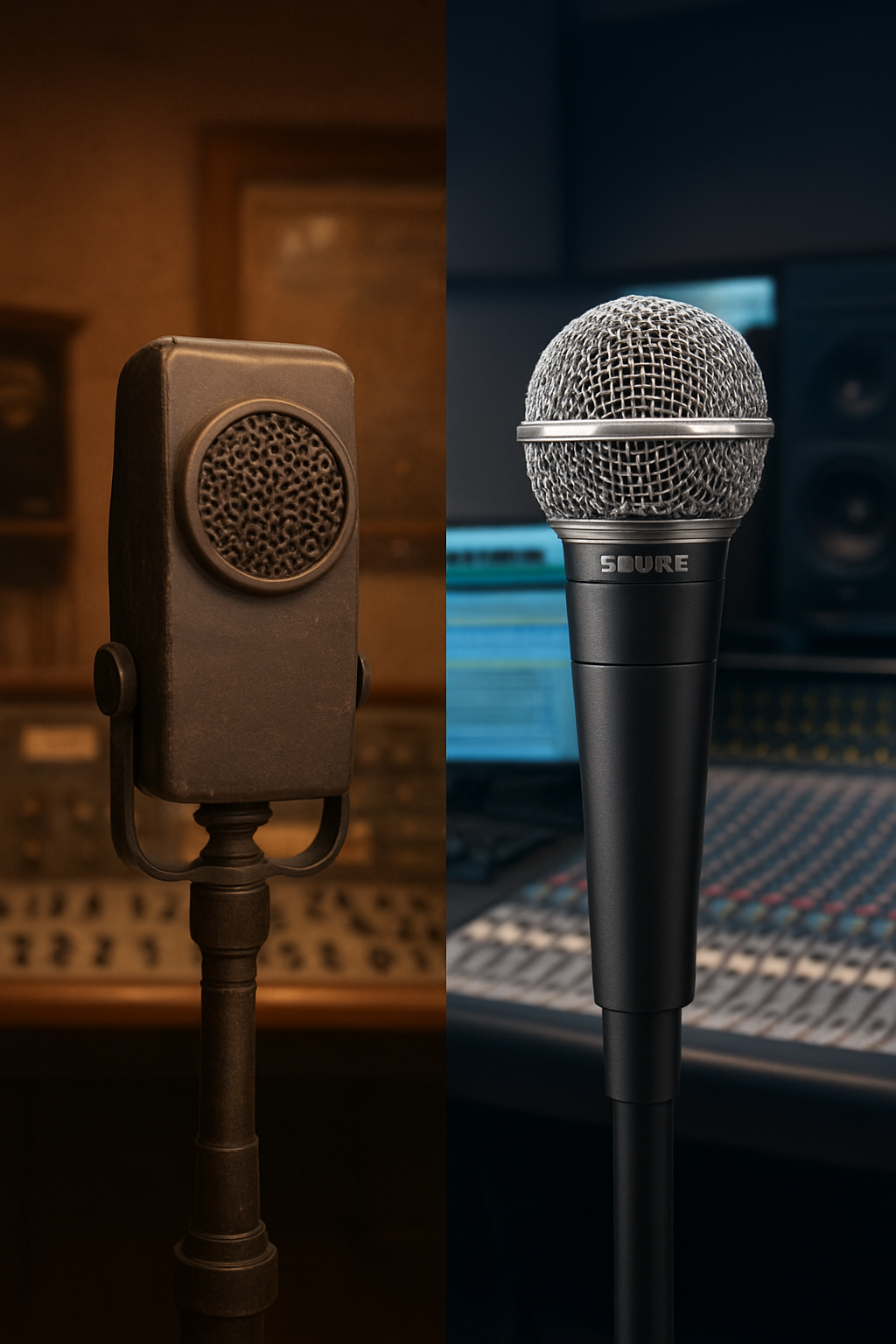
Ever wondered who dreamed up the microphone that now sits on your desk, stage, phone, or podcast setup? You may be surprised to learn it was not one single genius in a lab shouting 'test test' into a tin can - it was an evolving team effort spanning centuries of tinkering.
When we ask who invented microphones, the early credit usually goes to a man named Emile Berliner, who in 1877 patented the first practical microphone in the United States. But calling Berliner the single inventor feels a bit like crediting one musician with inventing rock 'n' roll. The microphone has a messy origin story: multiple scientists, inventors, and telephone pioneers were experimenting with sound transmission during the late 1800s. Berliner took the idea and turned it into something that actually worked reliably - which is a polite historical way of saying he fixed a lot of other peoples static.
Before Berliner, sound experiments were more theoretical. Alexander Graham Bell famously invented the telephone, but Bell's early transmitters were a muffled nightmare that would make AM radio sound hi-fi by comparison. Berliner's carbon microphone finally made speech clearer, enabling the telephone to become the indispensable human connection machine that it is today. Just as crucially, his invention made it possible to amplify sound electrically, which would later transform live performance, broadcasting, and yes, inevitably karaoke night.
Fast forward a few decades and microphones became the beating heart of radio broadcasts. The 1920s and 30s ushered in the age of radio drama, crooners, and news bulletins that reached millions of homes. Suddenly, the microphone was no longer a telephone accessory - it was the star of the studio. Singers like Bing Crosby practically seduced the world through a ribbon microphone, while announcers perfected that authoritative tone that said everything from breaking news to 'stay tuned for more'. Without microphones, radio would have been a short lived experiment with everyone squinting and leaning forward going 'what did he just say'.
Technology kept evolving. By the mid 20th century dynamic microphones and ribbon microphones were everywhere. Vacuum tubes powered early studio gear, and then one clever innovation changed professional audio forever - condenser microphones with external power. This mysterious power source became known as phantom power, usually 48 volts sent up the same cable that carries audio. Despite its spooky name, phantom power is far less haunted than radio engineers made it sound. It simply powers ultra sensitive condenser capsules, giving them the headroom and clarity required for pristine studio sound. Without phantom power, your favorite crystal clear podcast or vocal track would sound like someone recorded it through a pillow.
With better technology came legendary manufacturers. The names read like rock star royalty - Neumann, Shure, AKG, Sennheiser, Electro-Voice. If you have ever seen a stage performance, you have probably seen a Shure SM58 enduring outrageous punishment while still sounding perfectly presentable. Meanwhile, condenser classics like the Neumann U87 remain studio icons, the kind of gear musicians whisper about reverently like sacred relics. Each company pushed microphone design forward, refining clarity, durability, and character until microphones became an art form as much as a technology.
Today microphones are everywhere, from your smartphone to your laptop to tiny lavaliers clipped discreetly under a presenter's jacket. Streaming, podcasting, TikTok, and home studios have made microphones more essential than ever before. In a way, we now live in the most microphone focused era of human history - there has never been a moment when so many people are speaking into so many microphones all day long. For more technical info, check out How Microphones Work.
So who invented microphones? Technically Berliner - culturally, countless engineers helped shape sound as we know it. Every whisper in a recording booth, every electrifying concert, every podcast ramble owes a debt to those early inventors trying to capture a clear sentence without sounding like a submarine sonar test. And the next time you hit record, remember that history is in that mic - and a little bit of phantom power too.
When we ask who invented microphones, the early credit usually goes to a man named Emile Berliner, who in 1877 patented the first practical microphone in the United States. But calling Berliner the single inventor feels a bit like crediting one musician with inventing rock 'n' roll. The microphone has a messy origin story: multiple scientists, inventors, and telephone pioneers were experimenting with sound transmission during the late 1800s. Berliner took the idea and turned it into something that actually worked reliably - which is a polite historical way of saying he fixed a lot of other peoples static.
Before Berliner, sound experiments were more theoretical. Alexander Graham Bell famously invented the telephone, but Bell's early transmitters were a muffled nightmare that would make AM radio sound hi-fi by comparison. Berliner's carbon microphone finally made speech clearer, enabling the telephone to become the indispensable human connection machine that it is today. Just as crucially, his invention made it possible to amplify sound electrically, which would later transform live performance, broadcasting, and yes, inevitably karaoke night.
Fast forward a few decades and microphones became the beating heart of radio broadcasts. The 1920s and 30s ushered in the age of radio drama, crooners, and news bulletins that reached millions of homes. Suddenly, the microphone was no longer a telephone accessory - it was the star of the studio. Singers like Bing Crosby practically seduced the world through a ribbon microphone, while announcers perfected that authoritative tone that said everything from breaking news to 'stay tuned for more'. Without microphones, radio would have been a short lived experiment with everyone squinting and leaning forward going 'what did he just say'.
Technology kept evolving. By the mid 20th century dynamic microphones and ribbon microphones were everywhere. Vacuum tubes powered early studio gear, and then one clever innovation changed professional audio forever - condenser microphones with external power. This mysterious power source became known as phantom power, usually 48 volts sent up the same cable that carries audio. Despite its spooky name, phantom power is far less haunted than radio engineers made it sound. It simply powers ultra sensitive condenser capsules, giving them the headroom and clarity required for pristine studio sound. Without phantom power, your favorite crystal clear podcast or vocal track would sound like someone recorded it through a pillow.
With better technology came legendary manufacturers. The names read like rock star royalty - Neumann, Shure, AKG, Sennheiser, Electro-Voice. If you have ever seen a stage performance, you have probably seen a Shure SM58 enduring outrageous punishment while still sounding perfectly presentable. Meanwhile, condenser classics like the Neumann U87 remain studio icons, the kind of gear musicians whisper about reverently like sacred relics. Each company pushed microphone design forward, refining clarity, durability, and character until microphones became an art form as much as a technology.
Today microphones are everywhere, from your smartphone to your laptop to tiny lavaliers clipped discreetly under a presenter's jacket. Streaming, podcasting, TikTok, and home studios have made microphones more essential than ever before. In a way, we now live in the most microphone focused era of human history - there has never been a moment when so many people are speaking into so many microphones all day long. For more technical info, check out How Microphones Work.
So who invented microphones? Technically Berliner - culturally, countless engineers helped shape sound as we know it. Every whisper in a recording booth, every electrifying concert, every podcast ramble owes a debt to those early inventors trying to capture a clear sentence without sounding like a submarine sonar test. And the next time you hit record, remember that history is in that mic - and a little bit of phantom power too.
You may purchase items mentioned in this article here. Affiliate links earn me a commission at no extra cost to you. Thanks for supporting IanGardner.com