What is an LED Video Wall?
From sports arenas to TV studios. Learn how display technology evolved from stacked TVs to large scale displays.
Ian Gardner is a British-American broadcaster, voice artist and audio enthusiast, sharing years of experience building creative workflows from a modern home studio. He helps readers make smarter buying decisions across studio gear, production tools and home comforts for both inside and outside the workspace. Broadcasters, podcasters, voice artists, producers and digital creators will find guidance that supports high production values and efficient workflows for building a successful home studio business. Similar articles can be found in the televisions blog.
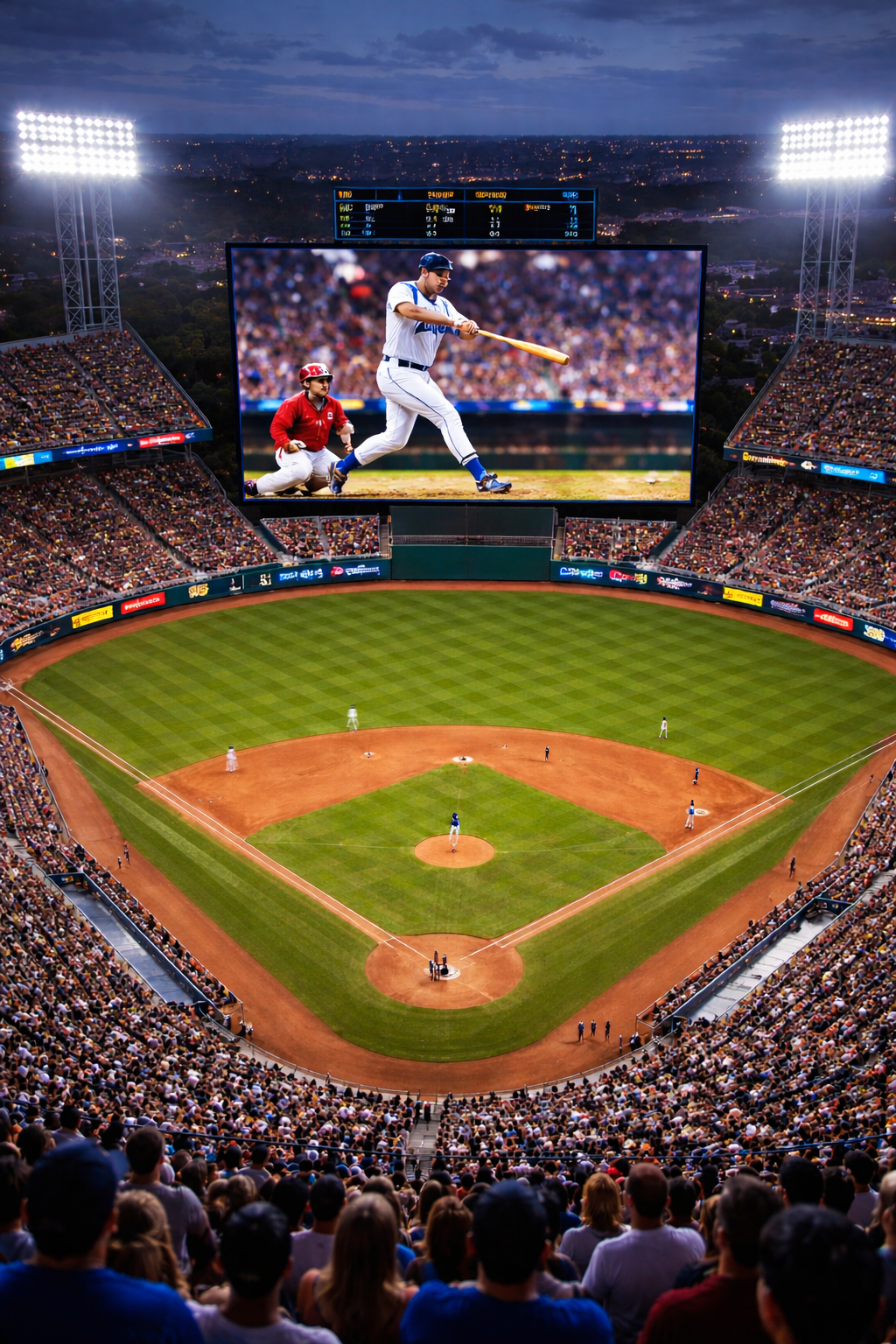
Big screens grab attention. Bigger screens stop traffic. LED video walls are the modern endgame of a very human obsession - making pictures so large, bright, and immersive that you cannot look away.
Before LED video walls ruled stadiums, TV studios, and city skylines, the journey toward bigger screens was a patchwork affair. Literally. In the early days, scale meant stacking and grouping what you already had. During the 1980s and 1990s, control rooms, sports venues, and corporate lobbies stitched together multiple 4:3 televisions into giant grids. It worked, sort of. Thick bezels sliced the image into chunks, colors never quite matched, and motion felt disjointed. Viewers did not watch content so much as mentally assemble it.
Projection technology was the next big leap. Rear projection cubes and massive front projectors promised seamless images without the visual gridlines. For the first time, walls could behave like single displays. But projection came with tradeoffs. Bright rooms washed out the image, bulbs were expensive and fragile, and contrast struggled to impress. Sports bars dimmed the lights. TV studios carefully controlled reflections. Outdoor use was limited to nighttime events. Bigger screens were possible, but they were not yet fearless.
LED technology changed everything by flipping the brightness problem on its head. Early LED displays were not subtle. They showed up as scoreboards, highway signs, and stock tickers. Resolution was low, pixels were large, and nobody expected cinematic quality. What they delivered instead was visibility. These displays cut through sunlight, weather, and distance with ease. They were bold, durable, and impossible to ignore, which made them perfect for stadiums and outdoor advertising.
As LED components shrank and pixel pitch improved, the walls moved closer to the audience. Jumbotrons became sharper. Concert stages transformed into living backdrops. Instead of static banners or basic visuals, artists and producers could surround performers with motion graphics, live feeds, and immersive environments. The video wall stopped being decoration and became part of the performance.
TV studios were quick to see the potential. Traditional green screens required imagination, careful lighting, and heavy post production. LED video walls delivered real time environments with accurate reflections and natural lighting on talent and sets. Newsrooms gained flexible backgrounds. Weather studios wrapped presenters in data. Late night shows shifted from static sets to dynamic visual worlds. Cameras loved the depth, and producers loved the speed.
Outside the studio, cities lit up. Digital billboards replaced printed vinyl, allowing brands to rotate messages, animate visuals, and react to time of day or live events. Advertising stopped being static and started behaving more like content. A single wall could tell multiple stories, target different audiences, and update instantly without sending anyone up a ladder.
What truly defines modern LED video walls is modular design. Panels connect like high tech building blocks, allowing displays to scale in any direction. Flat walls are just the beginning. Curves, corners, columns, ribbons, and wraparound stages are now common. Aspect ratios are no longer fixed, and creative layouts are limited more by imagination than hardware.
Performance is another major advantage. LED walls deliver extreme brightness, deep blacks, vibrant colors, and high refresh rates that look smooth both to the human eye and on camera. There are no bulbs to burn out mid show and no shadows cast by projectors. Once installed, the wall simply works, day or night.
Even home studios feel the influence of this big screen evolution. While full LED walls remain out of reach for most creators, the philosophy has trickled down. Larger monitors, multi display setups, and immersive visuals are now the norm. Content framing, lighting, and presentation increasingly borrow cues from broadcast studios and live event stages.
The story of LED video walls is really a story of ambition. Every generation pushed size and impact as far as technology allowed. From stacking boxy televisions, to wrestling with projection systems, to snapping together ultra fine pitch LED panels, the goal never changed. Make the image bigger, brighter, and more convincing. Today, LED video walls are everywhere, yet they still feel a little magical. Walls disappear. Buildings become canvases. Screens feel less like objects and more like windows into motion and light. And if history tells us anything, the next chapter will not be smaller.
Before LED video walls ruled stadiums, TV studios, and city skylines, the journey toward bigger screens was a patchwork affair. Literally. In the early days, scale meant stacking and grouping what you already had. During the 1980s and 1990s, control rooms, sports venues, and corporate lobbies stitched together multiple 4:3 televisions into giant grids. It worked, sort of. Thick bezels sliced the image into chunks, colors never quite matched, and motion felt disjointed. Viewers did not watch content so much as mentally assemble it.
Projection technology was the next big leap. Rear projection cubes and massive front projectors promised seamless images without the visual gridlines. For the first time, walls could behave like single displays. But projection came with tradeoffs. Bright rooms washed out the image, bulbs were expensive and fragile, and contrast struggled to impress. Sports bars dimmed the lights. TV studios carefully controlled reflections. Outdoor use was limited to nighttime events. Bigger screens were possible, but they were not yet fearless.
LED technology changed everything by flipping the brightness problem on its head. Early LED displays were not subtle. They showed up as scoreboards, highway signs, and stock tickers. Resolution was low, pixels were large, and nobody expected cinematic quality. What they delivered instead was visibility. These displays cut through sunlight, weather, and distance with ease. They were bold, durable, and impossible to ignore, which made them perfect for stadiums and outdoor advertising.
As LED components shrank and pixel pitch improved, the walls moved closer to the audience. Jumbotrons became sharper. Concert stages transformed into living backdrops. Instead of static banners or basic visuals, artists and producers could surround performers with motion graphics, live feeds, and immersive environments. The video wall stopped being decoration and became part of the performance.
TV studios were quick to see the potential. Traditional green screens required imagination, careful lighting, and heavy post production. LED video walls delivered real time environments with accurate reflections and natural lighting on talent and sets. Newsrooms gained flexible backgrounds. Weather studios wrapped presenters in data. Late night shows shifted from static sets to dynamic visual worlds. Cameras loved the depth, and producers loved the speed.
Outside the studio, cities lit up. Digital billboards replaced printed vinyl, allowing brands to rotate messages, animate visuals, and react to time of day or live events. Advertising stopped being static and started behaving more like content. A single wall could tell multiple stories, target different audiences, and update instantly without sending anyone up a ladder.
What truly defines modern LED video walls is modular design. Panels connect like high tech building blocks, allowing displays to scale in any direction. Flat walls are just the beginning. Curves, corners, columns, ribbons, and wraparound stages are now common. Aspect ratios are no longer fixed, and creative layouts are limited more by imagination than hardware.
Performance is another major advantage. LED walls deliver extreme brightness, deep blacks, vibrant colors, and high refresh rates that look smooth both to the human eye and on camera. There are no bulbs to burn out mid show and no shadows cast by projectors. Once installed, the wall simply works, day or night.
Even home studios feel the influence of this big screen evolution. While full LED walls remain out of reach for most creators, the philosophy has trickled down. Larger monitors, multi display setups, and immersive visuals are now the norm. Content framing, lighting, and presentation increasingly borrow cues from broadcast studios and live event stages.
The story of LED video walls is really a story of ambition. Every generation pushed size and impact as far as technology allowed. From stacking boxy televisions, to wrestling with projection systems, to snapping together ultra fine pitch LED panels, the goal never changed. Make the image bigger, brighter, and more convincing. Today, LED video walls are everywhere, yet they still feel a little magical. Walls disappear. Buildings become canvases. Screens feel less like objects and more like windows into motion and light. And if history tells us anything, the next chapter will not be smaller.
You may purchase items mentioned in this article here. Affiliate links earn me a commission at no extra cost to you. Thanks for supporting IanGardner.com