VoIP Phones End the Call for Landlines
Voice over Internet Protocol is transforming how we communicate, sending calls across internet networks and making outdated copper landlines a relic of the past.
Ian Gardner is a British-American broadcaster, voice artist and audio enthusiast, sharing years of experience building creative workflows from a modern home studio. He helps readers make smarter buying decisions across studio gear, production tools and home comforts for both inside and outside the workspace. Broadcasters, podcasters, voice artists, producers and digital creators will find guidance that supports high production values and efficient workflows for building a successful home studio business. Similar articles can be found in the studio-essentials blog.
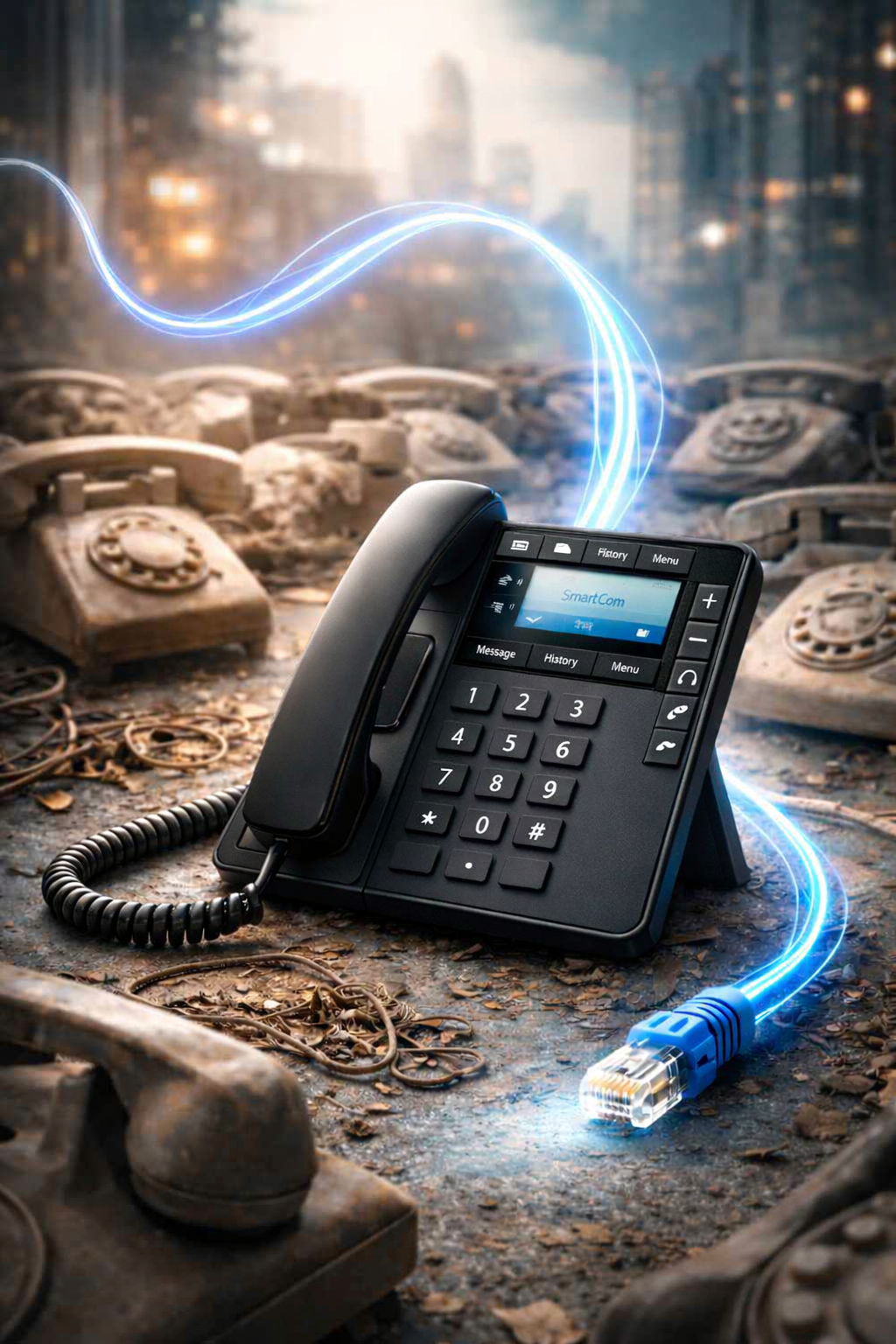
Voice over IP - usually shortened to VoIP - is one of the most important technological shifts in modern telecommunications. While traditional telephony relied on dedicated copper telephone lines, VoIP phones transmit voice as digital data across computer networks. This simple change fundamentally transformed how voice communication works. Instead of a phone connecting directly to the public switched telephone network through a wall jack, a VoIP device connects to a local area network (LAN) in exactly the same way a computer or network printer does. The result is a flexible, scalable, and inexpensive way to make phone calls anywhere in the world.
To understand VoIP, it helps to briefly look at how traditional landline telephones worked. For more than a century, analog phones were connected through copper pairs that ran from homes and offices to a telephone exchange. When you picked up the handset, a circuit was created between two endpoints. That circuit stayed open for the entire call. Even if nobody was speaking, the connection remained dedicated to those two phones. This approach worked well when telephone infrastructure was built around centralized switching systems, but it was inefficient and expensive to maintain.
VoIP takes a completely different approach. Instead of maintaining a continuous electrical circuit, your voice is captured by a microphone, converted into digital data by an analog to digital converter, compressed using a codec, and then broken into small packets. These packets are sent across an IP network - the same type of network used by the internet. When they reach the receiving device, they are reassembled, decompressed, and converted back into audio through a speaker.
One of the most interesting aspects of VoIP is how the phone physically connects to the network. A typical VoIP desk phone includes an Ethernet port rather than a traditional RJ11 telephone jack. This Ethernet port plugs into a router, network switch, or structured cabling system inside the building. In other words, the phone is simply another network device on the LAN. Many VoIP phones even include two Ethernet ports so a computer can share the same wall connection. Internally, the phone runs firmware that handles network communication, signaling protocols, and audio processing.
Because the phone is on the LAN, it receives an IP address just like a computer would. This usually happens automatically through DHCP from the router. Once the phone has an IP address, it registers with a VoIP service provider using a signaling protocol such as SIP - the Session Initiation Protocol. SIP is responsible for setting up, managing, and ending calls. When you dial a number, the phone sends a SIP request to your provider's server. That server determines where the call should go and connects the call through the appropriate network routes.
Another important technical component of VoIP is the audio codec used to compress voice data. Codecs determine both the audio quality and the bandwidth required for each call. One of the most common codecs is G.711, which delivers near uncompressed audio quality and uses roughly 64 kilobits per second of bandwidth for the voice stream itself. When network overhead is included, the total bandwidth per call typically rises to around 80 to 90 kbps. Other codecs such as G.729 compress the audio more aggressively and can reduce bandwidth usage to roughly 8 kbps for the audio stream. The tradeoff is slightly lower audio fidelity, although modern implementations still sound quite good.
Latency and jitter are also important considerations. Because VoIP traffic travels across packet networks, delays can occur if the network is congested. Most VoIP systems mitigate this with jitter buffers and quality of service settings that prioritize voice packets over less time sensitive data. On a properly configured LAN or broadband connection, call quality can rival or even exceed traditional landline audio.
All of this technology has contributed to the steady decline of traditional landline telephones. Maintaining massive copper infrastructure is expensive for telecom companies, especially when many customers have already moved to mobile phones or internet based calling. Across much of the world, telephone companies are actively retiring their copper networks and replacing them with fiber optic infrastructure. Once voice is transmitted digitally over fiber or broadband internet, there is no longer any need for the old circuit switched telephone system.
The long term outlook is clear - landlines as we once knew them are slowly disappearing. Instead, voice communication is becoming just another internet service. Businesses have already embraced this shift because VoIP systems allow easy scaling, remote working, and advanced features like call routing, voicemail to email, and unified communications. For home users and small studios, VoIP offers similar benefits without the cost and complexity of legacy phone services.
In my own home studio, and specifically for UK calls, I use a VoIP Grandstream GXP1625 desk phone which has proven to be a reliable and straightforward device. Like most VoIP phones, it connects directly to my LAN using an Ethernet cable rather than plugging into a traditional telephone socket. Once connected to the network, it registers with my provider and is ready to make or receive calls. My VoIP provider is Sipgate, which allows me to use a British phone number even though I am located in the United States. When I call friends or relatives in the UK, it feels just like using a normal UK phone line. The same applies when I speak with UK based clients. Because the call originates from a UK number, everything feels familiar and local from their perspective.
The flexibility of VoIP makes this possible. Since the phone communicates over the internet rather than a physical telephone circuit tied to a geographic exchange, the number can effectively exist anywhere. As long as the phone has an internet connection and the SIP credentials are configured correctly, the system works.
VoIP began as an experimental technology in the early days of internet telephony, but it has now matured into the dominant form of voice communication. With copper landlines steadily being phased out and broadband connections becoming faster and more reliable, the transition toward fully digital voice networks is inevitable. For anyone who has used a good VoIP phone on a solid network connection, it is easy to see why the future of telephony belongs to IP based communication.
To understand VoIP, it helps to briefly look at how traditional landline telephones worked. For more than a century, analog phones were connected through copper pairs that ran from homes and offices to a telephone exchange. When you picked up the handset, a circuit was created between two endpoints. That circuit stayed open for the entire call. Even if nobody was speaking, the connection remained dedicated to those two phones. This approach worked well when telephone infrastructure was built around centralized switching systems, but it was inefficient and expensive to maintain.
VoIP takes a completely different approach. Instead of maintaining a continuous electrical circuit, your voice is captured by a microphone, converted into digital data by an analog to digital converter, compressed using a codec, and then broken into small packets. These packets are sent across an IP network - the same type of network used by the internet. When they reach the receiving device, they are reassembled, decompressed, and converted back into audio through a speaker.
One of the most interesting aspects of VoIP is how the phone physically connects to the network. A typical VoIP desk phone includes an Ethernet port rather than a traditional RJ11 telephone jack. This Ethernet port plugs into a router, network switch, or structured cabling system inside the building. In other words, the phone is simply another network device on the LAN. Many VoIP phones even include two Ethernet ports so a computer can share the same wall connection. Internally, the phone runs firmware that handles network communication, signaling protocols, and audio processing.
Because the phone is on the LAN, it receives an IP address just like a computer would. This usually happens automatically through DHCP from the router. Once the phone has an IP address, it registers with a VoIP service provider using a signaling protocol such as SIP - the Session Initiation Protocol. SIP is responsible for setting up, managing, and ending calls. When you dial a number, the phone sends a SIP request to your provider's server. That server determines where the call should go and connects the call through the appropriate network routes.
Another important technical component of VoIP is the audio codec used to compress voice data. Codecs determine both the audio quality and the bandwidth required for each call. One of the most common codecs is G.711, which delivers near uncompressed audio quality and uses roughly 64 kilobits per second of bandwidth for the voice stream itself. When network overhead is included, the total bandwidth per call typically rises to around 80 to 90 kbps. Other codecs such as G.729 compress the audio more aggressively and can reduce bandwidth usage to roughly 8 kbps for the audio stream. The tradeoff is slightly lower audio fidelity, although modern implementations still sound quite good.
Latency and jitter are also important considerations. Because VoIP traffic travels across packet networks, delays can occur if the network is congested. Most VoIP systems mitigate this with jitter buffers and quality of service settings that prioritize voice packets over less time sensitive data. On a properly configured LAN or broadband connection, call quality can rival or even exceed traditional landline audio.
All of this technology has contributed to the steady decline of traditional landline telephones. Maintaining massive copper infrastructure is expensive for telecom companies, especially when many customers have already moved to mobile phones or internet based calling. Across much of the world, telephone companies are actively retiring their copper networks and replacing them with fiber optic infrastructure. Once voice is transmitted digitally over fiber or broadband internet, there is no longer any need for the old circuit switched telephone system.
The long term outlook is clear - landlines as we once knew them are slowly disappearing. Instead, voice communication is becoming just another internet service. Businesses have already embraced this shift because VoIP systems allow easy scaling, remote working, and advanced features like call routing, voicemail to email, and unified communications. For home users and small studios, VoIP offers similar benefits without the cost and complexity of legacy phone services.
In my own home studio, and specifically for UK calls, I use a VoIP Grandstream GXP1625 desk phone which has proven to be a reliable and straightforward device. Like most VoIP phones, it connects directly to my LAN using an Ethernet cable rather than plugging into a traditional telephone socket. Once connected to the network, it registers with my provider and is ready to make or receive calls. My VoIP provider is Sipgate, which allows me to use a British phone number even though I am located in the United States. When I call friends or relatives in the UK, it feels just like using a normal UK phone line. The same applies when I speak with UK based clients. Because the call originates from a UK number, everything feels familiar and local from their perspective.
The flexibility of VoIP makes this possible. Since the phone communicates over the internet rather than a physical telephone circuit tied to a geographic exchange, the number can effectively exist anywhere. As long as the phone has an internet connection and the SIP credentials are configured correctly, the system works.
VoIP began as an experimental technology in the early days of internet telephony, but it has now matured into the dominant form of voice communication. With copper landlines steadily being phased out and broadband connections becoming faster and more reliable, the transition toward fully digital voice networks is inevitable. For anyone who has used a good VoIP phone on a solid network connection, it is easy to see why the future of telephony belongs to IP based communication.
You may purchase items mentioned in this article here. Affiliate links earn me a commission at no extra cost to you. Thanks for supporting IanGardner.com