The Original Tick Tock
Discover how radio controlled clocks combine modern technology with precision timekeeping to keep your studio and broadcasts perfectly on schedule.
Ian Gardner is a British-American broadcaster, voice artist and audio enthusiast, sharing years of experience building creative workflows from a modern home studio. He helps readers make smarter buying decisions across studio gear, production tools and home comforts for both inside and outside the workspace. Broadcasters, podcasters, voice artists, producers and digital creators will find guidance that supports high production values and efficient workflows for building a successful home studio business. Similar articles can be found in the studio-essentials blog.
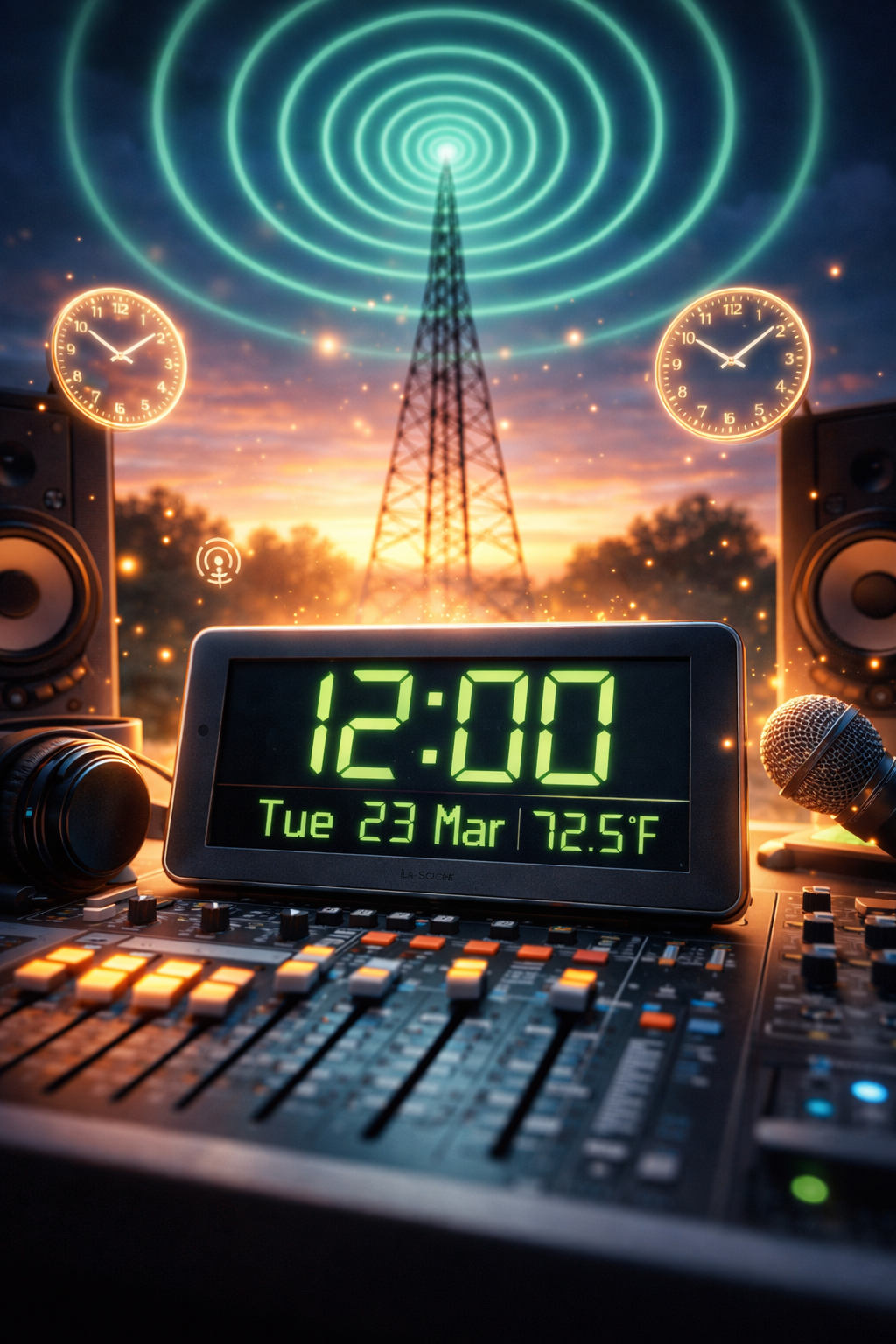
Radio controlled clocks have become a staple in homes and professional environments where precise timekeeping is essential. These clocks, often called atomic or radio-synchronized clocks, combine traditional timekeeping with modern technology to ensure that they always display the correct time. Unlike ordinary quartz clocks that can drift a few seconds each day, radio controlled clocks adjust themselves automatically using signals from highly accurate atomic clocks, giving users a level of precision that was once only possible in scientific or military settings.
The origins of radio controlled clocks date back to the early 20th century, when scientists first began experimenting with synchronizing time over long distances using radio waves. The concept was relatively simple - transmit a standardized time signal via radio and have a clock receive that signal to correct itself. However, practical consumer versions of these clocks did not appear until the 1980s and 1990s, when technology became reliable and affordable enough for widespread use. In the USA and UK, radio controlled clocks quickly gained popularity among those who needed dependable timekeeping without the hassle of manual adjustments for daylight saving changes or drift.
These clocks work by receiving time signals broadcasted from specialized transmitters. In the United States, the National Institute of Standards and Technology (NIST) operates the WWVB radio station near Fort Collins, Colorado. This station broadcasts on a frequency of 60 kHz and continuously transmits the official U.S. time based on NISTs cesium atomic clocks. Clocks equipped to receive the WWVB signal can decode this information and adjust themselves automatically, even accounting for leap seconds and daylight saving time. In the United Kingdom, a similar system exists with the MSF radio signal transmitted from Anthorn in Cumbria. MSF operates at a frequency of 60 kHz as well, providing the official UK time to radio controlled clocks across Britain and parts of Europe. Both systems are designed to be highly reliable, with signals strong enough to penetrate most buildings, although placement near windows often improves reception.
The uses of radio controlled clocks extend far beyond simply knowing the right time. In home studios, accurate clocks are critical for managing schedules and ensuring that projects are delivered on time. Recording sessions often require precise timing, especially when multiple tracks are being layered or when collaborating remotely with other studios. Even small discrepancies in time can cause issues with synchronization, file versioning, and deadline management. For professionals handling live broadcasts or streaming events, accurate clocks are indispensable. A broadcast that runs even a few seconds off schedule can disrupt programming, confuse audiences, or cause timing conflicts with other media feeds. Radio controlled clocks remove these concerns by offering a consistently accurate reference point that requires virtually no maintenance.
Beyond professional settings, radio controlled clocks have practical benefits for everyday use. They eliminate the need to manually adjust for daylight saving time, leap years, or battery-powered quartz drift. Many modern models, such as digital clocks, also provide additional information like temperature, date, and even humidity, making them versatile tools for both homes and offices. This combination of convenience and accuracy has made them popular among people who value punctuality and precision in their daily routines.
In my own setup, I rely on a La Crosse Technology digital clock that shows time, date, and temperature. Its radio-controlled accuracy helps me keep sessions on schedule and ensures that any live recordings or broadcasts are perfectly timed - it's an essential for my home studio!
The origins of radio controlled clocks date back to the early 20th century, when scientists first began experimenting with synchronizing time over long distances using radio waves. The concept was relatively simple - transmit a standardized time signal via radio and have a clock receive that signal to correct itself. However, practical consumer versions of these clocks did not appear until the 1980s and 1990s, when technology became reliable and affordable enough for widespread use. In the USA and UK, radio controlled clocks quickly gained popularity among those who needed dependable timekeeping without the hassle of manual adjustments for daylight saving changes or drift.
These clocks work by receiving time signals broadcasted from specialized transmitters. In the United States, the National Institute of Standards and Technology (NIST) operates the WWVB radio station near Fort Collins, Colorado. This station broadcasts on a frequency of 60 kHz and continuously transmits the official U.S. time based on NISTs cesium atomic clocks. Clocks equipped to receive the WWVB signal can decode this information and adjust themselves automatically, even accounting for leap seconds and daylight saving time. In the United Kingdom, a similar system exists with the MSF radio signal transmitted from Anthorn in Cumbria. MSF operates at a frequency of 60 kHz as well, providing the official UK time to radio controlled clocks across Britain and parts of Europe. Both systems are designed to be highly reliable, with signals strong enough to penetrate most buildings, although placement near windows often improves reception.
The uses of radio controlled clocks extend far beyond simply knowing the right time. In home studios, accurate clocks are critical for managing schedules and ensuring that projects are delivered on time. Recording sessions often require precise timing, especially when multiple tracks are being layered or when collaborating remotely with other studios. Even small discrepancies in time can cause issues with synchronization, file versioning, and deadline management. For professionals handling live broadcasts or streaming events, accurate clocks are indispensable. A broadcast that runs even a few seconds off schedule can disrupt programming, confuse audiences, or cause timing conflicts with other media feeds. Radio controlled clocks remove these concerns by offering a consistently accurate reference point that requires virtually no maintenance.
Beyond professional settings, radio controlled clocks have practical benefits for everyday use. They eliminate the need to manually adjust for daylight saving time, leap years, or battery-powered quartz drift. Many modern models, such as digital clocks, also provide additional information like temperature, date, and even humidity, making them versatile tools for both homes and offices. This combination of convenience and accuracy has made them popular among people who value punctuality and precision in their daily routines.
In my own setup, I rely on a La Crosse Technology digital clock that shows time, date, and temperature. Its radio-controlled accuracy helps me keep sessions on schedule and ensures that any live recordings or broadcasts are perfectly timed - it's an essential for my home studio!
You may purchase items mentioned in this article here. Affiliate links earn me a commission at no extra cost to you. Thanks for supporting IanGardner.com