Stand and Deliver
Great audio starts with the stand holding your mic steady. From boom arms to round bases, discover which setup keeps your sound sharp and your hands free.
Ian Gardner is a British-American broadcaster, voice artist and audio enthusiast, sharing years of experience building creative workflows from a modern home studio. He helps readers make smarter buying decisions across studio gear, production tools and home comforts for both inside and outside the workspace. Broadcasters, podcasters, voice artists, producers and digital creators will find guidance that supports high production values and efficient workflows for building a successful home studio business. Similar articles can be found in the studio-essentials blog.
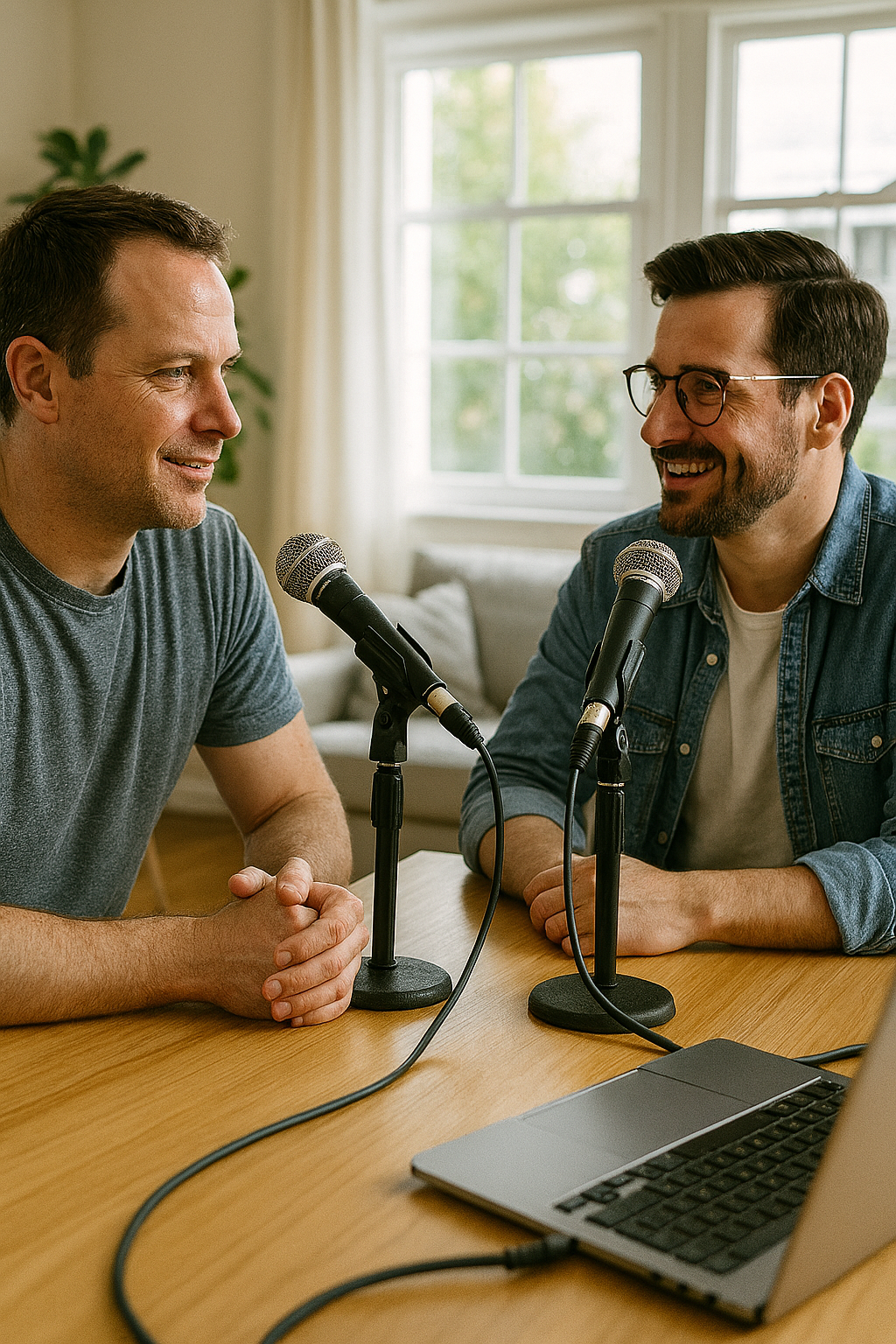
Think holding a microphone is as simple as grab and go? Think again - because how you support that mic can make or break your audio, your comfort, and your on-air swagger. In this fun guide, we dive into the unsung heroes of your home studio: desktop stands, boom arms, and classic round base mic stands.
If you have ever wandered into a studio and noticed the mic sitting perfectly still while the host moves like a caffeinated bobblehead, that is not an accident. Microphone support is one of the most overlooked parts of home recording. Whether you are running a cosy podcast, hosting an online radio show, or rehearsing stand-up comedy for your cat, how you hold - or don't hold - your mic shapes everything from tone to comfort to professionalism.
Let's start with the smallest but mightiest: the desktop mic stand. This compact powerhouse is perfect for podcasters, streamers, voiceover artists, and anyone who sits close to their recording setup. The big advantage is stability - once you plant it on your desk, the mic stays exactly where you put it. No creeping. No sagging. No slow-motion droop halfway through a dramatic sentence. Desktop stands also reduce handling noise since your hands never touch the mic. They are great for detailed, crisp recordings where you want total consistency in distance and angle. If you have a dynamic mic like an SM7B or RE20, pairing it with a sturdy desktop stand makes your desk feel like a real studio console. Plus, for newcomers, desktop stands are a great gateway into proper mic technique because they force you to maintain a steady vocal position.
Next up: the boom arm - the single best way to feel like a professional radio host before you even press record. Boom arms are the mechanical spider limbs you see in every station, podcast studio and YouTube setup on earth. The beauty of a boom arm is its movement. You can swing it in, swing it out, reposition on the fly, or park it out of the way when you are done. If you gesture a lot when you talk, a boom arm saves you from punching your own mic into orbit. They also keep your desk clear, making room for keyboards, mixers, coffee, and the stack of snacks that somehow became part of your workflow. For radio-style setups, a boom arm is practically essential because it lets you stay close to the mic while handling buttons, faders, hotkeys and notes. For streamers, it allows perfect eye-line alignment with the camera. For long recording sessions, it prevents the dreaded hunch-back posture that comes from leaning toward a fixed stand. In short: if your mic needs to move with you, a boom arm is your co-pilot.
And then there is the old-school legend: the round base mic stand. If a desktop stand is a precision tool and a boom arm is a radio robot, the round base stand is pure stage energy. You see these in comedy clubs, karaoke nights, rehearsal rooms, music venues, singer-songwriter gigs and pretty much anywhere someone stands to perform. The weighted base keeps the stand planted while the slim stem lifts the mic to just the right height. Singers love them because they can move around the stand, grip it dramatically, or step aside when the guitar solo kicks in. Comedians love them because the stand doubles as a prop. Speakers love them because you can walk up, deliver your message, and walk off without fiddling with anything. In the home studio world, a round base stand is perfect for vocalists who prefer to stand while performing or recording. It also gives you a bit of physical presence that a desk stand cannot replicate.
Now here is the twist: most creators eventually use more than one type. You might record your podcast seated at a desktop stand, then switch to a round base stand when you want to rehearse vocals, then move to a boom arm for live streams. There is no single correct option - only the right tool for the job. For example, a gaming streamer will probably hate a round base stand because it blocks movement, but a comedian rehearsing timing and pacing might find it essential. A voiceover artist recording long sessions will love the ergonomic freedom of a boom arm, but a traveling podcaster might want the simplicity and portability of a desktop stand.
And yes - all of this matters. Microphones do not exist in a vacuum. They pick up the world exactly as it is, including table bumps, posture shifts, grip noise, and every unplanned motion you make. Good mic support is not just about convenience. It is about consistency, clarity, and confidence. It lets you focus on performance instead of wrestling a mic into position like a reluctant houseplant.
So the next time someone asks how to hold a mic, you can smile and tell them the truth: the best way to hold a mic is often not to hold it at all. Let the stand do the work. You focus on sounding great.
If you have ever wandered into a studio and noticed the mic sitting perfectly still while the host moves like a caffeinated bobblehead, that is not an accident. Microphone support is one of the most overlooked parts of home recording. Whether you are running a cosy podcast, hosting an online radio show, or rehearsing stand-up comedy for your cat, how you hold - or don't hold - your mic shapes everything from tone to comfort to professionalism.
Let's start with the smallest but mightiest: the desktop mic stand. This compact powerhouse is perfect for podcasters, streamers, voiceover artists, and anyone who sits close to their recording setup. The big advantage is stability - once you plant it on your desk, the mic stays exactly where you put it. No creeping. No sagging. No slow-motion droop halfway through a dramatic sentence. Desktop stands also reduce handling noise since your hands never touch the mic. They are great for detailed, crisp recordings where you want total consistency in distance and angle. If you have a dynamic mic like an SM7B or RE20, pairing it with a sturdy desktop stand makes your desk feel like a real studio console. Plus, for newcomers, desktop stands are a great gateway into proper mic technique because they force you to maintain a steady vocal position.
Next up: the boom arm - the single best way to feel like a professional radio host before you even press record. Boom arms are the mechanical spider limbs you see in every station, podcast studio and YouTube setup on earth. The beauty of a boom arm is its movement. You can swing it in, swing it out, reposition on the fly, or park it out of the way when you are done. If you gesture a lot when you talk, a boom arm saves you from punching your own mic into orbit. They also keep your desk clear, making room for keyboards, mixers, coffee, and the stack of snacks that somehow became part of your workflow. For radio-style setups, a boom arm is practically essential because it lets you stay close to the mic while handling buttons, faders, hotkeys and notes. For streamers, it allows perfect eye-line alignment with the camera. For long recording sessions, it prevents the dreaded hunch-back posture that comes from leaning toward a fixed stand. In short: if your mic needs to move with you, a boom arm is your co-pilot.
And then there is the old-school legend: the round base mic stand. If a desktop stand is a precision tool and a boom arm is a radio robot, the round base stand is pure stage energy. You see these in comedy clubs, karaoke nights, rehearsal rooms, music venues, singer-songwriter gigs and pretty much anywhere someone stands to perform. The weighted base keeps the stand planted while the slim stem lifts the mic to just the right height. Singers love them because they can move around the stand, grip it dramatically, or step aside when the guitar solo kicks in. Comedians love them because the stand doubles as a prop. Speakers love them because you can walk up, deliver your message, and walk off without fiddling with anything. In the home studio world, a round base stand is perfect for vocalists who prefer to stand while performing or recording. It also gives you a bit of physical presence that a desk stand cannot replicate.
Now here is the twist: most creators eventually use more than one type. You might record your podcast seated at a desktop stand, then switch to a round base stand when you want to rehearse vocals, then move to a boom arm for live streams. There is no single correct option - only the right tool for the job. For example, a gaming streamer will probably hate a round base stand because it blocks movement, but a comedian rehearsing timing and pacing might find it essential. A voiceover artist recording long sessions will love the ergonomic freedom of a boom arm, but a traveling podcaster might want the simplicity and portability of a desktop stand.
And yes - all of this matters. Microphones do not exist in a vacuum. They pick up the world exactly as it is, including table bumps, posture shifts, grip noise, and every unplanned motion you make. Good mic support is not just about convenience. It is about consistency, clarity, and confidence. It lets you focus on performance instead of wrestling a mic into position like a reluctant houseplant.
So the next time someone asks how to hold a mic, you can smile and tell them the truth: the best way to hold a mic is often not to hold it at all. Let the stand do the work. You focus on sounding great.
You may purchase items mentioned in this article here. Affiliate links earn me a commission at no extra cost to you. Thanks for supporting IanGardner.com