Seen in the Best Light
From Zoom calls to live streams, discover how simple home studio lighting upgrades can instantly make you look more polished.
Ian Gardner is a British-American broadcaster, voice artist and audio enthusiast, sharing years of experience building creative workflows from a modern home studio. He helps readers make smarter buying decisions across studio gear, production tools and home comforts for both inside and outside the workspace. Broadcasters, podcasters, voice artists, producers and digital creators will find guidance that supports high production values and efficient workflows for building a successful home studio business. Similar articles can be found in the studio-essentials blog.
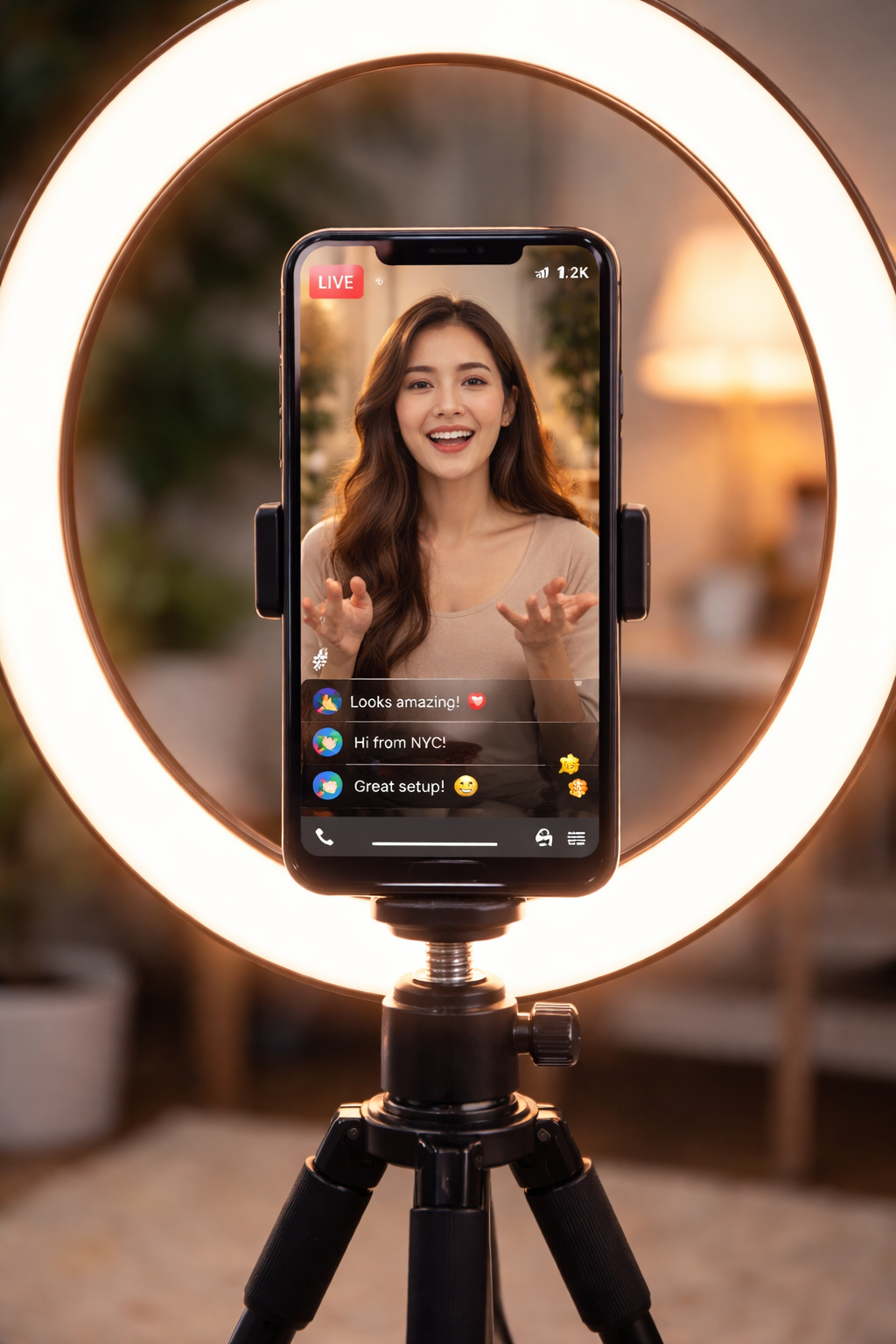
Lighting used to be something you worried about only if you worked in TV, film, or had a friend called Gary who owned several tripods and far too many opinions. Then webcams arrived, Zoom took over the world, and suddenly everyone discovered that the overhead kitchen light was not, in fact, flattering. Thus began the great home studio lighting awakening. Ring lights, LED panels, and small but mighty desk lights stepped in to save creators, Zoomers, and live streaming hosts from looking like they were broadcasting from a witness protection bunker.
At its core, good lighting is about professionalism. You can have the best microphone, a flawless script, and the confidence of a seasoned broadcaster, but if your face is half in shadow or glowing an unsettling shade of yellow, your message loses impact. Humans are visual creatures. We trust what we can see clearly. Well lit faces feel open, competent, and deliberate. Poor lighting feels accidental, rushed, or like you joined the call five seconds after rolling out of bed.
This is where ring lights earned their popularity. They are simple, effective, and forgiving. A ring light places even illumination directly around the camera lens, which reduces harsh shadows and smooths out facial features. It is the lighting equivalent of a polite nod that says, yes, I prepared for this. For creators filming tutorials, live streaming hosts chatting for hours, or professionals hopping between video meetings all day, that consistency matters.
The real revolution, however, came from LEDs. Not so long ago, decent lighting meant bulky fixtures, hot bulbs, and a noticeable dent in your bank account. LED technology changed everything. Lights became smaller, cooler, more energy efficient, and dramatically cheaper. What once required a dedicated studio can now sit comfortably on a desk or clamp to a bookshelf. Adjustable brightness and color temperature became standard features instead of luxury add ons.
For home studio users, this is a gift. You can dial in warm light for a relaxed podcast vibe, neutral daylight for business meetings, or slightly cooler tones for crisp product demos. Modern LED lights let you adapt to your space instead of fighting it. They also play nicely with cameras, reducing flicker and producing clean, consistent results even during long recording sessions.
Lighting also becomes non negotiable if you want to use a green screen. The idea of replacing your background with a slick virtual set sounds appealing until you try it under uneven lighting. Shadows, wrinkles, and dark patches on the screen make keying messy and distracting. Proper lighting ensures the green screen is evenly lit, which allows software to cleanly separate you from the background. This is where additional LED panels or side lights earn their keep, filling in shadows and keeping the screen uniform.
For business meetings, lighting has quietly become part of personal branding. The modern professional is often judged through a webcam before they ever step into a conference room. Good lighting signals competence and attention to detail. It says you understand the medium and respect the time of the people watching you. The good news is that professional style lighting at home is now easy to achieve without turning your office into a film set.
A basic setup can be as simple as a single ring light placed slightly above eye level, angled gently downward. Add a small fill light or desk lamp off to the side, and you have depth without drama. Position yourself facing a light source rather than with a window behind you, unless you enjoy appearing as a mysterious silhouette. These small adjustments make a noticeable difference and require far less effort than most people expect.
Creators and streamers benefit even more. Consistent lighting builds a recognizable look. Viewers subconsciously associate clear visuals with higher quality content. This does not mean blasting yourself with light until you resemble a lighthouse. Soft, controlled lighting is the goal. LED lights excel here, offering diffusion and adjustability that older lighting solutions simply could not manage.
Another overlooked benefit of modern lighting is comfort. LEDs stay cool, which matters during long recording sessions. Nobody performs well while slowly roasting under hot bulbs. Comfortable lighting keeps energy levels up and helps you stay focused, whether you are hosting a live stream, recording a batch of videos, or sitting through back to back meetings.
The rise of affordable lighting has also lowered the barrier to entry for new creators. You no longer need to wait until you can afford expensive gear to look credible on camera. A modest investment in lighting often delivers a bigger visual upgrade than a new camera. It is the quiet hero of home studios, doing most of the work while getting very little attention.
In the end, lighting is about intention. It shows that you chose how you appear on screen rather than leaving it to chance. Ring lights and LED panels are tools, not status symbols. Used well, they help you communicate clearly, appear professional, and feel confident in front of the camera. Whether you are pitching an idea, teaching an audience, or just trying not to look like you are broadcasting from a cave, good lighting makes all the difference. That is what lighting up is really about.
At its core, good lighting is about professionalism. You can have the best microphone, a flawless script, and the confidence of a seasoned broadcaster, but if your face is half in shadow or glowing an unsettling shade of yellow, your message loses impact. Humans are visual creatures. We trust what we can see clearly. Well lit faces feel open, competent, and deliberate. Poor lighting feels accidental, rushed, or like you joined the call five seconds after rolling out of bed.
This is where ring lights earned their popularity. They are simple, effective, and forgiving. A ring light places even illumination directly around the camera lens, which reduces harsh shadows and smooths out facial features. It is the lighting equivalent of a polite nod that says, yes, I prepared for this. For creators filming tutorials, live streaming hosts chatting for hours, or professionals hopping between video meetings all day, that consistency matters.
The real revolution, however, came from LEDs. Not so long ago, decent lighting meant bulky fixtures, hot bulbs, and a noticeable dent in your bank account. LED technology changed everything. Lights became smaller, cooler, more energy efficient, and dramatically cheaper. What once required a dedicated studio can now sit comfortably on a desk or clamp to a bookshelf. Adjustable brightness and color temperature became standard features instead of luxury add ons.
For home studio users, this is a gift. You can dial in warm light for a relaxed podcast vibe, neutral daylight for business meetings, or slightly cooler tones for crisp product demos. Modern LED lights let you adapt to your space instead of fighting it. They also play nicely with cameras, reducing flicker and producing clean, consistent results even during long recording sessions.
Lighting also becomes non negotiable if you want to use a green screen. The idea of replacing your background with a slick virtual set sounds appealing until you try it under uneven lighting. Shadows, wrinkles, and dark patches on the screen make keying messy and distracting. Proper lighting ensures the green screen is evenly lit, which allows software to cleanly separate you from the background. This is where additional LED panels or side lights earn their keep, filling in shadows and keeping the screen uniform.
For business meetings, lighting has quietly become part of personal branding. The modern professional is often judged through a webcam before they ever step into a conference room. Good lighting signals competence and attention to detail. It says you understand the medium and respect the time of the people watching you. The good news is that professional style lighting at home is now easy to achieve without turning your office into a film set.
A basic setup can be as simple as a single ring light placed slightly above eye level, angled gently downward. Add a small fill light or desk lamp off to the side, and you have depth without drama. Position yourself facing a light source rather than with a window behind you, unless you enjoy appearing as a mysterious silhouette. These small adjustments make a noticeable difference and require far less effort than most people expect.
Creators and streamers benefit even more. Consistent lighting builds a recognizable look. Viewers subconsciously associate clear visuals with higher quality content. This does not mean blasting yourself with light until you resemble a lighthouse. Soft, controlled lighting is the goal. LED lights excel here, offering diffusion and adjustability that older lighting solutions simply could not manage.
Another overlooked benefit of modern lighting is comfort. LEDs stay cool, which matters during long recording sessions. Nobody performs well while slowly roasting under hot bulbs. Comfortable lighting keeps energy levels up and helps you stay focused, whether you are hosting a live stream, recording a batch of videos, or sitting through back to back meetings.
The rise of affordable lighting has also lowered the barrier to entry for new creators. You no longer need to wait until you can afford expensive gear to look credible on camera. A modest investment in lighting often delivers a bigger visual upgrade than a new camera. It is the quiet hero of home studios, doing most of the work while getting very little attention.
In the end, lighting is about intention. It shows that you chose how you appear on screen rather than leaving it to chance. Ring lights and LED panels are tools, not status symbols. Used well, they help you communicate clearly, appear professional, and feel confident in front of the camera. Whether you are pitching an idea, teaching an audience, or just trying not to look like you are broadcasting from a cave, good lighting makes all the difference. That is what lighting up is really about.
You may purchase items mentioned in this article here. Affiliate links earn me a commission at no extra cost to you. Thanks for supporting IanGardner.com