Electro-Voice RE20 Microphone Overview
Discover why the EV RE20 is a go-to microphone in studios around the world and why its smooth, natural sound makes it ideal for broadcasting and music recording.
Ian Gardner is a British-American broadcaster, voice artist and audio enthusiast, sharing years of experience building creative workflows from a modern home studio. He helps readers make smarter buying decisions across studio gear, production tools and home comforts for both inside and outside the workspace. Broadcasters, podcasters, voice artists, producers and digital creators will find guidance that supports high production values and efficient workflows for building a successful home studio business. Similar articles can be found in the microphones blog.
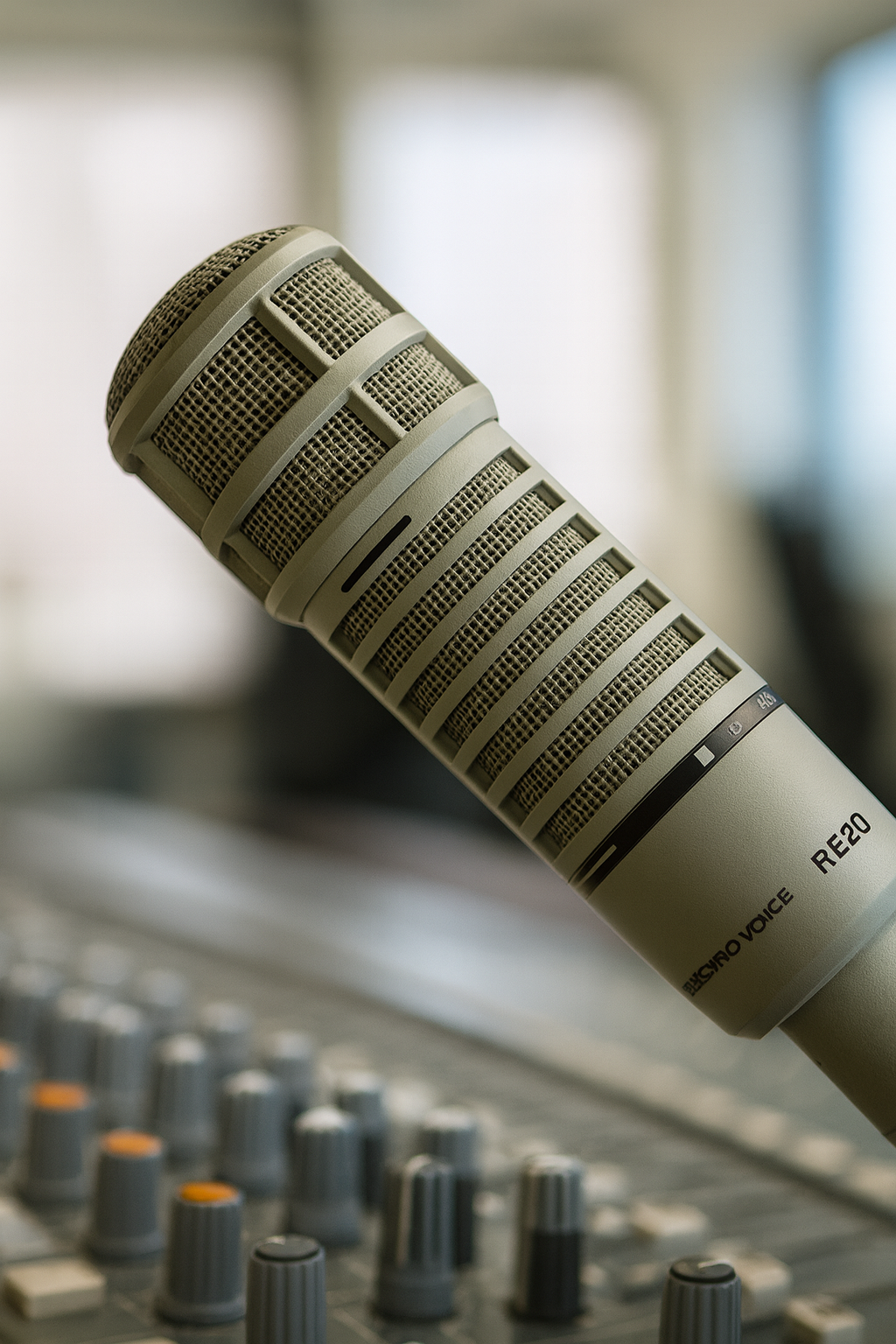
When I first got my hands on the Electro-Voice RE20 microphone, it completely reshaped my understanding of what a professional broadcast mic should sound like. Back in college days, we had a radio station, entirely run by students that was broadcasting across the campus. University Radio Essex introduced me to my career in broadcasting and delightfully distracted me from attending boring lectures. After a successful campaign, we received a grant that completely changed the look and sound of the station that was in desperate need of new equipment. With that funding I bought an Alice Air 2000 broadcast desk, a triple-stack of Sonifex cart players because digital playout wasn't a thing then - and my first true professional microphone purchase of the RE20. It was a revelation in build, tone, and consistency, and it set the standard in my mind for what a real broadcast microphone should be.
Electro-Voice, founded in 1930 in South Bend, Indiana, built its name on durability and innovation. The company originally supplied microphones for public address systems during a time when reliability mattered more than anything else. Over the decades, EV became known for robust engineering that survived the harsh realities of broadcast, touring, and field production. When the RE20 arrived in 1968, it took the industry's expectations for broadcast microphones and raised them considerably, combining ruggedness with a highly controlled and neutral sound signature - and if you want a quick look at the RE20 in action, you can watch the 1 minute 2 know breakdown here.
The RE20's most famous piece of engineering is Electro-Voice's Variable-D technology. This design reduces the proximity effect, allowing talent to work close to the microphone without the low frequency boom that plagues most dynamic microphones. Broadcasters loved this because it delivered a natural, even tone whether a presenter leaned in or moved slightly off axis. For a studio environment where consistency matters across long shows and multiple voices, this feature alone made the RE20 stand out.
The microphone's sound profile contributed to its legendary status. The RE20 is balanced, smooth, and predictable. It does not hype frequencies, and it does not exaggerate sibilance or low end. Instead, it captures voices in a clean, controlled manner that makes processing easier. Engineers often describe it as a microphone that takes EQ very well. That characteristic made it a preferred choice in radio stations across the world, where signal chains vary but reliability is essential.
In modern podcasting, the RE20's popularity has only grown. With many creators recording in untreated rooms, the natural off axis rejection and consistent capture help reduce room reflections and background noise. It is seen on countless podcast sets, YouTube shows, and livestreams because it delivers a professional broadcast tone straight out of the box. It also handles high sound pressure levels exceptionally well, meaning it can be used for vocals, voiceover work, kick drums, bass cabinets, horn sections, and more. Its versatility across genres and environments makes it one of the few microphones that has remained relevant for more than five decades.
Despite the arrival of newer microphones, the RE20 still holds a respected place in studios, radio stations, and production rooms. It remains synonymous with authority, clarity, and professional broadcast sound. For me, that first RE20 at University Radio Essex was more than a purchase - it was an entry point into understanding what a professional microphone could truly deliver. Even today, the RE20 continues to define the sound of radio and podcasting, proving that great engineering stands the test of time.
Electro-Voice, founded in 1930 in South Bend, Indiana, built its name on durability and innovation. The company originally supplied microphones for public address systems during a time when reliability mattered more than anything else. Over the decades, EV became known for robust engineering that survived the harsh realities of broadcast, touring, and field production. When the RE20 arrived in 1968, it took the industry's expectations for broadcast microphones and raised them considerably, combining ruggedness with a highly controlled and neutral sound signature - and if you want a quick look at the RE20 in action, you can watch the 1 minute 2 know breakdown here.
The RE20's most famous piece of engineering is Electro-Voice's Variable-D technology. This design reduces the proximity effect, allowing talent to work close to the microphone without the low frequency boom that plagues most dynamic microphones. Broadcasters loved this because it delivered a natural, even tone whether a presenter leaned in or moved slightly off axis. For a studio environment where consistency matters across long shows and multiple voices, this feature alone made the RE20 stand out.
The microphone's sound profile contributed to its legendary status. The RE20 is balanced, smooth, and predictable. It does not hype frequencies, and it does not exaggerate sibilance or low end. Instead, it captures voices in a clean, controlled manner that makes processing easier. Engineers often describe it as a microphone that takes EQ very well. That characteristic made it a preferred choice in radio stations across the world, where signal chains vary but reliability is essential.
In modern podcasting, the RE20's popularity has only grown. With many creators recording in untreated rooms, the natural off axis rejection and consistent capture help reduce room reflections and background noise. It is seen on countless podcast sets, YouTube shows, and livestreams because it delivers a professional broadcast tone straight out of the box. It also handles high sound pressure levels exceptionally well, meaning it can be used for vocals, voiceover work, kick drums, bass cabinets, horn sections, and more. Its versatility across genres and environments makes it one of the few microphones that has remained relevant for more than five decades.
Despite the arrival of newer microphones, the RE20 still holds a respected place in studios, radio stations, and production rooms. It remains synonymous with authority, clarity, and professional broadcast sound. For me, that first RE20 at University Radio Essex was more than a purchase - it was an entry point into understanding what a professional microphone could truly deliver. Even today, the RE20 continues to define the sound of radio and podcasting, proving that great engineering stands the test of time.
You may purchase items mentioned in this article here. Affiliate links earn me a commission at no extra cost to you. Thanks for supporting IanGardner.com