Crushing It
Discover how audio compressors turn recordings into smooth, professional-sounding tracks.
Ian Gardner is a British-American broadcaster, voice artist and audio enthusiast, sharing years of experience building creative workflows from a modern home studio. He helps readers make smarter buying decisions across studio gear, production tools and home comforts for both inside and outside the workspace. Broadcasters, podcasters, voice artists, producers and digital creators will find guidance that supports high production values and efficient workflows for building a successful home studio business. Similar articles can be found in the studio-essentials blog.
Ever wonder why your favorite radio station never blasts your eardrums but still sounds punchy and full? The secret is audio compressors - the unsung heroes of every polished track and crisp voiceover.
If you've ever cranked up a song only to have your speakers scream at you one moment and whisper the next, you've experienced the wild world of uncompressed audio. Enter the audio compressor - not a gym trainer for your biceps, but a sonic magician that tames peaks and fills in valleys to make sound smooth, punchy, and listenable. Compressors don't just make things quieter or louder - they make the chaotic orchestra of your recordings behave, like a polite crowd at a concert.
The history of audio compression is as entertaining as it is technical. Back in the golden age of radio, engineers discovered that listeners preferred a consistent sound level. Some stations got downright competitive about it. Take Z100 in New York for example - this station wasn't just playing hits, it was blasting them at a perceived volume that made every song feel like it was headlining Madison Square Garden. The trick was heavy compression. By squashing the dynamic range, quiet parts became more audible and loud parts didn't blow out your speakers. It was like giving every song a shot of espresso while keeping your eardrums intact.
Early compression wasn't limited to radio pop hits. Classical recordings, believe it or not, benefited too. Engineers used it subtly to make quiet instruments audible without letting the dramatic swells ruin the delicate moments. Jazz, rock, and even talk shows got the same treatment. Compression became an invisible hand shaping the listening experience, a backstage hero making sure every note, every word, had its moment without chaos.
Fast forward to today, and compression is everywhere. In your home studio, it isn't just a fancy radio trick - it's a vital tool for both voiceovers and musicians. Let's say you're recording a voiceover. Without a compressor, some words might pop out too loud while others get lost. A light touch of compression evens everything out, giving your voice that professional, radio-ready polish. Listeners get every nuance, from whispers to shouts, without cringing or straining.
Musicians love compression for similar reasons. Recording a guitar or vocal can reveal peaks that are embarrassingly louder than the rest of the performance. By compressing the track, those peaks are tamed and the quieter passages gain presence. The result is a track that sounds fuller and more balanced, even if your drummer hits a little too enthusiastically or your vocalist goes off-script. Compression doesn't replace good performance, but it does make your hard work sound its best.
And here's a fun twist - compression isn't always about control. Some engineers use it creatively. Heavy compression can add punch to a drum track, warmth to a vocal, or even give a bassline that unmistakable growl. It can turn a lifeless recording into something vibrant and alive, almost like squeezing juice out of every note. It's a bit like having a secret seasoning in your audio kitchen - used wisely, it elevates everything; used recklessly, it can ruin the dish.
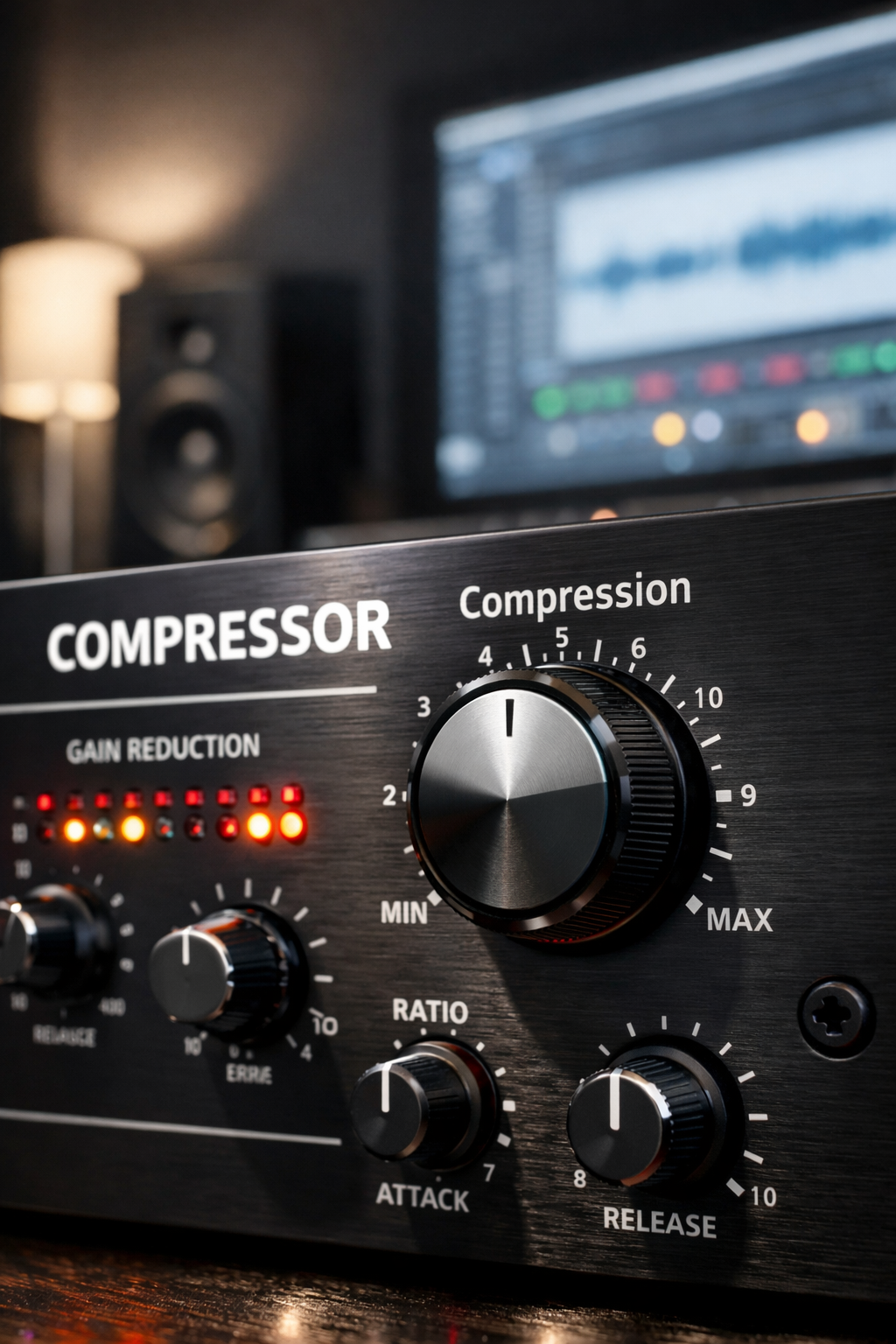
Understanding the controls is half the fun. Attack controls how quickly the compressor reacts to loud signals, while release decides how fast it stops compressing after the signal drops. Ratio determines how much squashing happens, and threshold sets the level where the compressor kicks in. These knobs may look intimidating at first, but once you start experimenting, it's a playground of sound design. Adjust a knob, play a note, and suddenly you understand why engineers smile when they talk about compression - it's power in your fingertips.
In a home studio setting, compression can also save your ears and your listeners. Without it, a casual listen to your track could be jarring. Your audience might have to fiddle with the volume between quiet verses and loud choruses. Compression evens things out, giving every piece of audio a consistent presence. For podcasters, YouTubers, or anyone recording at home, this means your content sounds like it was produced by pros without needing a Hollywood studio.
The beauty of modern compressors is that you don't need to overthink it. Software plugins offer presets for everything from subtle vocal smoothing to over-the-top pumping effects. Hardware compressors might be a little more intimidating, but they're rewarding to learn and can add character that digital plugins sometimes struggle to replicate. Either way, the goal remains the same - clarity, balance, and impact.
So the next time you hear a track that sounds like it's hugging your ears just right, or a voiceover that never hits your ears too hard or too soft, tip your hat to the humble compressor. From the booming airwaves of Z100 to your own cozy home studio, compressors are the silent sculptors of sound, turning wild recordings into polished gold. Whether you're chasing the perfect voiceover, the punchiest drum track, or simply want to make your music feel more alive, a compressor is the tool that helps your audio sing in harmony with your ears.
Compression isn't magic - it's science, art, and a touch of mischief. But in the end, it's what makes recordings listenable, professional, and, most importantly, fun. So plug in, tweak those knobs, and remember - a little squeeze goes a long way.
If you've ever cranked up a song only to have your speakers scream at you one moment and whisper the next, you've experienced the wild world of uncompressed audio. Enter the audio compressor - not a gym trainer for your biceps, but a sonic magician that tames peaks and fills in valleys to make sound smooth, punchy, and listenable. Compressors don't just make things quieter or louder - they make the chaotic orchestra of your recordings behave, like a polite crowd at a concert.
The history of audio compression is as entertaining as it is technical. Back in the golden age of radio, engineers discovered that listeners preferred a consistent sound level. Some stations got downright competitive about it. Take Z100 in New York for example - this station wasn't just playing hits, it was blasting them at a perceived volume that made every song feel like it was headlining Madison Square Garden. The trick was heavy compression. By squashing the dynamic range, quiet parts became more audible and loud parts didn't blow out your speakers. It was like giving every song a shot of espresso while keeping your eardrums intact.
Early compression wasn't limited to radio pop hits. Classical recordings, believe it or not, benefited too. Engineers used it subtly to make quiet instruments audible without letting the dramatic swells ruin the delicate moments. Jazz, rock, and even talk shows got the same treatment. Compression became an invisible hand shaping the listening experience, a backstage hero making sure every note, every word, had its moment without chaos.
Fast forward to today, and compression is everywhere. In your home studio, it isn't just a fancy radio trick - it's a vital tool for both voiceovers and musicians. Let's say you're recording a voiceover. Without a compressor, some words might pop out too loud while others get lost. A light touch of compression evens everything out, giving your voice that professional, radio-ready polish. Listeners get every nuance, from whispers to shouts, without cringing or straining.
Musicians love compression for similar reasons. Recording a guitar or vocal can reveal peaks that are embarrassingly louder than the rest of the performance. By compressing the track, those peaks are tamed and the quieter passages gain presence. The result is a track that sounds fuller and more balanced, even if your drummer hits a little too enthusiastically or your vocalist goes off-script. Compression doesn't replace good performance, but it does make your hard work sound its best.
And here's a fun twist - compression isn't always about control. Some engineers use it creatively. Heavy compression can add punch to a drum track, warmth to a vocal, or even give a bassline that unmistakable growl. It can turn a lifeless recording into something vibrant and alive, almost like squeezing juice out of every note. It's a bit like having a secret seasoning in your audio kitchen - used wisely, it elevates everything; used recklessly, it can ruin the dish.
Understanding the controls is half the fun. Attack controls how quickly the compressor reacts to loud signals, while release decides how fast it stops compressing after the signal drops. Ratio determines how much squashing happens, and threshold sets the level where the compressor kicks in. These knobs may look intimidating at first, but once you start experimenting, it's a playground of sound design. Adjust a knob, play a note, and suddenly you understand why engineers smile when they talk about compression - it's power in your fingertips.
In a home studio setting, compression can also save your ears and your listeners. Without it, a casual listen to your track could be jarring. Your audience might have to fiddle with the volume between quiet verses and loud choruses. Compression evens things out, giving every piece of audio a consistent presence. For podcasters, YouTubers, or anyone recording at home, this means your content sounds like it was produced by pros without needing a Hollywood studio.
The beauty of modern compressors is that you don't need to overthink it. Software plugins offer presets for everything from subtle vocal smoothing to over-the-top pumping effects. Hardware compressors might be a little more intimidating, but they're rewarding to learn and can add character that digital plugins sometimes struggle to replicate. Either way, the goal remains the same - clarity, balance, and impact.
So the next time you hear a track that sounds like it's hugging your ears just right, or a voiceover that never hits your ears too hard or too soft, tip your hat to the humble compressor. From the booming airwaves of Z100 to your own cozy home studio, compressors are the silent sculptors of sound, turning wild recordings into polished gold. Whether you're chasing the perfect voiceover, the punchiest drum track, or simply want to make your music feel more alive, a compressor is the tool that helps your audio sing in harmony with your ears.
Compression isn't magic - it's science, art, and a touch of mischief. But in the end, it's what makes recordings listenable, professional, and, most importantly, fun. So plug in, tweak those knobs, and remember - a little squeeze goes a long way.
You may purchase items mentioned in this article here. Affiliate links earn me a commission at no extra cost to you. Thanks for supporting IanGardner.com