Big Screens for Home Studios
The Panasonic Z8 Series 77-inch OLED turns every edit, mix and movie night into a full scale visual event.
Ian Gardner is a British-American broadcaster, voice artist and audio enthusiast, sharing years of experience building creative workflows from a modern home studio. He helps readers make smarter buying decisions across studio gear, production tools and home comforts for both inside and outside the workspace. Broadcasters, podcasters, voice artists, producers and digital creators will find guidance that supports high production values and efficient workflows for building a successful home studio business. Similar articles can be found in the televisions blog.
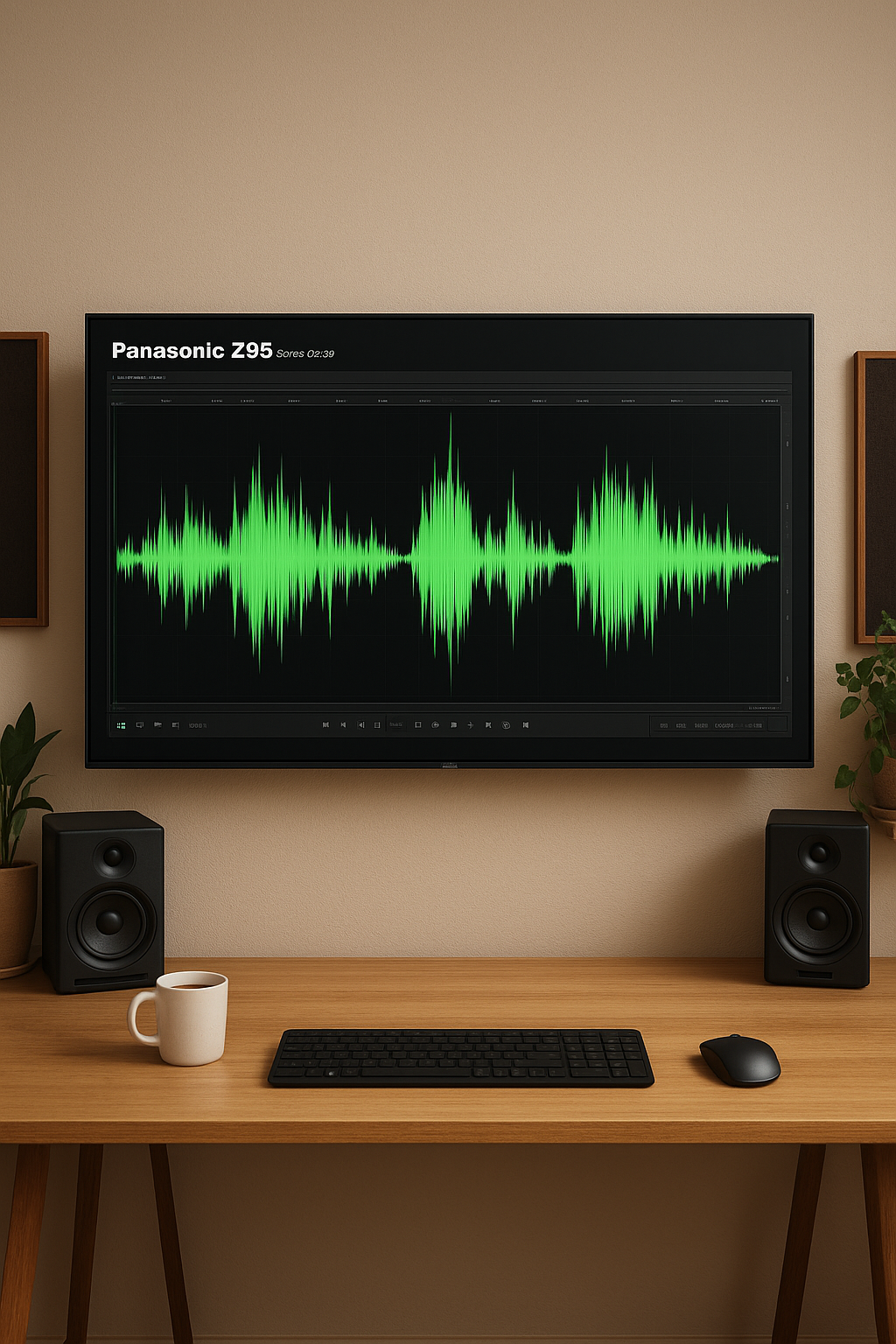
My 19-inch computer monitor recently developed a well known power supply issue where it took three hours to switch on, which is exactly the sort of slow burn no creator needs in a home studio. But it did provide a great opportunity to upgrade the display to a big screen. Really big. And the first replacement option on my list was the Panasonic Z8 Series (2025) 77-inch OLED 4K Ultra HD Smart Fire TV.
If you've ever stared at a small monitor while editing audio waveforms or video timelines, you know the eye strain that comes free with every project. Swapping in a massive 77-inch OLED feels less like an upgrade and more like the studio equivalent of switching from a bicycle to a bullet train. The new 2025 panel delivers incredible color accuracy, razor sharp 4K detail, and the deep contrast that OLED technology is famous for. In a home studio, where precision matters, this kind of display becomes a genuine workflow improvement rather than a luxury.
One of the biggest surprises is how naturally a large TV slots into studio work. Place it a few feet back on the wall and your DAW becomes a full command center. Audio editing suddenly feels spacious and readable, even with dozens of tracks open. Those tiny automation curves you've squinted at for years become easy to follow, and your timeline stops feeling like a crossword puzzle. Video editors get the biggest boost - scrubbing, trimming, color matching, and evaluating transitions on an OLED designed for accurate visual reproduction feels almost unfair, but in the best possible way.
If you produce radio or podcasts, a large screen also becomes your broadcast dashboard. Playlist software, timers, meters, notes, and playback controls can all live comfortably on one display instead of being squeezed across multiple monitors. With a 77-inch workspace, everything is visible at a glance, which makes it far easier to keep a show moving smoothly. Even a small home setup suddenly feels more like a professional broadcast studio.
When the workday ends, the screen transitions effortlessly from production tool to entertainment center. After a long editing session, kicking back and watching a movie on a 77-inch OLED is the kind of reward that makes the upgrade worthwhile. The built-in Fire TV platform makes streaming quick and simple, while the panel's color depth and contrast give movies and shows a cinematic feel. It also performs beautifully for gaming if you need a break from waveforms, timelines, and EQ tweaks.
If you're still wondering whether a TV can replace a monitor in a home studio, the short answer is yes. A display this large gives you an enormous working canvas while still delivering the clarity and responsiveness creators need. The combination of OLED precision, 4K resolution, and smart streaming features makes it both a serious creative tool and a relaxation powerhouse.
So while my old 19-inch monitor takes three hours to wake up and start its day, I'm already up and running on a screen that makes every part of studio life easier, clearer, and a lot more enjoyable.
If you've ever stared at a small monitor while editing audio waveforms or video timelines, you know the eye strain that comes free with every project. Swapping in a massive 77-inch OLED feels less like an upgrade and more like the studio equivalent of switching from a bicycle to a bullet train. The new 2025 panel delivers incredible color accuracy, razor sharp 4K detail, and the deep contrast that OLED technology is famous for. In a home studio, where precision matters, this kind of display becomes a genuine workflow improvement rather than a luxury.
One of the biggest surprises is how naturally a large TV slots into studio work. Place it a few feet back on the wall and your DAW becomes a full command center. Audio editing suddenly feels spacious and readable, even with dozens of tracks open. Those tiny automation curves you've squinted at for years become easy to follow, and your timeline stops feeling like a crossword puzzle. Video editors get the biggest boost - scrubbing, trimming, color matching, and evaluating transitions on an OLED designed for accurate visual reproduction feels almost unfair, but in the best possible way.
If you produce radio or podcasts, a large screen also becomes your broadcast dashboard. Playlist software, timers, meters, notes, and playback controls can all live comfortably on one display instead of being squeezed across multiple monitors. With a 77-inch workspace, everything is visible at a glance, which makes it far easier to keep a show moving smoothly. Even a small home setup suddenly feels more like a professional broadcast studio.
When the workday ends, the screen transitions effortlessly from production tool to entertainment center. After a long editing session, kicking back and watching a movie on a 77-inch OLED is the kind of reward that makes the upgrade worthwhile. The built-in Fire TV platform makes streaming quick and simple, while the panel's color depth and contrast give movies and shows a cinematic feel. It also performs beautifully for gaming if you need a break from waveforms, timelines, and EQ tweaks.
If you're still wondering whether a TV can replace a monitor in a home studio, the short answer is yes. A display this large gives you an enormous working canvas while still delivering the clarity and responsiveness creators need. The combination of OLED precision, 4K resolution, and smart streaming features makes it both a serious creative tool and a relaxation powerhouse.
So while my old 19-inch monitor takes three hours to wake up and start its day, I'm already up and running on a screen that makes every part of studio life easier, clearer, and a lot more enjoyable.
You may purchase items mentioned in this article here. Affiliate links earn me a commission at no extra cost to you. Thanks for supporting IanGardner.com